Latest Posts

Is Baptism Required for Salvation?

There is still much confusion among Believers regarding the role of Baptism: Specifically, whether or not Baptism is required for salvation.  There is much already written on this subject; nevertheless, it will be addressed here because of its importance and its thorniness.

Accordingly, let us center the discussion on, perhaps, the most controversial verse on the subject:

“He that believeth and is baptized shall be saved; but he that believeth not shall be damned.” ~ Mark 16:16

These words of Jesus have been applied by many to make the case that salvation requires both faith and baptism.  Let us see if that application is true.

Antithetical Parallelism: Look BOTH ways

In Mark 16:16, Jesus uses a literary form called “antithetical parallelism” 1 to define the criteria for salvation (“to be saved”). Antithetical parallelism is frequently used in The Bible (e.g., Psalm 37:21, Proverbs 8:35-36; 10:1; 10:2; 19:16, Ecclesiastes 10:2) whereby it “provides an antithesis, or contrast. A verse containing antithetical parallelism brings together opposing ideas in marked contrast.

To demonstrate this, let us separate the parallel elements of the verse

  1. “He that believeth and is baptized shall be saved; (Thesis)
  2. but he that believeth not shall be damned.” (Anti-Thesis)

leaf-546383_1920

If we examine only the forward statement (the thesis), it appears that faith (to believe) and baptism are both required for salvation.  However, notice that in the reverse statement (the anti-thesis), that apparent “requirement” for baptism is omitted.  That is, ONLY the requirement for belief is retained.

This is crucial, because, if baptism were an essential requirement for salvation, it is reasonable to expect that it would have been included in the reverse statement (the anti-thesis), which then would have read:

  • “but he that believeth not [and is baptized not] shall be damned.” (Anti-Thesis)

Certainly, an extra four (or so) words would not have been a textual burden. Accordingly, we must conclude that baptism was omitted from the reverse statement (the anti-thesis) because it was not fundamental for salvation.

Prescriptive vs. Definitive: Having eyes ≠ having sight

That leaves us with a crucial question: “Why then did Jesus mention baptism?”

The simple answer is that baptism is included in the thesis of the parallelism because it is prescriptive for the church, i.e., the saved are to be baptized.  In other words, baptism is a natural consequence of belief/faith in Jesus.  But, as shown (by its absence) in the anti-thesis of the parallelism, baptism is not a co-requisite, with belief/faith, for salvation.  Hence, baptism is prescribed for the saved; but faith defines them.

Moreover, if we make baptism definitive, then its absence in the anti-thesis leads to an inescapable logical limbo:

air-bubbles-230014_1920

  • “but he that believeth not shall be damned.” (Anti-Thesis)

Specifically, the anti-thesis states that ONLY those who “believeth not” are to be “damned”.  Consequently, those who believe and are NOT baptized are left in a philosophical limbo as they are NEITHER saved NOR damned! At the end of times, they would have nowhere to go!

 Singularity | Look Around

The final issue with forcing baptism to be definitive—i.e., by focusing exclusively on the thesis and ignoring the antithesis of the parallelism in Mark 16:16—is its ‘loneliness’. Baptism as a defining requirement for salvation is found nowhere else in Scripture.

Every doctrinal topic/principle raised by Jesus in The Gospels is explained in the remaining books of The New Testament, particularly in The Epistles.  Accordingly, if baptism was required for salvation, then we should expect that Scripture would inform us of that through repetition and/or commentary (as God tells us in 2 Peter 1:19-21).

Indeed, making baptism a requirement for salvation changes the nature of salvation itself. We are told that

water-lilies-481984_1920

“For by grace are ye saved through faith; and that not of yourselves: it is the gift of God: not of works, lest any man should boast.” ~ Ephesians 2:8-9

Thus, salvation is the definitive work of God without any assistance from man. Baptism, however, requires natural agents (man and water) to be fulfilled; as it were, ‘forcing’ God to work through man to accomplish His work.

Closing Thoughts

Baptism is prescriptive for Believers, but not requisite for salvation. Rather, baptism is a Believer’s public and symbolic action to declare the change brought about by salvation’s work in him/her. In many ways, Baptism can be likened to a wedding ceremony which announces to the entire community that a man and a woman have decided to commit themselves to each other and to God in holy matrimony. Or, in the style of the antithetical parallelism of Mark 16:16:

  1. “He that loveth a woman and has a wedding shall be married to her; (Thesis)
  2. but he that loveth not a woman will not be allowed to be married to her.” (Anti-Thesis)

  1. “A major literary device in Hebrew poetry is parallelism. Often, the parallelism is synonymous—the same idea is restated in different words, side by side (see Psalm 40:13). Antithetical parallelism provides an antithesis, or contrast. A verse containing antithetical parallelism will bring together opposing ideas in marked contrast. Instead of saying the same thing twice, it says one thing and then a different thing.”  This definition was obtained here

God’s Joy in the Midst of Life’s Pain

Ingrained in the heart of every human being is a longing to be happy and safe. We yearn for comfort, for security, for happiness. And when we find those things in life, we tend to cling to them because we’re afraid to face pain, loneliness and fear.

This is true of Christians as well. We want perpetual blessings from our heavenly Father. After all, He is Almighty, right? It’s no cost to Him to outfit us will the money we need, with good health, with friends and family who bring us joy and companionship. We feel, perhaps, that since we were good enough to choose to follow such a powerful and loving God that surely He will flood our lives with comfort and ease. We hold on to the promises of “peace that passeth understanding” (Philippians 4:7), and “I will never leave you or forsake you,” (Hebrews 13:5) and “I have plans to prosper you and not to hurt you” (Jeremiah 29:11).

And all of those promises are good, solid promises on which we can rely. But we have to remember that there are other promises we have to consider as well:

“These things I have spoken unto you, that in me ye might have peace. In the world ye shall have tribulation: but be of good cheer; I have overcome the world.” – John 16:33
“Blessed are ye, when men shall revile you, and persecute you, and shall say all manner of evil against you falsely, for my sake.” – Matthew 5:11
“Remember the word that I said unto you, ‘The servant is not greater than his lord.’ If they have persecuted me, they will also persecute you; if they have kept my saying, they will keep yours also.” – John 15:20

wild-flowers-216029_1280

Notice there are no caveats to these promises. Nowhere does our loving heavenly Father say “If you are good, you will have no difficulties; but if you misbehave, then watch out!” The trials and difficulties that come in to every Believer’s life are a guarantee. They are not dependent on our behavior, either good or bad. If you are walking with God, then difficult and painful times will come your way. This is a consistent theme throughout the Bible.

Many good and godly men and women depicted in the Bible had to face difficulties, sometimes severe ones. Joseph was sold as a slave by his own brothers. King David was exiled during his God-appointed rule in Israel, running for his life from his own dearly beloved son. Job faced the loss of great wealth and comfort, without even the support of his own wife or close friends. The prophets were consistently mocked and ignored. Even Jesus Himself faced censure from his family and the most humiliating and ignominious death possible. This is an inescapable reality of the world we live in: In this world we will face pain, loss, confusion and struggle, sometimes very extreme and very prolonged.

This is a point of testing that we often fail.

We believe God is loving and good when things are easy and we can see a smooth, comfortable course ahead of us. It’s so easy to feel love and praise for God when we get the promotion at work, when a dear saint in the church is healed, when our children delight us and our friends admire us. But when sickness strikes and sees no relief; when a colleague maligns us and we find ourselves out of work, when children rebel and we feel alone and rejected – where is our faith then?

That’s the question the world is asking. We are under constant scrutiny from non-believers. And while they are not ultimately the judges of our souls, they do have a valid challenge. Non-believers face the same triumphs and tragedies that we do in life (Ecclesiastes 9:2). They see intense hardships, as well as dizzying successes. They already know that walking with God does not prevent us from facing pain, and they demand to know: Where is your God when things are hard? Where is your faith? Where is your peace?cactus-362204_1920

Let’s get beyond a superficial “God is good all the time” and be brutally honest with ourselves: we don’t doubt God when we are happy. We don’t question our faith when we have money in the bank. Our praise is usually the overflowing of an already-happy heart, presented within the safe walls of a comfortable church. But God knows that faith, like steel, can’t strengthen unless is put through the fire. He knows that the true value of praise comes when it is offered in the midst of pain. He knows that His people are being watched by those who are looking for the kind of peace and provision we claim to have through Him. We are the ones that don’t know those truths, and so He teaches us by allowing the difficulties to come.

“My brethren, count it all joy when ye fall into divers temptations; Knowing this, that the trying of your faith worketh patience. But let patience have her perfect work, that ye may be perfect and entire, wanting nothing.” – James 1:2-4

The biggest difference between the life of a Christian and the life of a non-believer is that our difficulties serve a very specific purpose: to bring glory to God. Not just a gleeful outpouring of a soul that has known no trouble, but the kind of true praise that acknowledges there is more to suffering than the pain of the moment. The real faith that sees beyond the immediate situation and believes in a design that is beyond human comprehension. The peace that refuses to be rattled when everything is being shaken. The real love that contents itself in the presence of God, and knows no fear and no limits. These qualities are the only answers that will silence the skeptics of the world, and God will use His children to communicate that message to anyone who will listen.

Much of our walk with God is counter-intuitive. We want to do good to those who do good to us, but God says to bless our enemies and to treat them well. We want to avenge our hurts and humiliations, but God says that we are to accept these things as a blessing and leave vengeance to Him. When difficulties come our way, we feel stress and fear—but God consistently tells us to “fear not.” Each time life tempts us to respond in a way that is natural and expected, God calls us to do the opposite. Why? Because it brings Him glory! It confounds the wisdom of the wise of the world. And it humbles and trains our hearts and wills to remember that He is our anchor, our solid place, our reality even over the circumstances of the moment.desert_flowers

In such humility is great strength, the kind of strength we cannot find in ourselves or in the world around us. Matthew Henry writes in his treatise “The Quest for Meekness and Quietness of Spirit”:

“Those that through grace are able to compose and quiet themselves are fit to live in this world, where we meet with so much every day to discompose and disquiet us. In general, whether the outward condition be prosperous or adverse, whether the world smile or frown upon us, a meek and quiet spirit is neither lifted up with the one, nor cast down with the other, but still in the same poise; in prosperity humble and condescending, the estate rising, but the mind not rising with it; in adversity encouraged and cheered up, “cast down, but not in despair….”

Are you quiet and composed within your spirit, resting on the never-ending provision of God? Or are you tossed and troubled, elated one minute and crushed the next? God is Almighty over every circumstances; He is the Rock we can cling to in peace and contentment regardless of the waves crashing around us. Calm assurance will speak more to our neighbors than any sermon or oral testimony, and it allows God to shine His glory through our lives.

flower in desert-2

We do ourselves no favors when we fret and worry; we only give the Enemy an excuse to mock. The strained and anxious Christian is no help to his neighbors, who have worries and cares of their own. If we have nothing to offer than the same floundering as the lost, then we should not be surprised if they do not come to us to find answers. We should turn to our Father so He can quiet and compose us, and outfit us for the work of life and of testimony to others.

This life is a hard walk, and the pain we feel through trials and losses is very real. God records every tear (Psalm 56:8); He is not uncaring regarding your pain, and He promises that one day you will never weep again (Revelation 21:4). Yes, there is pain in this world, but when you’re facing it with God by your side, with the assurance that He sees and that He will be glorified through your difficulty, then there is also a tremendous joy. Don’t become so overwhelmed with the heaviness of life that you don’t embrace the joy,

“For I reckon that the sufferings of this present time are not worthy to be compared with the glory which shall be revealed in us.” ~ Romans 8:18

The term “reckon” is a technical term, related to the balancing of accounts; it does not refer to a feeling or a fancy. You may not feel that your current suffering is light and transient; but you can categorize it as such because the Bible tells us that it is so. Account for your sufferings as being a drop in the bucket compared to the glory that God is revealing in our lives, and rest in His assurance and love knowing that everything that comes our way, whether good or bad, is a tool in His hands to work to our benefit (Romans 8:28).

“Blessed be God, even the Father of our Lord Jesus Christ, the Father of mercies, and the God of all comfort; who comforteth us in all our tribulation, that we may be able to comfort them which are in any trouble, by the comfort wherewith we ourselves are comforted of God. For as the sufferings of Christ abound in us, so our consolation also aboundeth by Christ.” ~ 2 Corinthians 1:3-5

by Joelle Heilemann

ONE WAY OUT | The Call of Levi

“And as [Jesus] passed by, He saw Levi the son of Alphaeus sitting at the receipt of custom, and said unto him, “Follow me.” And he arose and followed Him.” ~ Mark 2:14

Levi (a.k.a. Matthew) was a publican: a tax collector for the Roman government. Rome ruled Israel, and anyone working for Rome was by default an enemy of the Jews. But publicans/tax-collectors were even worse, for they were traitors. Most publicans, like Levi, were Jews who sold out their countrymen to work for the other side, just so they could get rich (ostensibly, by overtaxing and pocketing the difference). To choose to become a publican was to choose cash over country, luxury over loyalty.

Understandably, publicans were hated: they were considered to be “the scum of the earth”. They were so bad, they were put in a class by themselves: when referring to the unrighteous, the religious elite would say “publicans and sinners” (e.g., Mark 2:15). Accordingly, publicans were essentially excommunicated from Jewish religious life and for them there was no way back, no hope, no redemption.

Enter Jesus.

When Jesus called Levi, He was offering him a way out of the dreadful situation he was in. Whatever Levi’s motives were, whatever path had led him there, it was a bad place to be. He would never be accepted as a regular Jewish man again: he would never be welcomed in the synagogues.

looking outside

And though he worked for them, the Romans wouldn’t accept him either: they knew he was a traitor: they knew he had “sold out”.

Only Jesus offered him hope, only Jesus offered him a way out, only Jesus offered him redemption.

Levi accepted Jesus’ offer.

It meant he would lose his job, his wealth, his seat “at the receipt of custom”. It meant taking the biggest risk of his life. But this was his only chance, his only hope, his only way out. Either he would follow Jesus or fester in the mess he had created for himself.

Levi accepted Jesus’ offer: Levi followed Jesus.

In calling Levi, Jesus showed His love for the least among us. Jesus offer of salvation extended even to outcasts. There was no wretch Jesus could not reach.

But there is more.

We were all outcasts, for we are all sons of Adam. When Adam was cast out of the garden, so were we, for we were all in Adam. We were all outcasts from God’s family. And we were all sentenced to death: eternal separation from God: condemned to be outcasts for eternity.

walk into light

“For all have sinned, and come short of the glory of God;” ~ Romans 3:23

But then God sent Jesus to make a way, THE ONLY WAY, out for us. If we would follow Jesus, He would take us back inside the fold: back in fellowship with God, our Father.

For since by man came death, by man came also the resurrection of the dead. For as in Adam all die, even so in Christ shall all be made alive. ~ 1 Corinthians 15:21-22

If we are yet unsaved, then, just like Levi, we find ourselves in desperation. If we stay as we are, if we ignore Jesus’ call, we will be stuck as outcasts forever. We see Him coming toward us, we hear His call: “Follow me”.

Our lives hang in the balance. What will our answers be?

For God so loved the world, that he gave his only begotten Son, that whosoever believeth in him should not perish, but have everlasting life. ~ John 3:16

Teaching Christ: The Church’s Crucial Calling

“And He went forth again by the sea side; and all the multitude resorted unto Him, and He taught them.” ~ Mark 2:13

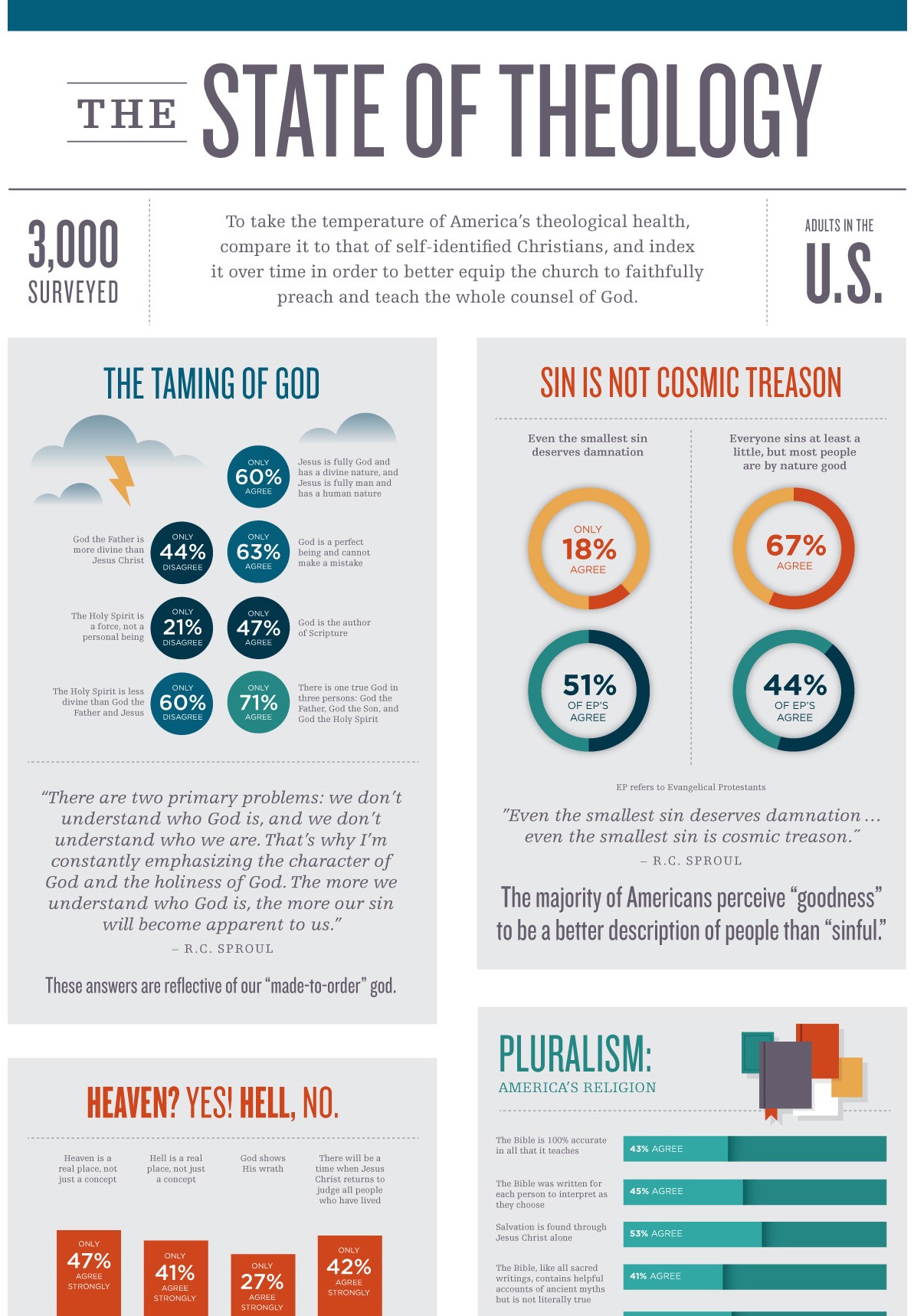
A recent survey (conducted by Ligonier Ministries) has shown that there is much confusion in the church about what The Bible teaches about many issues of everyday life. It appears that many Christians have insufficient knowledge of truth to apply it consistently to their lives. It appears Christians lack a true Biblical worldview because they don’t know enough of The Bible to build one. It is hard to build a ‘widget’ if you don’t have any idea what that ‘widget’ is supposed to look like and how it is supposed to function.

Certainly, there is enough blame to go around. There is individual responsibility, brotherly responsibility, and pastoral responsibility.  However, before assigning blame it may be helpful to just examine what has gone wrong, rather than who did it. And, to this end, our text sheds ample light on the problem.

Jesus spent most of His public ministry teaching. He healed many individuals, but a great majority of people experienced Him as a teacher. We know Jesus spent private time in prayer (Mark 1:35), and it is probably reasonable to assume that He sang psalms of worship from time to time, but the bulk of His ministry was teaching. Indeed, He began teaching at twelve (Luke 2:41-50), approximately eighteen years before performing His first (recorded) miracle (John 2:1-12).

As the Gospels show us, the crowds that followed Jesus were mostly interested in having Jesus minister to their physical needs (e.g., Mark 1:32-34).  They brought their sick to Him to be healed; they followed Him because He fed them miraculously (John 6:26-27).  The physical needs of the people were genuine: they needed help, and Jesus’ helped many.  But, more than miracle-working, Jesus’ was devoted to teaching them.

Likewise, today we have real pressing physical needs that we rightly bring to Jesus.  But, more than showering us with blessings, Jesus wants us to “learn of” Him (Matthew 11:29).  He who is the Truth (John 14:6) wants us to know the Truth so that we can be set free by the Truth (John 8:32) so that we can walk in Truth (Psalm 86:11).  The transformation to which Believers are called comes through a renewing of our minds (Romans 12:1-2), not our flesh, not our bank accounts, not our thrills.  We are transformed by the renewing of our minds!

“Teach me thy way, O Lord; I will walk in thy truth…” ~ Psalm 86:11a

Jesus’ emphasis on teaching, as the core of the ministry of the Gospel, is made even clearer in “The Great Commission”; where the disciples (and thereby the church) are commanded (twice) to teach. (The only other ministerial command given in “The Great Commission” is to baptize.)

“Go ye therefore, and teach all nations, baptizing them in the name of the Father, and of the Son, and of the Holy Ghost:  Teaching them to observe all things whatsoever I have commanded you” ~ Matthew 28:19-20a

The primary ministry of the Church is therefore teaching. The church is called to teach.

It is clear that the twelve disciples/apostles got the message: they understood that teaching was imperative, for they committed themselves to the work of teaching above all other duties:

“Then the twelve called the multitude of the disciples unto them, and said, It is not reason that we should leave the word of God, and serve tables. Wherefore, brethren, look ye out among you seven men of honest report, full of the Holy Ghost and wisdom, whom we may appoint over this business.  But we will give ourselves continually to prayer, and to the ministry of the word.~ Acts 6:2-4

The critical importance of teaching is amplified even further, where ALL Believers are instructed to prepare themselves to be able to teach if called on.

“Study to shew thyself approved unto God, a workman that needeth not to be ashamed, rightly dividing the word of truth.” ~ 2 Timothy 2:15

And, indeed, we are ALL expected to mature spiritually to the level of teachers.

“For when for the time ye ought to be teachers, ye have need that one teach you again which be the first principles of the oracles of God; and are become such as have need of milk, and not of strong meat.  For every one that useth milk is unskilful in the word of righteousness: for he is a babe.  But strong meat belongeth to them that are of full age, even those who by reason of use have their senses exercised to discern both good and evil.” ~ Hebrews 5:12-14

bible study group

In summary, every Believer, especially those in leadership roles, has responsibility to teach. Teaching is the primary ministry Jesus instructs us to use in the development of the Church. While we all can’t serve as teachers in any given Church, we are ALL expected to study God’s Word enough to become experts and thereby able to teach if necessary.

Lazy laymen do not bring glory to God through slothful study habits. Likewise, lazy leaders jeopardize the development of the Church when failing to provide instruction necessary to produce a healthy, well-fed flock who can stand strong in the whirlwind of false-teaching/un-truths swirling around them daily.

Church is not the place for motivational speaking, it is the place for nutritional teaching. A hungry man motivated is still hungry. Likewise, singing to a hungry man might help him forget his hunger for a while; but, when the music ends, his hunger remains. However, a hungry man fed and taught how to find food can help himself and other hungry men.

To be clear, there is nothing wrong with music ministries, exhortation ministries, and so on. God created these ministries; they are good and serve to edify The Church. However, as both Jesus and the apostles showed us, teaching God’s Word (which presupposes diligent study of God’s Word) takes a decided and definitive first place in the establishing of the Church.

New Things for the New Year

“And He brought us out from thence, that He might bring us in…” Deuteronomy 6:23a

Are you ready for a new thing? God often wants to do a new thing in our lives but He has three challenges. When He wants to bring us out of the old and into a new place He cannot get us out of the old because we are insecure and want to hold on to the old place. He then has to blast us out of the old. That’s why a call of God is often made up of a pull from the front and a boot from the rear.

His second challenge is that He has to pull us through the transition between the old place and the new. Transitions can last for years and they can be very painful. But He promises He can pull us through the worst of them.

Monarch life stages

His third challenge is to get us right so He can settle us into the new place. We should no more resist that work of God than a baby should resist being born and coming out into life.

Don’t give God a hard time when He wants to do a new thing in your life. We must believe that God is good all the time. If we trust His character we should cooperate with Him when He wants to make changes and do new things in us and for us. A rut is a grave with both ends knocked out. Our loving Heavenly Father does not want to see His children in the living death of a rut.

Instead of giving God a hard time, make it easy for Him as He brings you out of the old place and leads you into the new places He has for you in the New Year.

Adapted from “New Things for the New Year” by Dick Woodward.

When He Died

Lights are flashing, people are dashing,
it’s so cold out it would kill a snowman,
Cash register’s ringing, Caroler’s singing,
and a man digs through a trash can.

Everyone’s shopping, nobody’s stopping,
as he holds out the paper cup he’s found,
With holiday cheer, filling the air,
he begs from his seat on the cold ground.

Music is playing, everyone’s saying,
Merry Christmas and oh yes Happy New Year,
Yet all step around, the man on the ground,
pretending there’s no one to see there.

Hungry and cold, broken and old,
With a beard and all dirty they think he’s strange,
Their filled with detest, by his simple request,
can you please help me out with some spare change.

No one would dare, to venture near,
the old man with change to be given,
All stepped aside, as he walked with no pride,
to the alley with the box that he lives in.

By TrueBlu9

“Then shall he say also unto them on the left hand, ‘Depart from me, ye cursed, into everlasting fire, prepared for the devil and his angels: for

  • I was an hungred, and ye gave me no meat:
  • I was thirsty, and ye gave me no drink:
  • I was a stranger, and ye took me not in:
  • naked, and ye clothed me not:
  • sick, and in prison, and ye visited me not.’

Then shall they also answer him, saying, ‘Lord, when saw we thee an hungred, or athirst, or a stranger, or naked, or sick, or in prison, and did not minister unto thee?’

Then shall he answer them, saying, ‘Verily I say unto you, Inasmuch as ye did it not to one of the least of these, ye did it not to me.'” ~ Matthew 25:41-45

Not Only on Christmas Day

Bookmark and Share

Lord, this is my prayer
Not only on Christmas Day
But until I see You face to face
May I live my life this way:

Just like the baby Jesus
I ever hope to be,
Resting in Your loving arms
Trusting in Your sovereignty.

And like the growing Christ child
In wisdom daily learning,
May I ever seek to know You
With my mind and spirit yearning.

Like the Son so faithful
Let me follow in Your light,
Meek and bold, humble and strong
Not afraid to face the night.

Nor cowardly to suffer
And stand for truth alone,
Knowing that Your kingdom
Awaits my going home.

Not afraid to sacrifice
Though great may be the cost,
Mindful how You rescued me
From broken-hearted loss.

Like my risen Savior
The babe, the child, the Son,
May my life forever speak
Of who You are and all You’ve done.

So while this world rejoices
And celebrates Your birth,
I treasure You, the greatest gift
Unequaled in Your worth.

I long to hear the same words
That welcomed home Your Son,
“Come, good and faithful servant,”
Your Master says, “Well done.”

And may heaven welcome others
Who will join me in praise
Because I lived for Jesus Christ
Not just on Christmas Days

by Mary Fairchild

“But his delight is in the law of the LORD; and in his law doth he meditate day and night. And he shall be like a tree planted by the rivers of water, that bringeth forth his fruit in his season; his leaf also shall not wither…” ~ Psalm 1:2-3a

Christmas First

The world was but a cradle,
When the infant child was born.
Nothing but a manger,
For which to keep him warm.

The angels’ chorus sang,
There was frankincense and myrrh.
But not a sound he made,
This child, with heart so pure.

No mortal man could see,
As the star shone down so bright.
How this small defenseless babe,
Would fill the world with light.

For on that peaceful night,
God sent his only son.
That one day he’d be a man,
Eternal life would come.

So let us now rejoice,
Our souls through him redeemed.
Remember not the presents,
But what Christmas truly means…

By Geoffrey Caldwell

The people that walked in darkness have seen a great light: they that dwell in the land of the shadow of death, upon them hath the light shined…
For unto us a child is born, unto us a son is given: and the government shall be upon his shoulder: and his name shall be called Wonderful, Counsellor, The mighty God, The everlasting Father, The Prince of Peace.
~ Isaiah 9:2, 6

Gleaming Light

If I have brought a gleam of light
To cheer a darkened day,
If I held out a friendly hand
To help along the way.
Then in these acts of kindness done
It is not me you see,
But glimpses of that Loving One
Who chose to dwell in me.

Found in a Christian Newsletter

“Ye are the light of the world. A city that is set on an hill cannot be hid. Neither do men light a candle, and put it under a bushel, but on a candlestick; and it giveth light unto all that are in the house.” ~ Matthew 5:14-15

More Thoughts on Ferguson, MO.

At some point while I was playing or preparing to play Monday Night Football, the news broke about the Ferguson Decision. After trying to figure out how I felt, I decided to write it down. Here are my thoughts:

I’M ANGRY because the stories of injustice that have been passed down for generations seem to be continuing before our very eyes.

I’M FRUSTRATED, because pop culture, music and movies glorify these types of police-citizen altercations and promote an invincible attitude that continues to get young men killed in real life, away from safety movie sets and music studios.

I’M FEARFUL because in the back of my mind I know that although I’m a law abiding citizen I could still be looked upon as a “threat” to those who don’t know me. So I will continue to have to go the extra mile to earn the benefit of the doubt.

I’M EMBARRASSED because the looting, violent protests, and law breaking only confirm, and in the minds of many, validate, the stereotypes and thus the inferior treatment.

ferguson_protest_hug-cropped-1

I’M SAD, because another young life was lost from his family, the racial divide has widened, a community is in shambles, accusations, insensitivity hurt and hatred are boiling over, and we may never know the truth about what happened that day.

I’M SYMPATHETIC, because I wasn’t there so I don’t know exactly what happened. Maybe Darren Wilson acted within his rights and duty as an officer of the law and killed Michael Brown in self defense like any of us would in the circumstance. Now he has to fear the backlash against himself and his loved ones when he was only doing his job. What a horrible thing to endure. OR maybe he provoked Michael and ignited the series of events that led to him eventually murdering the young man to prove a point.

I’M OFFENDED, because of the insulting comments I’ve seen that are not only insensitive but dismissive to the painful experiences of others.

I’M CONFUSED, because I don’t know why it’s so hard to obey a policeman. You will not win!!! And I don’t know why some policeman abuse their power. Power is a responsibility, not a weapon to brandish and lord over the populace.

“For as many of you as have been baptized into Christ have put on Christ. There is neither Jew nor Greek, there is neither bond nor free, there is neither male nor female: for ye are all one in Christ Jesus.” ~ Galatians 3:27-28

I’M INTROSPECTIVE, because sometimes I want to take “our” side without looking at the facts in situations like these. Sometimes I feel like it’s us against them. Sometimes I’m just as prejudiced as people I point fingers at. And that’s not right. How can I look at white skin and make assumptions but not want assumptions made about me? That’s not right.

I’M HOPELESS, because I’ve lived long enough to expect things like this to continue to happen. I’m not surprised and at some point my little children are going to inherit the weight of being a minority and all that it entails.

ferguson_protest_hug-cropped-2

I’M HOPEFUL, because I know that while we still have race issues in America, we enjoy a much different normal than those of our parents and grandparents. I see it in my personal relationships with teammates, friends and mentors. And it’s a beautiful thing.

I’M ENCOURAGED, because ultimately the problem is not a SKIN problem, it is a SIN problem. SIN is the reason we rebel against authority. SIN is the reason we abuse our authority. SIN is the reason we are racist, prejudiced and lie to cover for our own. SIN is the reason we riot, loot and burn.  BUT I’M ENCOURAGED because God has provided a solution for sin through the his son Jesus and with it, a transformed heart and mind. One that’s capable of looking past the outward and seeing what’s truly important in every human being. The cure for the Michael Brown, Trayvon Martin, Tamir Rice and Eric Garner tragedies is not education or exposure. It’s the Gospel.  So, finally, I’M ENCOURAGED because the Gospel gives mankind hope.

by Benjamin Watson

This article originally appeared here.

Author’s website: http://www.thebenjaminwatson.com/   Twitter:@benjaminswatson