Latest Posts

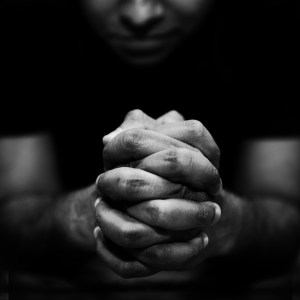
A Prayer

“And the servant of the Lord must not strive; but be gentle unto all men, apt to teach, patient,” ~ 2 Timothy 2:24

Teach me, Father, how to go
Softly as the grasses grow;
Hush my soul to meet the shock
Of the wild world as a rock;
But my spirit, propped with power,
Make as simple as a flower.

Let the dry heart fill its cup,
Like a poppy looking up;
Let life lightly wear her crown
Like a poppy looking down,
When its heart is filled with dew,
And its life begins anew.

Teach me, Father, how to be
Kind and patient as a tree.
Joyfully the crickets croon
Under the shady oak at noon;
Beetle, on his mission bent,
Tarries in that cooling tent.

Let me, also, cheer a spot,
Hidden field or garden grot—
Place where passing souls can rest
On the way and be their best.

by Edwin Markham

“But the wisdom that is from above is first pure, then peaceable, gentle, and easy to be intreated, full of mercy and good fruits, without partiality, and without hypocrisy.” ~ James 3:17

Foundation for Faithfulness

“I have set the Lord always before me: because He is at my right hand, I shall not be moved.” ~ Psalm 16:8

God demands that His children, those who are His, be faithful to Him in every circumstance, in every situation.

“Moreover it is required in stewards, that a man be found faithful.” ~ 1 Corinthians 4:2

However, faithfulness can sometimes be a challenge:

  • It is easy to give when we have a lot to spare. But how about the times when we have little?
  • It is easy to praise God when life is good: God looks good when He gives us good things. But how about the times when life is bad (e.g., when we lose our health, or our jobs)?
  • It is easy to do right when there is no reason to do wrong. But what happens when we are faced with temptation? It is easy to be faithful when we are among the faithful. But what choices will we make when we find ourselves among the faithless? And how about the times when we are alone (when no one can see us)?

lonely tree at dusk

It is easy to be a faithful Christian in the virtual world of Facebook and Twitter (just post/tweet Bible stuff). However, it is much harder to be a faithful Christian in the real world, where you can see and experience the real me.

Peter’s life demonstrates how difficult it is to be faithful: Before Jesus was arrested, he was willing to fight and die for Him (John 13:37-38). But when Jesus was arrested he denied Him three times (John 18:17, 25-27).

Our text (Psalm 16:8, above) gives us the key(s) to being faithful: David tells us that he will “not be moved”, i.e., he will remain faithful, because he has “set the Lord always before” him. Or, more specifically, he will remain faithful because God is at his “right hand”.

In other words, David could remain faithful as long as he never lost sight of God and he never did anything without God’s help. Indeed, David fell into sin exactly when he took his eyes off God and placed them on Bathsheba and when he let go of God and held on to her (2 Samuel 11) instead.

Likewise, our faithfulness depends on God being central to our lives. Like Peter, we have to keep our eyes on Jesus to stay above water (Matthew 14:28-31): God, not our circumstances, must be our focus at all times. And we must seek God’s direction and help for everything we plan to do.

SONY DSC

This is easy to say, but how does it apply in practice?  Here are some examples:

How about the times when we have little?

Whether we have a little or a lot everything belongs to God and is to be used as He instructs/guides us.

Consider this: If, as a child, your parents gave you some money sent you to the store to buy whatever you wanted, your primary concern would be how much money you had. In that case, it would be QUANTITY that determined your happiness. Conversely, if as a child, your parents gave you some money and sent you to the store to buy what was on their shopping list, your primary concern would be how well you fulfilled the task. In that case it would be OBEDIENCE that determined your happiness.

When we are focused on God we never worry about how much we have, we just want to see how well we can carry out His instructions. (And God is a good Father: He won’t send us to the “store” with His “shopping list” without giving us the money we need. We run into problems when we ADD things to His “shopping list” or when we just ignore His and use our own “shopping list”)

How about the times when life is bad (e.g., when we lose our health, or our jobs)?

We know we can depend on God, He is “at our right hand”. Therefore, whatever life brings must be good for us; even the consequences of our actions.

“And we know that all things work together for good to them that love God, to them who are the called according to his purpose.” ~ Romans 8:28

When God is the focus of our lives, it means that only His will matters: It’s not what I want, it’s what He commands. When God is the focus of our lives, it means that only His perspective is true: It’s not how I see it, it’s how God sees it.

So whatever happens in my life, whether “good” (pleasant/easy) or “bad” (painful/difficult), whether God’s blessing or God’s judgment it is ALL to my benefit. Consider this: God’s judgment of David (2 Samuel 12) made him a better man; Job’s affliction drew him closer to God, Paul’s thorn (2 Corinthians 12:7-10) glorified God and humbled Paul.

desert with cacti

(On a personal note: Some time ago, while living apart from my family due to work, I came very close to falling into a diabetic coma. I was unaware I had developed the disease and my blood glucose had risen to alarming levels. While going through this ordeal, I leaned how much I needed my family. Previously, I had begun to think that I could manage better without them. God used my condition to show me otherwise. Additionally, I then had to develop discipline in my eating habits in order to combat the disease. Self-discipline is a longstanding weakness and now God is using diabetes to help me develop in that area. While I hate the disease, I have to confess that in many ways it has been a blessing.)

How about the times we are faced with temptation? How about the times we find ourselves among the faithless? How about the times when we are alone (when no one can see us)?

Before yielding to temptation, we must first decide to remove God from before us, to eject Him from our right hand. It is hard to sin while praying to God; it is hard to sin while reading His Word; it is hard to sin while thinking about Him. Psalm 119 puts it this way:

“Wherewithal shall a young man cleanse his way? by taking heed thereto according to thy word.
With my whole heart have I sought thee: O let me not wander from thy commandments.
Thy word have I hid in mine heart, that I might not sin against thee.” ~ Psalm 119:9-11

As long as we focus and God and His Word, as long as we depend on Him and not ourselves, as long as we keep close to Him, we have ALL we need to live faithfully: we will not be moved. This is the foundation for faithfulness.

NO Middle-Ground: We LIVE in the LIGHT or DIE in the DARKNESS

5This then is the message which we have heard of Him, and declare unto you, that God is light, and in Him is no darkness at all. 6If we say that we have fellowship with Him, and walk in darkness, we lie, and do not the truth: 7But if we walk in the light, as He is in the light, we have fellowship one with another, and the blood of Jesus Christ His Son cleanseth us from all sin.” ~ 1 John 1:5-7

LIGHT vs. DARKNESS

God is exclusively light. This statement does not tell us what light is, or what darkness is; it simply defines God as being exclusively one of the two opposing concepts. Even before defining what light is and/or what the opposite of light (i.e., darkness) is, the big message is that God is exclusively one of the two. In other words, in defining God, a line is drawn: an impenetrable paradigmatic boundary.

The practical necessity of God’s exclusive nature becomes clearer in the next verses. But the purpose of the opening statement is to establish the premise of the ensuing arguments and to alert the reader that there are two paths to choose from: two paths between which there is an unbridgeable and bottomless chasm indicating the complete and defining absence of a middle ground: there is no compromise; there is no “third way”.

“I [Jesus] am come a light into the world, that whosoever believeth on me should not abide in darkness.” ~ John 12:46

“Every good gift and every perfect gift is from above, and cometh down from the Father of lights, with whom is no variableness, neither shadow of turning.” ~ James 1:17

FELLOWSHIP WITH GOD: WALKING IN THE LIGHT

Consequently, fellowship with God (v. 6) is also exclusive. Any attempt to dwell in both light and darkness defines that ‘dweller’ as being in darkness. To have fellowship with God precludes the possibility of having anything to do with darkness. To walk in darkness while fellowshipping with God would introduce darkness into God, however, based on the premise of the preceding statement, this is impossible.

switch-1

“…come ye, and let us walk in the light of the Lord.” ~ Isaiah 2:5b

The practical indication of this result is jarring. Fellowship with God requires a total commitment to exclusivity in the Believer/Disciple/Worshipper. Fellowship with God requires, demands, absolute purity of heart and mind, absolute purity of one’s being. There is no possibility of fellowshipping with God if there is any trace of sin in my heart (my emotions), my mind (my thinking) or my attitude (my approach).

Verse six also implies that fellowship is deeply intimate, so intimate that it puts at risk the very essence, the very definition, of God. Consider this example: There is one glass with clean, absolutely pure water, and another glass with dirty, sewage-infused water. While separate, it is clear that one glass of water is safe to drink and the other glass is toxic. However, if both glasses are combined we now have only sewage-infused water. The purity of the first is gone.

When God fellowships with us, He infuses us with Himself. No, we don’t become gods but He is fully intermixed and entwined with us: He indwells us! So much so, that if darkness is present in us He would be contaminated. And since God must remain God, since God cannot be diminished, He cannot have fellowship with any one who walks in darkness: the chasm is unbridgeable, the boundary is impenetrable.

“Jesus answered and said unto him, If a man love me, he will keep my words: and my Father will love him, and we will come unto him, and make our abode with him.” ~ John 14:23

“But ye are not in the flesh, but in The Spirit, if so be that The Spirit of God dwell in you. Now if any man have not The Spirit of Christ, he is none of His. And if Christ be in you, the body is dead because of sin; but The Spirit is life because of righteousness. But if The Spirit of Him that raised up Jesus from the dead dwell in you, He that raised up Christ from the dead shall also quicken your mortal bodies by His Spirit that dwelleth in you.” ~ Romans 8:9-11

WALKING IN DARKNESS

It is clear then that walking in darkness is walking separate from God. And while walking in darkness one sees no light. We often fool ourselves into believing that we have some ability to see right, or even do right while walking apart from God. This is clearly not possible. The man walking apart from God is always walking in sin. Consequently, it is not our actions that make anything sinful, it is our separation from God that defines sin.

switch-2

“But if a man walk in the night, he stumbleth, because there is no light in him.” ~ John 11:10

The sacrifice of the wicked is an abomination to the Lord: but the prayer of the upright is His delight.” ~ Proverbs 15:8

If we are apart from God everything we do is abominable. There is no way to be righteous when in darkness, because there is no light in darkness. God is not there. We cannot accomplish righteousness apart from God.

Therefore, the challenge is never to get wrongdoers (of any kind, or stripe) to stop doing wrong; the challenge is always to get any wrongdoer to walk in fellowship with God. If that wrongdoer is a Christian, then their challenge is to return to fellowship with God. If the wrongdoer is an unbeliever, their challenge is to receive –by grace, through faith– the salvation of Jesus Christ which enables them to have fellowship with God! Anything else, leaves us in walking in darkness where ALL actions are abominable.

FELLOWSHIP WITH ANOTHER

Verse seven, introduces us to some more practical results of the axiom that God is exclusively light. The first one is that it enables us to have fellowship with each other. Fellowship between individuals is good, it originates in the light, the light that God is. Therefore, if one is to have fellowship with another, it must be mediated by our fellowship with God, it must occur in the light. Fellowship does not occur outside of the light, fellowship does not occur without God.

on-off switch

“And if it seem evil unto you to serve the Lord, choose you this day whom ye will serve…” ~ Joshua 24:15a

This is an uncomfortable, unnerving reality. We often think of mutually shared emotion as fellowship, we think because I feel good around you and you feel good around me that we have fellowship. Clearly, this is not the case: Fellowship is spiritual and only occurs in the light and while it might be accompanied by emotion, it is not defined by emotion. Rather, it is defined by holiness and it is precluded by darkness, by sin. Moreover it is reserved for, exclusive to, those walking in fellowship with God, to those walking in the light.

“Be ye not unequally yoked together with unbelievers: for what fellowship hath righteousness with unrighteousness? and what communion hath light with darkness?” ~ 2 Corinthians 6:14

RESTORATION

A second outcome of the premise, that God is exclusively light, is of great comfort. Genuine introspection reveals our constant battle with darkness: our constant tendency and actuality to deviate from the light that is God and into the darkness where God is not. How then can we ever hope to fellowship with God??

The constancy of the pull and the tendency to err means that the opportunities to fellowship with God are often few and fleeting. But God knows us and He has already put a plan in place: The Blood of Jesus Christ, His Son. The Blood of Jesus Christ, His Son cleanses us from all sin. That is, The Blood of Jesus Christ, His Son RESTORES broken fellowship. The Blood of Jesus Christ, His Son RESCUES us from the darkness and ALL its effects. Hallelujah!!!

Consequently, (as verses 8-10 tell us), all we have to do is recognize when we have slipped into darkness, tell God about it and ask Him to bring us back into the Light. If we do that, then The Blood of Jesus Christ, His Son, restores us, puts us back into fellowship with God so that we can resume our walk in the Light. Amen!

“But now in Christ Jesus ye who sometimes were far off are made nigh by the blood of Christ. For He is our peace, who hath made both one, and hath broken down the middle wall of partition between us…  For through Him we both have access by one Spirit unto the Father.” ~ Ephesians 2:13-14, 18

(NOTE: The Blood of Jesus does not ‘bridge’ the gap between darkness and light; rather, it ‘translates’ us from darkness into God’s marvelous light)

aura-1

“And the light shineth in darkness; and the darkness comprehended it not… That was the true Light, which lighteth every man that cometh into the world.” ~ John 1:5, 9

New Neighbors

[Jesus asked] “Which now of these three, thinkest thou, was neighbour unto him that fell among the thieves?”
And he [the lawyer] said, “He that shewed mercy on him.”
Then said Jesus unto him, “Go, and do thou likewise.” ~ Luke 10:36-37

picture obtained from here.

picture obtained from here.

At the beginning of the famous parable of the Good Samaritan, a lawyer asked Jesus “Who is my neighbour?”. However, after relating the parable, rather than answering the lawyers question, Jesus asked the lawyer inverted the lawyer’s original question and tossed it back to him. Jesus’ inversion of the question gives us a key insight:

Lawyer: “Who is my neighbour?”
Jesus: “Which… was neighbour unto him that fell among the thieves?”

In the lawyer’s question, the focus is inward: “Who is MY neighbour?”. In Jesus’ question, the focus is outward: (paraphrasing) “Which… was neighbour UNTO him…?”

In other words, Jesus was trying to get the lawyer to see that the important question is not “Who is my neighbour?”. The important question is “Who am I neighbour to?”

Typically, we choose to be neighbours only to a select few: those who we feel comfortable with, those we admit to our circle of friends/family. In the parable of the Good Samaritan, however, Jesus points out that there are many people around us in need of our unconditional and sacrificial love. Will we choose to be their neighbours?? Or will we walk past them, ignoring them and their needs, as we head off to church???

“Who will you be neighbour to?”
_____________________________

“Good fences make good neighbors, only if you want fences as your neighbors.” ~ RitW

Making God Disappear


Facebook Twitter More...

“Am I a God at hand,” saith the Lord, “and not a God afar off?” “Can any hide himself in secret places that I shall not see him?” saith the Lord. “Do not I fill heaven and earth?” saith the Lord. (Jeremiah 23:23-24)

In Jeremiah 23 God condemns the false prophets of Jeremiah’s day for leading His people astray, for misrepresenting Him, for telling lies instead of seeking the truth. In the middle of His condemnation God asks the questions presented in our text (above). The questions distill for us a crucial step that everyone must make when deciding to sin. Explicitly, before deciding to sin we must make God disappear.

No one cheats on a test while the teacher is looking over their shoulder; no driver breaks the speed limit if he knows a policeman is driving right behind him/her. Generally, except for protests, we only commit crimes when no one in authority is ‘looking’. Therefore, when deciding to sin we must take God out of the picture, we must assume even just for that moment that God is not “at hand”, that God is “afar off”. We make ourselves believe that somehow, while sinning we are hidden from Him, that He cannot see us.eclipse at beach_cropped section

When Adam and Eve sinned they tried to hide themselves from God (Genesis 3:8). Why? They knew God knew about their sin, but they felt compelled to continue the pretense. If somehow they could hide themselves from God, they would be ‘safe’.

However, these questions do more than expose the mental and spiritual contortions we participate in when deciding to sin. They also reveal to us a powerful strategy in resisting the temptation to sin. Specifically, rather than pretending God is not present, we are challenged to consider that we are ALWAYS in God’s presence: that God does “fill heaven and earth”. By always reminding ourselves of God’s continual presence, by recognizing that we walk before Him, we possess a powerful deterrent to sin. As David wrote:

“I have set the Lord always before me: because he is at my right hand, I shall not be moved.” ~ Psalm 16:8

David consciously “set the Lord always before” himself: he was deliberately constantly aware of God’s presence and David knew that while he did so he would “not be moved”, he would not sin.

Let us do likewise: let us constantly remind ourselves that every breath is breathed before God, in His presence; that every move is made in His sight. God is near, right beside us, He is not far away, there is nowhere to hide, and there is nothing that He does not see. As long as we are aware of this, then indeed, like David, we “shall not be moved”.

Psalm 139:1-12
O lord, thou hast searched me, and known me.
Thou knowest my downsitting and mine uprising, thou understandest my thought afar off.
Thou compassest my path and my lying down, and art acquainted with all my ways.
For there is not a word in my tongue, but, lo, O Lord, thou knowest it altogether.
Thou hast beset me behind and before, and laid thine hand upon me.
Such knowledge is too wonderful for me; it is high, I cannot attain unto it.
Whither shall I go from thy spirit? or whither shall I flee from thy presence?
If I ascend up into heaven, thou art there: if I make my bed in hell, behold, thou art there.
If I take the wings of the morning, and dwell in the uttermost parts of the sea;
Even there shall thy hand lead me, and thy right hand shall hold me.
If I say, Surely the darkness shall cover me; even the night shall be light about me.
Yea, the darkness hideth not from thee; but the night shineth as the day: the darkness and the light are both alike to thee.

Perspective on Prayer

“And this is the confidence that we have in Him, that, if we ask any thing according to His will, He heareth us: And if we know that He hear us, whatsoever we ask, we know that we have the petitions that we desired of Him.” ~ 1 John 5:14-15

Here is an incisive quote that demonstrates one of the major points of our text:

“[Our] Prayers don’t change God’s mind, they change our heart” ~ P. Clairmont

That is precisely what “…if we ask any thing according to His will, He heareth us…” means. Praying/Asking according to God’s-will means we are not asking for anything outside of God’s perfect plan that He has already set out for us from before we were even born (Ephesians 2:10).

In other words, when we begin praying according to God’s will, we are the only party new to the information. God already knows His will for us, so only the person praying needs to change his/her mind, not God. When we meet God in prayer the only thing that can possibly change is OUR mind/heart/attitude. Certainly, God’s perfect plan can’t and won’t change.

23292

“Let us therefore come boldly unto the throne of grace, that we may obtain mercy, and find grace to help in time of need.” ~ Hebrews 4:16

Notably, even Jesus Christ praying in the Garden of Gethsemane could not change God’s mind, so He submitted Himself to the will of the Father and died on the Cross for our sins (Luke 22:39-46).

Likewise, Paul prayed thrice for his own healing, but he was also unable to change God’s mind. Instead God changed his heart (2 Corinthians 12:7-9).

Nevertheless, if we did consider the reverse proposition: that we could “change God’s mind” by prayer, we begin to see a philosophical and theological problem. If we can change God’s mind, then it means:

  1. We can give God new information that He was hitherto unaware of.
  2. We can persuade God to deviate from His perfect plan for us
  3. We have a better plan than God had in mind.

Since, by axiom, the God of The Bible is Omniscient (all-knowing and all-wise) it is ludicrous and inconsistent to consider anyone being able to present Him with new information or with a better plan (point 1 and point 3). And, since God is also loving and merciful, it is equally incomprehensible that He could be dissuaded from doing what is best for us (point 2).

Clearly, then, prayer is an opportunity for the Believer (for Christians born-again by the Blood of The Lamb, Christ Jesus) to come before the throne of God for Him to conform us to His will.

Scripture puts it this way:

“Thy kingdom come, Thy will be done in earth, as it is in heaven.” ~Matthew 6:10

“Let us therefore come boldly unto the throne of grace, that we may obtain mercy, and find grace to help in time of need.” ~ Hebrews 4:16

We pray to obtain mercy: forgiveness for our inability and unwillingness to conform to God’s perfect will.

We pray to obtain grace: the supernatural unction/empowering to conform to God’s perfect will.

“Be careful for nothing; but in every thing by prayer and supplication with thanksgiving let your requests be made known unto God. And the peace of God, which passeth all understanding, shall keep your hearts and minds through Christ Jesus.” ~ Philippians 4:6-7

We make our requests known to God, yes.  BUT it is His peace that sustains us while we are being conformed to the very image of Christ Jesus, who walked in His perfect will. Note, there is no promise made in that passage that God will grant us those requests. For, as our text points out we must “…ask any thing according to His will…” for God to hear us. Indeed, in the Book of James we are told

“Ye ask, and receive not, because ye ask amiss, that ye may consume it upon your lusts.” ~ James 4:3

Let us come to God in prayer so that He can change our minds/hearts to match His perfect plan for each one of us.

Heart Health: Search Me, O God


Facebook Twitter More...

It’s good to examine our own hearts but to do this the wrong way can only bring discouragement, even a sense of hopelessness over our spiritual condition. The Bible says in Jeremiah 17 that our heart is more deceitful than anything and desperately wicked, then asks us this question: “Who can know it?” So it is really impossible to understand our own hearts, much less to repair them.

Jeremiah goes on to reveal the solution to our problem. God says, “I, the Lord, search the heart, I test the mind…” God alone has the ability, and the loving care, to show us our own hearts and point us to a remedy that will give us hope and grace for change.

Other people may discern what we are but their observations and criticisms (even their compliments) carry no power to transform us. So God has ordained that we look into His Word and allow His Spirit to show us our own need and His remedy for character flaws and besetting sins.

Through His Word and His Spirit, He will cause us to see ourselves and feel a spiritual despair at our condition. But it is not the same feeling as when people condemn us. It is something healthy. When God shows us the heart, He can also give us grace to repent and to take Christ as our remedy for every failing and insufficiency.

Let the Lord examine you. Pray like David and say, “Search me, O God!” God will surely answer that request and begin His holy task of confirming you to the image of His Son. It may be painful at times, but throughout the process you will sense His Presence and will not succumb to despair, because you will know that He who began this work in you is intent on finishing it.

Adapted from Search me, O God by Nick Uva

Pastor Dick Woodward – In Memoriam

Rest in Peace, Pastor Woodward. Your faithful, insightful, compassionate, and often humorous teaching of God’s Word inspired a young man, listening to your radio program, late at night, many years ago (on Radio Bonaire), to study the Scriptures and to apply God’s Word to his life. Thank you sir. God has used you to bless many, including me.

Dick Woodward's avatar4SpiritualSecrets

OLYMPUS DIGITAL CAMERA

Dick Woodward,
October 25, 1930 – March 8, 2014

Last Saturday Dick Woodward went to be with his precious Lord & Savior, Jesus Christ, surrounded by family in a hospital room in Williamsburg, Virginia. Now resting in the Everlasting Arms of God amidst the green pastures and still waters of Heaven, he is free from the pain and suffering that was such a part of his daily life.  Even though he always said, “my blessings outweigh my sufferings,” we are grateful that in God’s mercy he is now finally free for all eternity.

Pastor, teacher, preacher, mentor, friend, brother, husband & father, Dick Woodward will live on in our memories and hearts for many years to come. He was not one for fancy Latin words and didn’t speak ‘with a steeple in his throat,’ but we are remembering him now.  If you have special memories to share, please do comment…

View original post 166 more words

Accept God’s Love = Expect God’s Correction

“For I know the thoughts that I think toward you, saith the Lord, thoughts of peace, and not of evil, to give you an expected end. Then shall ye call upon me, and ye shall go and pray unto me, and I will hearken unto you. And ye shall seek me, and find me, when ye shall search for me with all your heart.” ~ Jeremiah 29:11-13

This passage of Scripture has grown enormously in popularity over the last few years. However, though oft quoted, many are unaware of the context in which God spoke these words through His prophet Jeremiah.

Specifically, these verses were part of a prophecy in which Jeremiah was telling the people of Judah that Babylon would attack them and take them away in captivity for (seventy) years.

hands-6

Huh?!?!

Yes, God’s message of love and encouragement came in the middle of His message of impending judgment for their sins.

Most of us only want to think of God as a Father who brings us treats. And so we wait, we endure difficulties with the thought that the treats will be coming soon. But God is not like wishy-washy modern-day fathers, beholden/captive to junk psychology. No, God “chastens” and “scourges” His children.

“For whom the Lord loveth he chasteneth, and scourgeth every son whom he receiveth.  If ye endure chastening, God dealeth with you as with sons; for what son is he whom the father chasteneth not? But if ye be without chastisement, whereof all are partakers, then are ye bastards, and not sons.” ~ Hebrews 12:6-8

His children had behaved badly for many years, despite many warnings, and it was time for them to “experience” Fatherly correction. But the correction was not without purpose, it was not born of anger. Rather, as a good father, the correction that God was about to inflict was meant to help them change from doing evil to doing good: God wanted them to become the best children they could be. That is what was meant when He said:

“For I know the thoughts that I think toward you, saith the Lord, thoughts of peace, and not of evil, to give you an expected end.”

The “expected end” is the ultimate plan God had designed for them. And so His correction was meant not for their hurt but for their benefit.

God still operates that way with His children today. He wants what is best for us, and will correct us (with as much chastening and scourging as necessary) whenever we go astray.

hands-8

What is best for us??? What does God want for us??

The answers to those questions are found in the latter verses of our text:

“Then shall ye call upon me, and ye shall go and pray unto me, and I will hearken unto you. And ye shall seek me, and find me, when ye shall search for me with all your heart.”

God wants His children (then and now) to become a people who:

  1. Call upon Him, Pray unto Him (instead of calling/praying to idols of their own making)
  2. Seek Him with all their hearts (instead of seeking other “loves”: lusts)

God will not tolerate idolatry: He will only accept being first through last in our lives: If God is anything to us, He must be everything to us.

And He will not tolerate adultery: Our hearts must be for Him alone: We must love him completely and find love for others through our love for Him. To love God, is to love Him completely: To seek God, is to seek Him exclusively.

All of life’s triumphs and trials are meant to shape us toward the expected end that is living in His love and walking in His will.

“He hath shewed thee, O man, what is good; and what doth the Lord require of thee, but to do justly, and to love mercy, and to walk humbly with thy God?” ~ Micah 6:8

Love Persuasion


Facebook Twitter More...

“Who shall separate us from the love of Christ? shall tribulation, or distress, or persecution, or famine, or nakedness, or peril, or sword? As it is written, For thy sake we are killed all the day long; we are accounted as sheep for the slaughter.
Nay, in all these things we are more than conquerors through him that loved us.
For I am persuaded, that neither death, nor life, nor angels, nor principalities, nor powers, nor things present, nor things to come, nor height, nor depth, nor any other creature, shall be able to separate us from the love of God, which is in Christ Jesus our Lord.” ~ Romans 8:35-39

This passage of Scripture is both well known and loved by many. However, it is also perhaps, one of the hardest ones to put into practice in the daily life of many Believers.

We are told that nothing shall separate us from God’s love for us. And that is greatly comforting, even inspirational. However, it can be difficult to remember this truth and walk in this truth when trials come into our lives.

Consider, for example, how Jesus’ disciples responded when faced with a life-threatening storm:

“… Master, carest thou not that we perish?” ~ Mark 4:38b

They knew of Jesus’ power and they knew of His love for them and all men. Moreover, He was physically with them in the boat during the storm. Yet, just as we would have done, they wondered if He cared for them. When faced with the storms, and the trials of life, it can be hard to remember God’s love.

What is the solution? How did Paul, how did the disciples eventually learn and inculcate the truth of this passage into their lives? How did they move from uncertainty to certainty about God’s love for them? How did they learn to rest in the assuredness of God’s love in the midst of great trials and storms; even when faced with death?

stormy surf-3

A key word in the passage is ‘persuaded’. To be persuaded one must be given evidence. Lawyers try to persuade juries and/or judges. Scientists try to persuade us of the truth of their findings. A man tries to persuade his beloved of his love. And in every instance, the persuader must provide the ‘persuadee’ with evidence.

In other words, we come to truly believe the promises in this passage over time as we experience God, as we walk with Him in faith and see that it is true: that He does really love us and He really never abandons us when the going gets rough.

It is easy to love the words in the passage. But to really believe them, we may have to experience their truth first. The experience of God’s faithfulness as we endure those storms and trials of life will convince us of His unrelenting love for us.

The disciples finally got it when Jesus was resurrected. After, His death on the cross, they felt abandoned and confused. But when the resurrected Jesus visited them again and again, the finally realized that truly, not even death could separate them from their Lord.

Likewise, for many of us, it is Jesus’ constant reassurance when we are down and out, in despair and doubt, that will finally persuade us that He will always be by our side.

So my brothers and sisters,

————
Keep holding on when life gets tough,

Keep holding on when waves get rough;
God is not some distant stranger
Looking down from up above
He’s by your side, and nothing can
Separate you from His love
————

“But now thus saith the Lord that created thee… Fear not: for I have redeemed thee, I have called thee by thy name; thou art mine. When thou passest through the waters, I will be with thee; and through the rivers, they shall not overflow thee: when thou walkest through the fire, thou shalt not be burned; neither shall the flame kindle upon thee.” ~ Isaiah 43:1-3