Latest Posts

Calamitous Confidence

“A wise man feareth, and departeth from evil: but the fool rageth, and is confident.” ~ Proverbs 14:16

It is important that we do not allow ourselves to be swayed by people who appear to be knowledgeable just because they argue their points confidently.

Here is a simple example:

Those who are old enough can remember when those who “knew” confidently told everyone that butter was bad so we should use margarine instead. Then in the 1990’s we were told with equal confidence again by those who “knew” that margarine was bad, eat butter instead. Lately, we have been told, yet again by those who “know”, that “it depends”…

To be clear, knowledge does increase; we learn new things everyday. Therefore, there is nothing wrong with changing our minds as we get new information. The issue here is the certainty expressed by those who claim to be knowledgeable, the confidence shown by those who claim to know.

Human history should teach us humility: what we think is true, from a totally humanistic perspective, often turns out to be just the opposite. Only God has perfect understanding, only God has complete knowledge so we should look to Him for truth and not to ourselves. Accordingly, we should recognize how frail, how uncertain, our own understanding is and not place our confidence in it.

Here is a more serious example:

Those who “know” tell us that sex outside of marriage is okay, as long as those involved are consenting adults: do it if it makes you happy, they say.  Likewise, those who “know” tell us that divorce is okay in any and all circumstances: if your marriage is unhappy, you are not obligated to work things out: divorce if it makes you happy, they say.

However, societies that have embraced these principles have experienced an ever growing incidence of single parent families, which those who “know” also say are unhealthy (or at least not the best situation) for children.  (Statistics show that children raised in single parent families generally experience a higher incidence of abuse, have lower scholastic achievement and higher juvenile delinquency compared to children of two parent families. [1, 2, 3])

So, after following the advice of those who “know”, they then tell us that we end up hurting our children.  Hmmm… maybe we should be careful about following the badvice of those in the “know”.

Clearly, it is not the confidence/certainty with which an assertion is made that matters. Rather, it is the truth of a statement that is important.  The wise man fears (respects, reveres, and lives in awe of) God. He looks to God for truth.  So the wise man finds out what God says in His Word about life, about good and evil. And then the wise man does the good and departs from evil.

Conversely, the fool does not fear (respect, revere, and live in awe of) God. So the fool goes his own way confidently walking in his own self-determined truth.

Let us avoid being fools ourselves: let us learn to fear (respect, revere, and live in awe of) God which is how we begin to learn true wisdom. And let us not be duped by fools, those who have no respect for God, just because they speak with confidence.

“The fear of the LORD is the beginning of wisdom: a good understanding have all they that do his commandments: his praise endureth for ever.” ~ Psalm 111:10

“The fear of the LORD is the beginning of knowledge: but fools despise wisdom and instruction.” ~ Proverbs 1:7

“The fear of the LORD is the beginning of wisdom: and the knowledge of the holy is understanding.” ~ Proverbs 9:10

“The fear of the LORD is the instruction of wisdom; and before honour is humility.” ~ Proverbs 15:33

Water of Availability + Wine of Obedience = Wonder of Transformation


Facebook Twitter More...

1 And the third day there was a marriage in Cana of Galilee; and the mother of Jesus was there: 2 And both Jesus was called, and His disciples, to the marriage. 3 And when they wanted wine, the mother of Jesus saith unto Him, “They have no wine.”
4 Jesus saith unto her, “Woman, what have I to do with thee? Mine hour is not yet come.”
5 His mother saith unto the servants, “Whatsoever He saith unto you, do it.”
6 And there were set there six waterpots of stone, after the manner of the purifying of the Jews, containing two or three firkins apiece. 7 Jesus saith unto them, “Fill the waterpots with water.”
And they filled them up to the brim. 8 And He saith unto them, “Draw out now, and bear unto the governor of the feast.”
And they bare it.
9 When the ruler of the feast had tasted the water that was made wine, and knew not whence it was: (but the servants which drew the water knew;) the governor of the feast called the bridegroom, 10 And saith unto him, “Every man at the beginning doth set forth good wine; and when men have well drunk, then that which is worse: but thou hast kept the good wine until now.” ~ John 2:1-10

Let’s take a quick look at this popular Bible story, and see what it tells us about the heart of God.

“….both Jesus was called, and his disciples, to the marriage…”

In the midst of this celebration of life, someone took the time to call for Jesus. He wasn’t just invited, he was summoned. Someone when out of their way to make sure Jesus came to the party; that says a lot about how Jesus was viewed by the people who knew him, even before His ministry had fully begun.

It also hints to us how we are to call on Jesus in our every day life; don’t just invite Jesus casually, if He has the time. Call him, entreat Him, let Him know it matters to You that He shows up. And don’t forget to invite Him to the parties in your life. We’re quick to call on God when we are in need,but how often do we ask Him to join us for a celebration? He’s willing, if you’re wanting Him.

“And when they wanted wine, the mother of Jesus saith unto him, They have no wine.”

I love how John records this. When a need arose, Mary knew who to go to. And she didn’t boss Him into a particular action; she never suggests that He should miraculously turn the water into wine. All she knew was that there was a need, and that her Jesus could meet that need. Her statement is full of expectation; she doesn’t expect that she needs to do anything more than mention that there’s an opportunity to act.

This is the same eager expectation of the woman with the issue of blood (Matthew 9:19-21) and the lame beggar at the temple gate (Acts 3:1-9). When you make a need known to God, don’t be tremulous and uncertain – look to Him with eager expectation.

“Jesus saith unto her, Woman, what have I to do with thee? mine hour is not yet come.”

This passage can be a confusing one; it seems Jesus is rebuking His mother. But it’s important to note that God has a timing to everything; sometimes when we bring Him a need, He gently reminds us of this. Sometimes He goes on to say “Not yet” or “No, I have something better planned.” But be sure of this: He will always answer an honest plea.

“His mother saith unto the servants, Whatsoever he saith unto you, do it.”

This is the kind of boldness we are encouraged to show when we ask of God; she did not get a “No” from her Lord, so she proceeds with confidence. She doesn’t command or demand; she merely instructs the attendants to obey Jesus in whatever He tells them to do next. Faith always acts in obedience, never clamoring or quivering with fear. Faith calls for action, and that action must always be in accordance with God’s instructions.

“Jesus saith unto them, Fill the waterpots with water.”

Here’s where things get exciting!! In spite of His statement that His time had not yet come, Jesus acts. Faith and obedience have won their way into the heart of God, and He is pleased to respond. There are few things God loves more than to be trusted; He is ever so responsive when we submit ourselves entirely to Him and are willing to act in obedience!

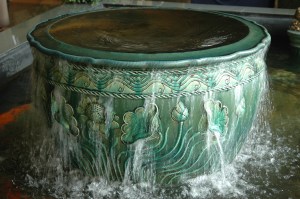
“And they filled them up to the brim”
"Jesus answered and said unto her, If thou knewest the gift of God, and who it is that saith to thee, Give me to drink; thou wouldest have asked of him, and he would have given thee living water." ~ John 4:10

“Jesus answered and said unto her, If thou knewest the gift of God, and who it is that saith to thee, Give me to drink; thou wouldest have asked of him, and he would have given thee living water.” ~ John 4:10

When God tells you to move, you do what He tells you, no matter how odd the command may seem. Surely the servants couldn’t know why they were being told to fill the water pots; Jesus had never turned water to wine before, so this order must have seemed hopelessly random. But they were told to obey – and boy, did they! They not only did as they were commanded, they fulfilled their task to the uttermost – filling the pots to the very brim.

Hauling water is hard work; surely they could have stopped a bit short and not have broken the command. But they were obedient to the fullest extent of their ability – and the reward was commensurate with their efforts.

“And he saith unto them, Draw out now, and bear unto the governor of the feast. And they bare it”

And the final act of total obedience – they were to bear their gift to the master of the assembly. Now, no one knew more than those servants that those jars were full of nothing but water – they had just filled them! Their acts of service, which till now had been enacted in private, were about to be made very public; and guests at a wedding would not take kindly to being served water instead of wine. But they bore the wine anyway.

Can any of us claim to have that kind of courage today? At home? In our church? At work or in the grocery store?

“When the ruler of the feast had tasted the water that was made wine, and knew not whence it was: (but the servants which drew the water knew;) the governor of the feast called the bridegroom, And saith unto him, Every man at the beginning doth set forth good wine; and when men have well drunk, then that which is worse: but thou hast kept the good wine until now.”

The final scene, the drum-roll—and what a climax! Faith has called for help; God has been moved into action; obedience has been worked out and the fruit has been brought forth for all to see. And how does it turn out? Not only is the water now wine, it is the best wine anyone has yet tasted! It’s so good the emcee has called the groom out and honored him before the whole crowd. Everyone has a wonderful wedding, and Mary’s faith has blossomed into the very first occasion on which Jesus performed a miracle.

Do we dare have that kind of faith? What kind of doors would God open in our homes and workplaces if we simply approached Him with eager expectation and held nothing back in obedience when He directs our steps?

“Give, and it shall be given unto you; good measure, pressed down, and shaken together, and running over, shall men give into your bosom. For with the same measure that ye mete withal it shall be measured to you again.” ~ Luke 6:13

~ contributed by Joelle Heilemann

FEAR NOT: Be Available


Facebook Twitter More...

“…And Jesus said unto Simon, FEAR NOT; from henceforth thou shalt catch men.” ~ Luke 5:10b

FEAR NOT: Be Available

When Simon Peter saw the huge catch of fish, he suddenly recognized Jesus’ true authority and holiness. And, looking at Jesus, he saw his own sins staring back at him like a reflection in a mirror.

How could The Holy One countenance such abject sinfulness? So Peter said the only thing that made sense to him: “…he fell down at Jesus’ knees, saying, ‘Depart from me; for I am a sinful man, O Lord'” (Luke 5:8b). Simon Peter was afraid to be in the presence of Jesus, because of his sin.

Today we often seem to be less aware of God’s holiness and our own sinfulness/unworthiness. However, Peter’s response was not uncommon. Fear was a typical response for a man/woman confronted with their own sin in God’s Holy presence. Consider Isaiah’s similar response in Isaiah chapter 6:

“Then said I, Woe is me! for I am undone; because I am a man of unclean lips, and I dwell in the midst of a people of unclean lips: for mine eyes have seen the King, the Lord of hosts.” ~ Isaiah 6:5

Jesus, however, did not ‘depart from Peter’. Rather, Jesus commissioned Peter to be a missionary. Clearly, Jesus was concerned about Peter’s sinfulness, and is concerned about our sinfulness; that’s why He died on the cross!!! But sinfulness is not a disqualifier in Jesus’ Kingdom. Or, said another way, sinlessness is not what qualifies a man for service in The Kingdom of God. Why? Because, if it was, we would all be disqualified. Who could pass that test?

Instead of unattainable sinlessness, Jesus was looking for other (much more achievable) qualities: Availability AND Obedience.

"If any man serve me, let him follow me; and where I am, there shall also my servant be: if any man serve me, him will my Father honour." ~ John 12:26

“If any man serve me, let him follow me; and where I am, there shall also my servant be: if any man serve me, him will my Father honour.” ~ John 12:26

When Jesus selected His fishermen disciples (as recounted in Luke 5:1-11, from which our text is taken) Simon Peter demonstrated the qualities that qualify us for service in God’s kingdom:

FIRST, when Jesus needed a boat from which to preach, Peter’s boat was AVAILABLE (Luke 5:3). Likewise, Jesus wants to use the very things He blesses us with for ministry, but we don’t make them available.

When the missionaries visit your church, will our cars be available to take them around? Will our houses be available for them to stay? When our churches needs a home to host community Bible studies, are our homes available? When there is a sick member of the church do we make the time to visit? Are we AVAILABLE? Simon Peter was.

SECOND, after He had finished preaching, Jesus instructed Simon to “Launch out into the deep, and let down your nets for a draught” (Luke 5:4). Now, Simon was an experienced fisherman, that was his profession. Also, he and his colleagues (Andrew, James and John) had toiled all night without catching anything (Luke 5:5). As far as Peter was concerned this was a futile task. However, despite his knowledge and experience, Peter OBEYED Jesus’ command.

Often we too will be challenged by Jesus, even just by what is in the Bible. Will we respond in obedience? When Jesus challenges us to give like the widow who gave everything, will we obey Him? Will we even obey the instructions to study God’s Word (e.g., 2 Timothy 2:15)? Will we obey the instructions to love our neighbor, even to love our enemies? Will we obey the instructions to visit the sick, to help the poor, to visit those in prison?

We can always find/concoct reasonable rational answers why we can’t/shouldn’t. But that is not the point: Jesus never asks us to rely on our reasoning. Jesus wants us to comply to His commands, he wants us to step forward in faith. Will we obey Him? Peter did.

(And his obedience resulted in a huge blessing!!!)

Peter’s availability and obedience meant he was ready to be a soldier in The Kingdom of God. He was useful to Jesus, despite his sinfulness. Jesus would die for those sins and for ours, there was nothing Peter could do to remove the stain of his iniquity.

But while Jesus would remove the obstacle of sin, we (like Peter) must remove ALL/ANY obstacles to availability and obedience so that we too can be qualified to serve in God’s Kingdom.

FEAR NOT, Believer, Jesus did not come to judge (though He will on His return), Jesus came to save!!! FEAR NOT, Jesus will take care of removing/forgiving our sins: He only wants us to be available and obedient.

FEAR NOT: God has a ‘Prison’ Reserved for You too


Facebook Twitter More...

“For there stood by me this night the angel of God, whose I am, and whom I serve, Saying,’FEAR NOT, Paul; thou must be brought before Caesar: and, lo, God hath given thee all them that sail with thee.’ Wherefore, sirs, be of good cheer: for I believe God, that it shall be even as it was told me.” ~ Acts 27:23-25

FEAR NOT: God has a ‘Prison’ Reserved for You too

The statement ‘FEAR NOT, Paul; thou must be brought before Caesar…’ is quite astonishing. An angel appeared to Paul with this message and it marked the end of Paul’s missionary ministry and the beginning of a sustained period of writing that would produce most of the epistles and a major doctrinal chunk of the New Testament. Moreover, all this would take place IMPRISONED in Rome.

So we could paraphrase the angels message as, “Don’t worry, Paul, you have been relieved of your post/ministry and reassigned to do some letter-writing in a cold dungeon in the capital where you may never see the light of day again.” It is likely that THAT message would have caused most of us to FEAR instead of to FEAR NOT.

Paul however, shows us the right response: he went willingly. His life had been turned upside-down, but he yielded willingly to God’s directive.

How could he be so willing??

At least a part of the answer lies in a verse he wrote to the Philippian Church:

“For to me to live is Christ, and to die is gain.” ~ Philippians 1:21

Paul’s life was completely dedicated, submitted, to the will of God: to the cause of Christ. He would go anywhere and do anything for Christ. If spending the rest of his life in a dungeon would further the work of the Kingdom of God: then he would go to the dungeon. Before his ‘reassignment’ he had willingly endured stonings, beatings, jailings, and more for the cause of Christ.

prison fence-1

“Be not thou therefore ashamed of the testimony of our Lord, nor of me his prisoner: but be thou partaker of the afflictions of the gospel according to the power of God;” ~ 2 Timothy 1:8

AND it mattered not whether he lost his life while serving his Lord, Jesus. For death, if it came, was gain!!! To be clear, Paul did not desire death; he was neither suicidal nor morbid. Rather, when God was ready to call him home, he would be ready to go, because he would be “dying” according to God’s PERFECT will. For Paul, life was not about living or dying life was about being in God’s will and being in God’s will was always gain; whether he was dead or alive.

So many of us, Believers, fear telling a stranger about Jesus, just because they might reject us or we might “make them uncomfortable”. Paul and the other Apostles spent their whole lives making people uncomfortable and they had the scars to prove it. BUT they were undeterred and they were unashamed.

“For I am not ashamed of the gospel of Christ: for it is the power of God unto salvation to every one that believeth…” ~ Romans 1:16a

Many of them had to leave their homes, their countries and their culture to spread the Gospel far and wide. God sent them on numerous assignments. How far are we willing to go for God?

What if God changes our careers, turns our lives upside-down, inside-out and reassigns us to a dungeon somewhere far away? Would we spend the rest of our days in FEAR and regret, in bitterness and resentment?? Or would we, like Paul, accept our redeployment willingly. Are our lives all about Christ or all about comfort??

FEAR NOT, Believer, God’s will won’t take us where His grace can’t sustain us. FEAR NOT, The Good Shepherd is always leading us to better pastures… even though some look like dungeons. Praise God!!!

RELATED ARTICLES

Pressed Close to God - Our afflictions are designed not to break us, but to bend us toward God.
Suffering: The Forgotten Gift - ...the Believer who is completing his course of suffering for Christ’s sake is completing the process of ceasing from sin. In other words, suffering for Christ’s sake transforms the Believer from sin-FULL to sin-LESS; suffering for Christ’s sake perfects Believers.
Rainbows… After the Rain - To get out of difficulty, one must usually go through it!

Fathers ‘Clued-in’ to God are not ‘Clue-less’


Facebook Twitter More...

“A fool despiseth his father’s instruction: but he that regardeth reproof is prudent.” ~ Proverbs 15:5

Homer_Simpson_2006

The prevalence of “father-bashing” television shows and movies is not accidental. Rather, it is the intentional work of the devil in the world to mock and denigrate fathers so that it will seem “cool” and even “normal” to ignore “clueless” dads.

Let us all be very careful not to fall into that trap.

God has so designed the family, that the father’s guidance and instruction is critical for the well-being of the children; starting from early childhood and continuing till when the children themselves are old.

It is the father who points the “arrows” (his children) and sends them on their journey (Psalm 127:4-5) through life.  And, it is the good father that uses God’s word to shape the arrows before they are sent.

Lo, children are an heritage of the Lord:
 And the fruit of the womb is his reward. 
As arrows are in the hand of a mighty man; 
 So are children of the youth.
Happy is the man that hath his quiver full of them:
 They shall not be ashamed, but they shall speak with the enemies in the gate.
~ Psalm 127:3-5

Archer - Psalm 127:3-5

Be wary of modern-day “prophets”


Facebook Twitter More...

“God, who at sundry times and in divers manners spake in time past unto the fathers by the prophets, hath in these last days SPOKEN UNTO US BY HIS SON… ” ~ Hebrews 1:1-2a

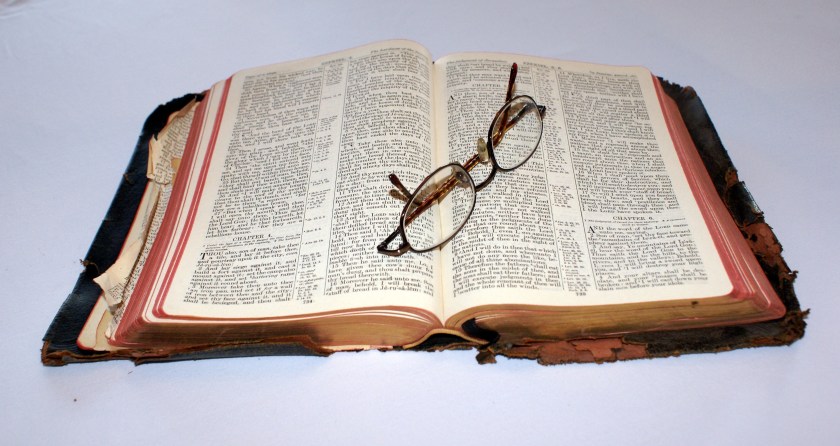
grandpa's bible

Friends, Brothers and Sisters in Christ, please be wary of those who would set themselves up as prophets. God’s Word for us comes through His Son, Jesus Christ.

We can, through the work of The Holy Spirit in us (John 14:), know all we need to know by reading The Bible, which tells us everything we need to know about Jesus and about life.

Despite all the prophets God sent, the Israelites were not saved, because they rejected God. Prophets/prophecies do not save us. Only God’s grace by faith of Jesus Christ can save us.

And ALL the prophecies we need are recorded for us in God’s Word.

To be clear, this does not obviate/preclude/deny the gift of prophecy which is a gift given to various members of the Body of Christ for its edification (1 Corinthians 12, Ephesians 4).  However, those so gifted do not point to themselves as the source of Truth.  Rather, they point to Jesus as The Truth and The Holy Spirit as the arbiter of Truth working in us.

In the body of Christ the gift of prophecy is intended as a conduit for the message of God’s Word to reach Believers who are otherwise blocked from it due to sin (in the individual specifically and in the church broadly), or due to heresies (2 John, Jude).   But prophecy never was intended to substitute the ministry of the Holy Spirit in the heart and mind of each individual Believer.

Indeed, Scripture tells us that we are a “royal priesthood” (1 Peter 2:9-10).  And as priests, it is the duty/responsibility of each and every Believer to be thoroughly trained in the Word of Truth.

“Study to shew thyself approved unto God, a workman that needeth not to be ashamed, rightly dividing the word of truth.” ~ 2 Timothy 2:15

God Says “Yes” to our Prayers when we say “Yes” to His Will


Facebook Twitter More...

“And this is the confidence that we have in Him, that, if we ask any thing according to His will, He heareth us: And if we know that He hear us, whatsoever we ask, we know that we have the petitions that we desired of Him.” ~ 1 John 5:14-15

These verses of Scripture assure us that God hears ALL our requests and gives us whatever we have requested… BUT there is a “catch”, there is a caveat. Namely, we must ask “according to His will”: The guarantee of God’s audience and of a positive response is only for those requests made “according to His will”.

These assertions have significant implication for the prayer life of a Believer. Let us examine two of them.

1. AUDIENCE is by AGENDA

We don’t come to God on our agenda, we come to God on His agenda. With modern-day casualness, we seem to forget God’s Sovereignty. We forget He is King.

We cannot assume entry into God’s presence on our terms and according to our wills. And, when we are in God’s presence, our concern must be His agenda not ours. Jesus’ death on The Cross opened direct access to God for forgiveness of our sins. But God is still our King and we must approach Him as such. Recall the first lines of the prayer that Jesus taught His disciples:

“…Our Father which art in heaven, Hallowed be thy name. Thy kingdom come, Thy will be done in earth, as it is in heaven.” ~ Matthew 6:9b-10

man praying-2

“And whatsoever we ask, we receive of him, because we keep his commandments, and do those things that are pleasing in his sight.” ~ 1 John 3:22

The prayer OPENS with an acknowledgement of God’s sovereignty (“Hallowed be thy name”) and petition for God’s will to be done (“Thy kingdom come, Thy will be done in earth, as it is in heaven”), which establishes the premise, the foundation, for the rest of the prayer: “Give us this day our daily bread” according to thy will my King; “forgive us our debts” according to thy will my King… and so on.

The prayer is therefore focused on the will of our Father, rather than the ‘needs’ of His children. To be clear, the needs are important, but only as they fit into God’s agenda, only as they accomplish His will.

Consider this human example: None of us can walk into Windsor Castle in London, England, and engage Queen Elizabeth in conversation about the things we want her to do. Similarly, no one could walk into The White House in Washington, D. C., and open a discussion with the US President about their personal concerns and what he should do about them.

In both examples, we would first have to request an audience AND that audience would only be granted if it coincided with their agendas. In short, they must both want to see us and to discuss the topics that coincide with their interests.

If such honor is afforded mere human leaders, how much more honor should we give the God of the universe?

2. FOCUS on GOD’S WILL not OUR WANT

Our passage forces us to shift our focus. If, the only prayers that are guaranteed to be heard and approved by God, are those which conform to His will, then it behooves us to find out exactly what God’s will is.

Before I ask God for something I want, I must first ask Him what He wants for me… THEN ask Him for that!

man praying

“And whatsoever ye shall ask in my name, that will I do, that the Father may be glorified in the Son.” ~ John 14:13

The focus of our prayer lives must then shift from telling God what we need/want to asking God what He wants for us. Therefore when we pray, it’s not about us, it’s about Him: it’s about conforming to His will, and NOT about trying to get God to do our will.

This is crucial, because our prayer life is often a source of frustration for us. We pray for God to do things we feel are important, and we grow frustrated when we see no result. Indeed, many Believers find themselves praying less and hoping less. In our hearts we ask, “Why should we bother to pray when nothing seems to happen?” And our prayers become perfunctory and pallid; our faith flounders and becomes flaccid.

The first step in a powerful prayer-life is seeking the will of God. We must let go of our wills our wants and our wishes. And replace them with God’s will “Thy kingdom come, Thy will be done” (Matthew 6:10). Once we have aligned ourselves with God’s will then ALL our prayers will be answered in the affirmative: God will say YES!

To help us grasp this concept, let us ask ourselves this question: “Whose will do I want established, my will or God’s will?”

If we are seeking the establishment of our own wills (regardless of how “altruistic” that might be) we will be frustrated. Conversely, if we are seeking the establishment of God’s will, then we will pray for revelation of God’s will and for God’s will to be done: we will forget about ourselves.

CLOSING THOUGHT

“But seek ye first the kingdom of God, and his righteousness; and all these things shall be added unto you.” ~ Matthew 6:33

Is “Church Service” a Noun or a Verb Phrase?

Judy's avatarConnecting Dots...to God

Christians, myself included, regularly use words and phrases like church, service, follower of Jesus Christ, shepherd, humility, community and surrender.  Yet, the words, phrases and values that actually animate our (my) behavior are very different.  I observe, and am challenged by, a disconnect between the way we typically do church and the way that Jesus lived and served and gave his life.

Country Church from MorguefileWhat if, instead of going to church as the primary activity of Christian faith, we lived to fully express the truth that we are the church?

“Just as each of us has one body with many members, and these members do not all have the same function, so in Christ we who are many form one body, and each member belongs to all the others.”  Romans 12:4-5

Perhaps the term “church service” would take on a new meaning as that which we daily live and do (like a verb phrase) instead of a weekly event that…

View original post 308 more words

Midnight Mindset | Trusting God’s Judgments throughout Tough Times


Facebook Twitter More...

“At midnight I will rise to give thanks unto thee because of thy righteous judgments.” ~ Psalm 119:62

What an inspiring verse!

Our text shows the utter submission to God’s will and purpose in the heart of the Psalm writer, David. And that submissive attitude should be true for EVERY Believer.

It is instructive to recall that in the span of his life, David had experienced God’s judgment.

  • His baby boy died because of his sin of adultery with Bathsheba and his murder of her husband Uriah. The Scripture makes it plain that the baby’s death was God’s judgment.

But God’s judgment for David’s sin did not end there.

  • As a result of his sin, David endured great family turmoil and even briefly lost his kingdom: (David’s favorite son, Absalom, murdered his half-brother Amnon for raping his sister Tamar. Absalom then rallied an army and deposed his father from the throne and chased him out of Jerusalem).
  • At the end of a brief war David was restored to his throne, but his son, his favorite son, Absalom, died while trying to escape.

starry night-3

This same David, submitted to God and accepted God’s judgment in his life. Indeed, he gave thanks for God’s righteous judgments; even in the middle of the night.

To be clear, God’s judgments are not always penalties. Indeed, many of God’s judgments are merciful. But those are not the ones that give us trouble: we never complain when God shows us mercy to us (though we sometimes complain when He shows mercy to others).

To submit to God’s judgments, especially when we find them painful, requires a heart that if focused on God rather than our selves. It requires a heart that is preoccupied with God’s holy will and purpose: A heart that is more interested in what God is trying to accomplish than what we want to enjoy.

David wept at the loss of his son, Absalom. And he had prayed and fasted for the health of his baby son, but he still died. Yet David recognized the hand of God and accepted that God’s decisions were far wiser than his own will. And so he gave thanks.

On a personal note, I still do not know why God allowed my sister to die of cancer. She was young and she left three young children and her husband behind. I have tried to “make sense” of it through the years, but… nothing… i’m still confused.

But, are God’s judgments righteous?

Yes, I really do believe they are: I believe God is good. Though sometimes His judgments are painful… But I accept that His wisdom is infinitely greater than mine… and so I would rather His will be done than mine… because I know I would choose what is easiest for me rather than what is best for me.

And so, I am learning to give thanks… even at midnight, even in the midnight of life’s travails, let us GIVE THANKS for God’s righteous judgments.

“The fear of the Lord is clean, enduring for ever: the judgments of the Lord are true and righteous altogether.” ~ Psalm 19:9

No Good without God

Facebook Twitter More...

“The sacrifice of the wicked is an abomination to the Lord: but the prayer of the upright is his delight.” ~ Proverbs 15:8

“Abide in me, and I in you. As the branch cannot bear fruit of itself, except it abide in the vine; no more can ye, except ye abide in me.
I am the vine, ye are the branches: He that abideth in me, and I in him, the same bringeth forth much fruit: for without me ye can do nothing.” ~ John 15:4-5

Until we are saved, until we accept Jesus as the only way to reunite with God, there is nothing we can do to please Him.

People often say something like the following:

“I have lived a good life, haven’t done anything too bad; I even gave to the poor and needy… I’ m sure I’ll be okay when I die”

Our text, however, clearly shows us the error of such notions. The unsaved man can do nothing good, because goodness is defined as doing God’s will. And it is God’s will that we are saved, that the Holy Spirit indwells our lives and that we seek God’s direction.

The unsaved are out of God’s will, and have no access to His empowering grace.

The unsaved man/woman acts out of his/her will, NOT God’s will.  The “good” the unsaved man/woman seeks to fulfill their own self-centered desires and not the desires of God.  Therefore, everything done by the unsaved is an abomination, repulsive, to God. Only actions of faith will please Him.

“…for whatsoever is not of faith is sin.” ~ Romans 14:23b

When Adam and Eve first sinned, it was a decision like all sin, to go their own way, to choose their own path. When we reject Jesus, we are doing the same. Therefore, we cannot expect the anything we do while rejecting God will somehow please Him.

BUT, if we accept the salvation that God offers, instead of choosing our own way, then there is hope:

“If we confess our sins, he is faithful and just to forgive us our sins, and to cleanse us from all unrighteousness.” ~ 1 John 1:9

Hallelujah! and Amen!