Latest Posts

Remember The NAME

Bookmark and Share

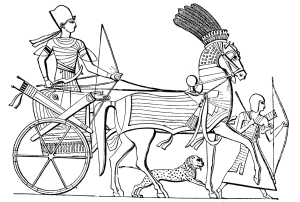
“Some trust in chariots, and some in horses: but we will remember the name of the LORD our God. They are brought down and fallen: but we are risen, and stand upright.” ~ Psalm 20:7-8

Our text is taken from the end of Psalm 20, which some describe as a “battle hymn”. In the psalm, God’s people are getting ready for war and it begins with a prayer for God’s guidance and blessings (Psalm 20:1-3); then it closes with an affirmation of God faithfulness when His people look to Him.

The spirit of the psalm is captured in vs. 7-8, where it declares that though some rely on their human/earthly resources (chariots and horses) for strength, the people of God rely on God for their strength. And those who rely on human/earthly resources will fail, while those that rely on God will be victorious.

To appreciate this verse fully, it is helpful to put ourselves in the place of king David, leading his nation into war. Then, as now, leaders evaluated their war readiness by assessing their relative firepower (number of troops, war machines, arsenal) and technology (iron chariots vs. brass/wooden chariots). War readiness helped determine whether they would fight or seek peace. David, however, saw things differently. To determine war readiness, David considered only one thing: “the name of the Lord our God” (v. 7b).

When thou goest out to battle against thine enemies, and seest horses, and chariots, and a people more than thou, be not afraid of them: for the LORD thy God is with thee, which brought thee up out of the land of Egypt. ~ Deuteronomy 20:1

From David’s approach, we can see that he understood that the skill and might of men were not important: the quality of chariots and the number of horses were insignificant. What would decide the outcome of the battle was whether he was operating in the name, in the authority, of God.

David knew that to go “in the name of the Lord” was to do the will of God. When God sent Moses in His name to free the Hebrews from bondage in Egypt (Exodus 3). The use of God’s name showed that Moses was authentic AND that the mission was guaranteed to succeed; which it did.

Likewise, when David fought Goliath he knew that neither Goliath’s weapons nor Goliath’s size would give Goliath victory because David was the one that came to that battle in the name of God. Victory would not be secured by might or by power (Zechariah 4:6), but by the Sovereign will of The Lord. The only thing that mattered in that battle was which one of them was operating in the will of God to accomplish the work of God; and that was David; so he won.

Then said David to the Philistine, Thou comest to me with a sword, and with a spear, and with a shield: but I come to thee in the name of the LORD of hosts, the God of the armies of Israel, whom thou hast defied. ~ 1 Samuel 17:45

Therefore, as we confront the goliath battles that appear in our personal lives and that face our nation(s), we need to direct our focus away from what mankind is doing and look instead at what God is doing.

For example, when we are afflicted by deadly diseases, like cancer or multiple sclerosis, the solution does not lie in how much healthcare we have access to. No, the solution lies in whether or not God still has a plan for our lives.

If God has a task for us to fulfill, then lack of healthcare can’t stop Him from accomplishing that task through us, in His name. Similarly, if God is ready to call us home, then no amount of healthcare can change the time he has appointed for our departure.

…”Thou comest to me with a sword, and with a spear, and with a shield: but I come to thee in the name of the LORD of hosts”… So David prevailed over the Philistine with a sling and with a stone… but there was no sword in the hand of David. ~ 1 Samuel 17:45, 50

This does not mean that medicine/medical-facilities are unimportant; for God has enabled man to develop the wonderful technology that brings healing to so many. However, it the power of God, not man-made technology (by itself), that sustains our health.

Are not two sparrows sold for a farthing? and one of them shall not fall on the ground without your Father. ~ Matthew 10:29

As another example, consider the response of the citizens of a nation in crisis. Typically, people pin their hopes on a leader or a political party to rescue them from their predicament. The belief is that the correct set of policies and legislation, or that a charismatic figure can lead them to a better future. But legislation, policies or charisma do not uplift nations. What exalts a nation is righteousness!

Righteousness exalteth a nation: but sin is a reproach to any people. ~ Proverbs 14:34

Let us not be blinded, the way to a better future does not come through more military power, better fiscal policy, superior technology, more government or less government. Chariots and horses do not and cannot cause a nation to prevail. Likewise, no leader or political figure of any stripe or type can lead any nation out of a crisis, without God’s enabling.

Put not your trust in princes, nor in the son of man, in whom there is no help. His breath goeth forth, he returneth to his earth; in that very day his thoughts perish. Happy is he that hath the God of Jacob for his help, whose hope is in the LORD his God ~ Psalm 146:3-5

Moreover, leaders who fail to acknowledge God, do so at their own peril (Daniel 4, 5).  Nations succeed because of righteousness: because we, the people of the nation, “remember the name of the Lord our God” (v. 7b) and put our trust in that name.

So shall they fear the name of the LORD from the west, and his glory from the rising of the sun… ~ Isaiah 59:19a

The name of the LORD is a strong tower: the righteous runneth into it, and is safe. ~ Proverbs 18:10

Again, this does not mean governments, big or small, right or left, are necessarily bad. Indeed, God chooses the government each person lives under (Romans 13:1-2) and He instructs us to respect it.

Submit yourselves to every ordinance of man for the Lord’s sake: whether it be to the king, as supreme. ~ 1 Peter 2:13

But, as Believers, we must never put our trust in the strength or abilities of people/things. Like David, all believers must “remember the name of the Lord our God” (v. 7b) and put our trust in Him.

In closing, let us keep in the forefront of our minds that God is aware, and in control, of every tiny detail of life. Indeed, the scripture tells us that Jesus holds every thing in the universe together; including our bodies and our governments and everything else

And He [Jesus] is before all things, and by Him all things consist. ~ Colossians 1:17

Let us, therefore, take our focus off the mechanisms and machinations of men and “remember the name of the Lord our God”, for only He can sustain us through the highs and lows of life. Only He can give us victory over the challenges we face; neither chariots nor horses can help us.

Bookmark and Share

Qualifications for the Kingdom

Bookmark and Share

2And, behold, they brought to him a man sick of the palsy, lying on a bed: and Jesus seeing their faith said unto the sick of the palsy; Son, be of good cheer; thy sins be forgiven thee. 3And, behold, certain of the scribes said within themselves, ‘This man blasphemeth.’ 4And Jesus knowing their thoughts said, Wherefore think ye evil in your hearts? 5For whether is easier, to say, Thy sins be forgiven thee; or to say, Arise, and walk? 6But that ye may know that the Son of man hath power on earth to forgive sins, (then saith he to the sick of the palsy,) Arise, take up thy bed, and go unto thine house. 7And he arose, and departed to his house. 8But when the multitudes saw it, they marvelled, and glorified God, which had given such power unto men. ~ Matthew 9:2-8 (Also in Mark 2:1-12 and Luke 5:17-26)

NOTES

  1. Focus on the Spiritual over the Physical
  2. Focus on Deeds over Declarations
  3. Focus on Salvation over Miracles

CHORDS

A man sick with palsy (i.e., the inability to move or control body movement) was brought to Jesus. With the common people and the religious leaders looking on, Jesus first forgave the palsied man’s sins and then healed him. This encounter establishes three principles.

First, the spiritual state of a person is more important than their physical state because it is their spiritual condition, not their physical condition, that qualifies them for the Kingdom of God. Accordingly, the focus of Jesus’ work is redemption (spiritual) not rehabilitation (physical).

The second principle is that it is our actions, not our declarations, that identify us as belonging to God. How we treat others reveals whether or not we are qualified for the Kingdom of God.

Lastly, misplaced faith produces misplaced expectations. The qualified put their faith in Jesus and expect Salvation. Those who are not qualified for the Kingdom, put their faith in miracles and expect lives of ease. Let us examine these principles in more detail below.

Spiritual vs. Physical: How do you see yourself?

When the man with the palsy was brought to Jesus, the expectation was that Jesus would heal him. Aside from the simple fact of his suffering, prevailing Jewish religious thought/philosophy taught that disease was a sign of sin (John 9:1-3). And, according to Scripture, the sinful are rejected by God. Therefore, according to the religious scholars of Jesus’ day, having the palsy disqualified the sick man from God’s Kingdom. Thus, from the people’s perspective, the only way to help the man was to heal him physically.

“But after that the kindness and love of God our Saviour toward man appeared, Not by works of righteousness which we have done, but according to his mercy he saved us, by the washing of regeneration, and renewing of the Holy Ghost; Which he shed on us abundantly through Jesus Christ our Saviour; That being justified by his grace, we should be made heirs according to the hope of eternal life.” (Titus 3:4-7)

However, Jesus (as he often does) did the unexpected: He forgave the man’s sins first, instead of dealing with his paralysis first. By forgiving the palsied man of his sins, Jesus prioritized the man’s spiritual health over his physical health. Jesus demonstrated that qualification for the Kingdom is based on spiritual state ALONE.

As Jesus explained (and as shown in Paul’s life), physical sickness is not necessarily linked to sin. Our physical state (healthy or sick, rich or poor, thin or fat, red or yellow) neither qualifies nor disqualifies us for entrance into the Kingdom of God: the ONLY thing that matters is our Spiritual state: whether our sins have been forgiven. If God forgives your sin, then you are in.

Indeed, the scribes in particular should have known that the lame had equal standing among the people of God. Speaking through Jeremiah God had specifically included the blind and the lame among those who He would call into fellowship as His people returned from captivity:

Behold, I will bring them from the north country, and gather them from the coasts of the earth, and with them the blind and the lame, the woman with child and her that travaileth with child together: a great company shall return thither. ~ Jeremiah 31:8

The story doesn’t end there, however. Jesus does go on to heal the man of his physical illness. It is clear, therefore, that Jesus DOES care about our physical condition. Jesus takes no pleasure in our physical ailments; He is not untouched by our infirmities (Matthew 8:16-17).

A defective nervous system paralyzed the man’s body and a defective (sinful) nature paralyzed his spirit. However, while his body would only be alive for a few years on earth, his spirit would live eternally, either in Heaven or in hell. Therefore, his spiritual state was infinitely more critical than his physical state. And so, Jesus fixed his spiritual problem, first.

“Surely he hath borne our griefs, and carried our sorrows… In all their affliction he was afflicted… in his love and in his pity he redeemed them; and he bare them, and carried them all the days of old.” (Isaiah 53:4a; 63:9)

Accordingly, God is preoccupied with our spiritual condition; that is why Jesus died on the cross to save us. Illness/disease is a scourge on our lives, but they don’t last forever, and God can still work through physical illnesses to minister to mankind.

And he [the LORD] said unto me, ‘My grace is sufficient for thee: for my strength is made perfect in weakness.’ Most gladly therefore will I rather glory in my infirmities, that the power of Christ may rest upon me. ~ 2 Corinthians 12:9

But spiritual illness, sin-sickness, completely blocks our ability to fellowship with God and serve Him (which is our calling).

Jesus answered and said unto him, Verily, verily, I say unto thee, Except a man be born again, he cannot see the kingdom of God. ~ John 3:3

Because the carnal mind is enmity against God: for it is not subject to the law of God, neither indeed can be. So then they that are in the flesh cannot please God. ~ Romans 8:7-8

The worst that physical sickness can do is to end our life here on earth, but spiritual sickness, uncured, leads to eternal death.

Marvel not at this: for the hour is coming, in the which all that are in the graves shall hear his voice, And shall come forth; they that have done good, unto the resurrection of life; and they that have done evil, unto the resurrection of damnation. ~ John 5:28-29

The questions we must ask therefore are,

  • How do we see ourselves?
  • When we look at ourselves, do we only see our physical needs?
  • Or, do we also see our spiritual needs?
  • Which one (physical or spiritual) do we want God to fix most?
  • Which one keeps us up at night? For which one do we spend most of our time praying for help?
  • Are we preoccupied by our physical state or consumed by our spiritual state?

Deeds vs. Declarations: How do you see your brother?

When Jesus forgave the palsied man of his sins, the scribes (who were part of the religious elite) questioned in their hearts His authority to do so. Jesus, knowing their thoughts asked them: “For whether is easier, to say, Thy sins be forgiven thee; or to say, ‘Arise, and walk?’” (Matt. 9:5).

The religious leaders had great socio-political influence and the common people were generally afraid of upsetting them (John 5:12-16John 9:18-23). They determined who was breaking the (Mosaic) law and who was obeying it. Those who broke the law and those who had certain physical ailments (like blindness (John 9) or palsy) were excommunicated (made social outcasts).

Jesus, however, constantly contended with the religious leaders because they made no effort to uplift the people and reveal to them God’s love, grace and mercy; they never actually tried to help those in need: neither spiritually nor physically.

“Then shall the King say unto them on his right hand, Come, ye blessed of my Father, inherit the kingdom prepared for you… For I was an hungred, and ye gave me meat: I was thirsty, and ye gave me drink: I was a stranger, and ye took me in: Naked, and ye clothed me: I was sick, and ye visited me: I was in prison, and ye came unto me… Verily I say unto you, Inasmuch as ye have done it unto one of the least of these my brethren, ye have done it unto me.” ~ Matthew 25:34-40

But woe unto you, scribes and Pharisees, hypocrites! for ye shut up the kingdom of heaven against men: for ye neither go in yourselves, neither suffer ye them that are entering to go in… Woe unto you, scribes and Pharisees, hypocrites! for ye pay tithe of mint and anise and cummin, and have omitted the weightier matters of the law, judgment, mercy, and faith… Even so ye also outwardly appear righteous unto men, but within ye are full of hypocrisy and iniquity. ~ Matthew 23:13, 23, 28

Therefore, one of the reasons Jesus asked the question (v. 5) was to remind them of how easy it was to just talk about who was a sinner/lawbreaker and who was not. (The other reason was to initiate a legal debate.) Verbal declarations are easy (whether positive or negative); the true challenge was in helping people in spiritual and/or physical need. The scribes had a problem with Jesus forgiving the man’s sins, but what had they done to help him spiritually or physically… Nothing! It’s always easier to talk than walk. They simply ignored people, like the palsied man, in their plight. The religious leaders of Jesus’ day had nothing to offer those in need.

Jesus then did what they wouldn’t and couldn’t do, he helped the palsied man, by healing him miraculously. Indeed, both the power to forgive sins and the power to heal come from God alone.

As it was in Jesus’ day, people around us today are in great need, both spiritually and physically (though the spiritual needs are of far greater importance, the Bible makes it clear thatthe physical needs of our fellow man should never be neglected, e.g., Matthew 25:31-46James 1:27). It is easy for believers to talk about the situation the world is in; hold meetings and conduct talk-shops. But it is our deeds that are really important, not our declarations: “Faith without works is dead” (James 2:26b).
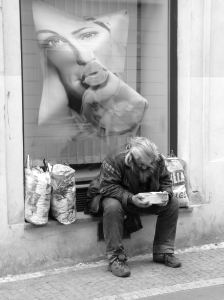
“What doth it profit, my brethren, though a man say he hath faith, and have not works? can faith save him? If a brother or sister be naked, and destitute of daily food, And one of you say unto them, Depart in peace, be ye warmed and filled; notwithstanding ye give them not those things which are needful to the body; what doth it profit? Even so faith, if it hath not works, is dead, being alone.” ~ James 2:14-17

What will we do to help those in need? If the society is in decay, what will you do to stop it? The world grows darker when our (believers) lights grow dimmer. Church attendance is crucial (Hebrews 10:25). However, it is often what we do outside, rather than inside, of church that has the greater impact. Which is easier, to talk and moan about the unsaved, or to live the Gospel for them to see, to speak the Gospel for them to hear and to help them in their needs because of the Gospel?

Jesus did all he could to help the palsied man, both spiritually and physically. Let us do ALL we can do to minister to the needs of people that come our way. The least we can do is, like the palsied man’s friends, carry those in need to Jesus (Mark 2:3). Qualification for the Kingdom is evidenced in deeds, in how we treat others, not just in what we say. Those who are qualified for the Kingdom of God do, those who aren’t qualified, don’t… They just talk.

But whoso hath this world’s good, and seeth his brother have need, and shutteth up his bowels of compassion from him, how dwelleth the love of God in him? My little children, let us not love in word, neither in tongue; but in deed and in truth. ~ 1 John 3:17-18

Therefore, we must ask ourselves the question: How do we see our brothers/sisters? Are our brothers/sisters worth enough to us that we will do whatever we can to meet their spiritual and physical needs? Or, is it enough to just talk about them, to discuss their plight, what they’re doing wrong and what not doing right?

Salvation vs. Miracles: How do you see Jesus?

After confronting the scribes (the religious elite) for their impotence, Jesus distinguished himself from them, and established His deity (v. 6), by healing the palsied man (vv. 6-7). In so doing, Jesus clearly defines the purpose for miracles: “But that ye may know that the Son of man hath power on earth to forgive sins” (Matt. 9:6). The whole purpose of Jesus’ miracles (and all miracles) was to reveal Jesus as SAVIOUR. In other words, miracles were to help those who saw/experienced them to turn to Jesus for Salvation. That means miracles are never to be an end in themselves.

“Wherefore do ye spend money for that which is not bread? and your labour for that which satisfieth not? hearken diligently unto me, and eat ye that which is good, and let your soul delight itself in fatness. Incline your ear, and come unto me: hear, and your soul shall live”~Isa. 55:2-3

To grasp the importance of this concept, consider the reaction of the people to Jesus miracle, “they marvelled, and glorified God, which had given such power unto men” (Matt. 9:8). As awesome as the miracle was, though they glorified God, they still failed to recognize Jesus as Saviour! They still only saw him as a man; a man imbued with great power, but still only a man, not The Saviour. They glorified God, but they failed to recognize (that Jesus is) God. This was the central issue obstructing them from accepting Jesus as their Saviour and Lord: they could see God in the miracles because they had tangible (physical) results, but they did not see God as Jesus because that required faith (spiritual engagement).

This pattern is also repeated elsewhere in the Gospels. For example, after Jesus fed the five thousand He warned his awestruck followers they focused on the wrong message from the miracles:

“Jesus answered them and said, Verily, verily, I say unto you, Ye seek me, not because ye saw the miracles, but because ye did eat of the loaves, and were filled. Labour not for the meat which perisheth, but for that meat which endureth unto everlasting life, which the Son of man shall give unto you: for him hath God the Father sealed.” ~ John 6:26-27

Instead of the miracles showing them Jesus as the source of everlasting Salvation, they only saw Jesus as the source of everlasting food. The rest of John 6 shows that they abandoned Jesus because they were frustrated that He wouldn’t agree to accommodate their fleshly fetish for free food. Jesus wanted them to put their faith in Him and receive salvation by Grace; but they were unable to look past their physical circumstances.

The purpose of the miracles was to identify Jesus as Saviour, but (like most of the people in Judea) most of us miss that point completely. Instead, it is far too easy to see only what Jesus can do for us physically, while being completely unaware/unconcerned about our far greater spiritual needs (for Salvation, for Restoration, for Righteousness).

We often seek miracles to obtain personal relief from medical, emotional or financial problems in our lives or the life of a loved one. However, physical benefit is only a byproduct and not the purpose of miracles. When God performs a miracle, the goal is to transform us spiritually. Indeed, there is a real danger that when God does perform a miracle in our lives that we will stay the same spiritually.

“Bear ye one another’s burdens, and so fulfil the law of Christ.” ~ Galatians 6:2

For all the miracles Jesus performed, the people of Judea still crucified Him! For all the miracles Jesus performed, many Judeans were still lost! If our attention is focused on our problems instead of our Saviour, miracles won’t really help us. If our physical crisis is miraculously solved, but our spiritual crisis is left unattended, then God will have touched our lives, but our souls will not be the better for it.

Finally, the greatest demonstration of Jesus as Saviour, the one that no one can miss/misunderstand/misinterpret, comes from the lives of everyday faithfulness that believers (should) lead as salt of the earth and light of the world (Matthew 5:13-16); as a body of believers that share His love and live in unity.

“A new commandment I give unto you, That ye love one another; as I have loved you, that ye also love one another. By this shall all men know that ye are my disciples, if ye have love one to another.” ~ John 13:34-35

“Neither pray I for these alone, but for them also which shall believe on me through their word; That they all may be one; as thou, Father, art in me, and I in thee, that they also may be one in us: that the world may believe that thou hast sent me. ~ John 17:20-21

There is no ambiguity in the message spoken by love and unity. And Jesus has chosen this way, above miraculous displays, for His disciples to make Him known as Saviour and Lord to a world full of problems.

Those who are qualified for the Kingdom of God look to Jesus and see their Saviour: one to fix/secure their eternal future. Those who are not qualified for the Kingdom only see a miracle worker: one to fix/secure their earthly present.

Therefore, the question is, How do we see Jesus? Is Jesus our Saviour onto eternal life in fellowship with God? Or, Is Jesus a tool to fix problems in this life? When faced with life’s problems what do we want from Jesus? Do we want exercise our faith or ease our flesh? Do we want His “strength to be made perfect” in our “weakness”?

CODA

  • If the spiritual is more important than the physical, how should we spend our time and effort?
  • If what we do is more important than what we say, how should we approach ministry?
  • If (the ongoing work of) Salvation is more important than miracles, which one do we to solve our problems?
Bookmark and Share

Christmas “Unplugged”

“But his delight is in the law of the LORD; and in his law doth he meditate day and night. And he shall be like a tree planted by the rivers of water, that bringeth forth his fruit in his season; his leaf also shall not wither…” ~ Psalm 1:2-3a – – – – – – – – – – – – – “Preach the word; be instant in season, out of season…” ~ 2 Timothy 4:2a

Bookmark and Share

Not Only Christmas Day

Lord, this is my prayer
Not only on Christmas Day
But until I see You face to face
May I live my life this way:

Just like the baby Jesus
I ever hope to be,
Resting in Your loving arms
Trusting in Your sovereignty.

And like the growing Christ child
In wisdom daily learning,
May I ever seek to know You
With my mind and spirit yearning.

Like the Son so faithful
Let me follow in Your light,
Meek and bold, humble and strong
Not afraid to face the night.

Nor cowardly to suffer
And stand for truth alone,
Knowing that Your kingdom
Awaits my going home.

Not afraid to sacrifice
Though great may be the cost,
Mindful how You rescued me
From broken-hearted loss.

Like my risen Savior
The babe, the child, the Son,
May my life forever speak
Of who You are and all You’ve done.

So while this world rejoices
And celebrates Your birth,
I treasure You, the greatest gift
Unequaled in Your worth.

I long to hear the same words
That welcomed home Your Son,
“Come, good and faithful servant,”
Your Master says, “Well done.”

And may heaven welcome others
Who will join me in praise
Because I lived for Jesus Christ
Not just on Christmas Days

by Mary Fairchild

Bookmark and Share

———————————————————————

“Then shall the King say unto them on his right hand, Come, ye blessed of my Father… For I was an hungred, and ye gave me meat: I was thirsty, and ye gave me drink: I was a stranger, and ye took me in: Naked, and ye clothed me: I was sick, and ye visited me: I was in prison, and ye came unto me. Then shall the righteous answer him, saying, Lord, when saw we thee an hungred, and fed thee? or thirsty, and gave thee drink? …a stranger, and took thee in? or naked, and clothed thee? Or when saw we thee sick, or in prison, and came unto thee? And the King shall answer and say unto them, Verily I say unto you, Inasmuch as ye have done it unto one of the least of these my brethren, ye have done it unto me.” ~ Matthew 25:34-40

Bookmark and Share

When He Died

Lights are flashing, people are dashing,
it’s so cold out it would kill a snowman,
Cash register’s ringing, Caroler’s singing,
and a man digs through a trash can.

Everyone’s shopping, nobody’s stopping,
as he holds out the paper cup he’s found,
With holiday cheer, filling the air,
he begs from his seat on the cold ground.

Music is playing, everyone’s saying,
Merry Christmas and oh yes Happy New Year,
Yet all step around, the man on the ground,
pretending there’s no one to see there.

Hungry and cold, broken and old,
With a beard and all dirty they think he’s strange,
Their filled with detest, by his simple request,
can you please help me out with some spare change.

No one would dare, to venture near,
the old man with change to be given,
All stepped aside, as he walked with no pride,
to the alley with the box that he lives in.

By TrueBlu9

Bookmark and Share

Where are you going in this New Year?

Bookmark and Share

“Therefore if any man be in Christ, he is a new creature: old things are passed away; behold, all things are become new.” ~ 2 Corinthians 5:17

“Where have you come from and where do you want to go?” (Genesis 16:7-8), God asked a person who was running away this question. It is my favorite devotional thought as I approach the threshold of a new year.

When you have reflected on an old year and been filled with resolute thoughts about a new year, have you ever had the thought, “I can’t stand another year, or a decade of years, like the years I’ve been having?” If you have, this is a good New Years devotional thought for you.

This question implies that if we do not have a crisis that changes things, we’re headed for more years like the years we’ve been experiencing. The most important change we actually need, therefore, is that we be changed ourselves.

The Bible tells us that when the leopard can change the color of her spots, then we who are accustomed to messing things up are going to start getting it right (Jeremiah 13:23). Though that means we’ll never be able to get things right by ourselves, the good news is that we can meet certain conditions and then be changed by God (John 6:47; Ephesians 2:8-10).

It is possible for God to give us an experience that Jesus called being “born again.” When that happens to us we’re told that we are a new creation. Old things have passed away. All things have become new and all this is done by God – not by us.

So we’re not doomed to go where we have come from, we are not doomed to continue going through life on a negative path, because we can be born again. Moreover, the how question (“How can my life’s direction change?”) is answered in one word; that word is “BELIEVE!”

“Therefore we are buried with him by baptism into death: that like as Christ was raised up from the dead by the glory of the Father, even so we also should walk in newness of life.” ~ Romans 6:4

For God so loved the world, that he gave his only begotten Son, that whosoever believeth in him should not perish, but have everlasting life. For God sent not his Son into the world to condemn the world; but that the world through him might be saved. He that believeth on him is not condemned~ John 3:16-18

Verily, verily, I say unto you, He that heareth my word, and believeth on him that sent me, hath everlasting life, and shall not come into condemnation; but is passed from death unto life. ~ John 5:24

Verily, verily, I say unto you, He that believeth on me hath everlasting life. ~ John 6:47

Adapted from Where are you going in this new year? by Dick Woodward.

Bookmark and Share

The Night Before Christ-mas Redux Remix Reviz


Bookmark and Share


The Night Before Christmas

“And Joseph also went up from Galilee, out of the city of Nazareth, into Judaea, unto the city of David, which is called Bethlehem; (because he was of the house and lineage of David:) To be taxed with Mary his espoused wife, being great with child.” ~ Luke 2:4-5

‘Twas the night before Christmas, and all through the town,
Dear Joseph was searching, walking up roads and down;
And Mary was waiting, so meek and so mild,
While Joseph was seeking a place for the Child.

The children were nestled, each snug in their beds,
The grown-ups wouldn’t bother, there’s no room they said;
When even the innkeeper sent them away,
Joseph was wondering, where they would stay.

He thought of the caves in the side of the hills,
Lets go there said Mary, it’s silent and still;
The moon on the breast of the new fallen snow,
Made pathways of light for their tired feet to go.

And there in a cave, in a cradle of hay,
Our Savior was born on that first Christmas Day!
The Father was watching in heaven above,
He sent for His angels, His couriers of love.

More rapid than eagles God’s bright angels came;
Rejoicing and eager as each heard his name;
Come Power, Come Cherubs, Come Virtues, Come Raphael,
Come Thrones and Dominions, come Michael and Gabriel.

“And she brought forth her firstborn son, and wrapped him in swaddling clothes, and laid him in a manger; because there was no room for them in the inn. And there were in the same country shepherds abiding in the field, keeping watch over their flock by night.” ~ Luke 2:7-8

Now fly to the Earth, where My poor people live,
Announce the glad tiding My Son comes to give;
The Shepherds were watching their flocks on this night,
And saw in the heavens and unearthly light.

The Angels assured them, they’d nothing to fear,
It’s Christmas they said, the Savior is here!
They hastened to find Him, and stood at the door,
Till Mary invited them in to adore.

He was swaddled in bands from His head to His feet,
Never did the Shepherds see a baby so sweet!
He spoke not a word, but the shepherds all knew,
He was telling them secrets and blessing them too.

Then softly they left Him, The Babe in the hay,
And rejoiced with great joy on that first Christmas Day;
Mary heard them exclaim as they walked up the hill,
Glory to God in the Highest, Peace to men of good will!

By: Sister St. Thomas, B.N.D. de N


‘Twas The Night Before Jesus Came

“And, lo, the angel of the Lord came upon them, and the glory of the Lord shone round about them: and they were sore afraid. And the angel said unto them, Fear not: for, behold, I bring you good tidings of great joy, which shall be to all people. For unto you is born this day in the city of David a Saviour, which is Christ the Lord.” ~ Luke 2:9-11

‘Twas the night before Jesus came
And all through the house
Not a creature was praying, not one in the house.
Their Bibles were lain on the shelf without care,
In hopes that Jesus would not come there.

The children were dressing to crawl into bed,
Not once ever kneeling or bowing a head.
And Mom in her rocker with baby on her lap,
Was watching The Late Show while I took a nap.

When out of the East there arose such a clatter,
I sprang to my feet to see what was the matter.
Away to the window I flew like a flash,
Tore open the shutters and threw up the sash!

When what to my wondering eyes should appear
But angels proclaiming that Jesus was here.
With a light like the sun sending forth a bright ray,
I knew in a moment that this must be The Day.

“And this shall be a sign unto you; Ye shall find the babe wrapped in swaddling clothes, lying in a manger. And suddenly there was with the angel a multitude of the heavenly host praising God, and saying, Glory to God in the highest, and on earth peace, good will toward men.” ~ Luke 2:12-14

The light of His face made me cover my head;
It was Jesus! Returning just like he said.
And though I possessed worldly wisdom and wealth,
I cried when I saw Him in spite of myself.

In the Book of Life which He held in His hand
Was written the name of every saved man.
He spoke not a word as He searched for my name,
When He said “It’s not here” my head hung in shame.

The people whose names had been written with love
He gathered to take to His Father above.
With those who were ready He rose without a sound
While all the rest were left standing around.

I fell to my knees, but it was too late;
I had waited too long and thus sealed my fate.
I stood and cried as they rose out of sight;
Oh, if only I had been ready tonight.

In the words of this poem the meaning is clear;
The coming of Jesus is drawing near.
There’s only one life and when comes the last call,
We’ll find that the Bible was true after all!

by Dianne Frances Donenfeld


‘Twas The Night Before Christmas, Not a Sign of Baby Jesus

“…It came to pass, as the angels were gone away from them into heaven, the shepherds said one to another, Let us now go even unto Bethlehem, and see this thing which is come to pass, which the Lord hath made known unto us.” Lk 2:15

‘Twas the night before Christmas
and all through the town
Not a sign of Baby Jesus
was anywhere to be found.

The people were all busy
with Christmas time chores
Like decorating, and baking,
and shopping in stores.

No one sang “Away in a manger,
no crib for a bed”.
Instead, they sang of Santa
dressed-up in bright red.

Mama watched Martha Stewart,
Papa drank beer from a tap.
As hour upon hour
the presents they’d wrap

“And they came with haste, and found Mary, and Joseph, and the babe lying in a manger.” ~ Luke 2:16

When what from the TV
did they suddenly hear?
‘Cept an ad.. which told
of a big sale at Sears.

So away to the mall
they all flew like a flash
Buying things on credit
and others with cash!

And, as they made their way home
From their trip to the mall,
Did they think about Jesus?
Oh, no… not at all.

Their lives were so busy
with their Christmas time things
No time to remember
Christ Jesus, the King.

“And when they had seen it, they made known abroad the saying which was told them concerning this child.” ~ Luke 2:17

There were presents to wrap
and cookies to bake.
How could they stop and remember
who died for their sake?

To pray to the Savior
they had no time to stop.
Because they needed more time
to “Shop til they dropped!”

On Wal-mart! On K-mart!
On Target! On Penney’s!
On Hallmark! On Zales!
A quick lunch at Denny’s

From the big stores downtown
to the stores at the mall
They would dash away, dash away,
and visit them all!

“And the shepherds returned, glorifying and praising God for all the things that they had heard and seen, as it was told unto them.” ~ Luke 2:20

And up on the roof,
there arose such a clatter
As grandpa hung icicle lights
up on his brand new step ladder.

He hung lights that would flash.
He hung lights that would twirl.
Yet, he never once prayed to Jesus…
Light of the World.

Christ’s eyes… how they twinkle!
Christ’s Spirit… how merry!
Christ’s love… how enormous!
All our burdens… He’ll carry!

So instead of being busy,
overworked, and uptight
Let’s put Christ back in
Christmas and enjoy
some good nights!

Author Unknown


Bookmark and Share


Manger Bed: Free Food for Stall

Bookmark and Share

“And she brought forth her firstborn son… and laid him in a manger; because there was no room for them in the inn.” ~ Luke 2:7

As we discussed elsewhere, swaddling clothes give us a nice picture of Jesus’ ministry of salvation and love. Likewise, we can learn some lessons from the manger.

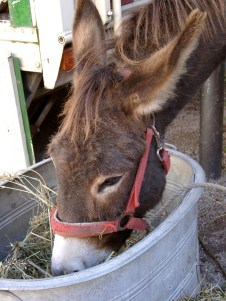
A manger is a feeding trough (a low open container) for animals. A good farmer would keep the manger filled with enough food to nourish the livestock. Likewise, Mary laying Jesus in a manger pictures for us God providing food for His children. In other words, the manger reveals Jesus as the Bread of Life: God’s nourishment for believers

The idea that spiritual food (not physical food) sustains life was then, and is now, quite radical. Indeed, Jesus taught this principle throughout His earthly ministry (Matthew 4:4; 26:26; John 6:24-71), because men and women are eternal souls living in a temporary body in a temporary universe (2 Peter 3:10).

Physical food only sustains our temporary bodies for the few years we live here on earth. It takes spiritual food to give us spiritual strength to “walk in the Spirit” (Galatians 5:16, 25) and to fight spiritual battles with spiritual weapons (2 Corinthians 10:4) against spiritual foes (Ephesians 6:12) as citizens of the spiritual Kingdom of Heaven (John 3:5). Jesus put it this way

“And Jesus said unto them, I am the bread of life: he that cometh to me shall never hunger; and he that believeth on me shall never thirst.” ~ John 6:35

‘Man shall not live by bread alone, but by every word that proceedeth out of the mouth of God.’ ~ Matthew 4:4b

‘Labour not for the meat which perisheth, but for that meat which endureth unto everlasting life, which the Son of man shall give unto you…’

‘And Jesus said unto them, I am the bread of life: he that cometh to me shall never hunger; and he that believeth on me shall never thirst.’

‘This is the bread which cometh down from heaven, that a man may eat thereof, and not die.’

It is the spirit that quickeneth; the flesh profiteth nothing: the words that I speak unto you, they are spirit, and they are life.’ ~ John 6:27a, 35, 50, 63

To experience the abundant life, which Jesus offers us, we must feed on Him: the Word of God (John 1:1-15). Any organism (whether animal, plant or human) that is deprived of food soon degrades, deactivates and dies. Likewise, the Christian who fails to feed on the Word of grows ever weaker, unable to live victoriously for God.

For in him we live, and move, and have our being… ~ Acts 17:28

But the manger pictures even more for us. In Jesus’ day, mangers were primarily found inside stables/barns and were used by domesticated animals inside that stable/barn. Jesus, The Bread of Life, is to be eaten by those living inside God’s stable: the fellowship of believers: the Church. The Word of God is not meant for the unsaved, the undomesticated, those who go their own way and choose their own path in life.

For what man knoweth the things of a man, save the spirit of man which is in him? even so the things of God knoweth no man, but the Spirit of God. Now we have received, not the spirit of the world, but the spirit which is of God; that we might know the things that are freely given to us of God

But the natural man receiveth not the things of the Spirit of God: for they are foolishness unto him: neither can he know them, because they are spiritually discerned… For who hath known the mind of the Lord, that he may instruct him? but we have the mind of Christ. ~ 1 Corinthians 2:11-12, 14, 16

“It is the spirit that quickeneth; the flesh profiteth nothing: the words that I speak unto you, they are spirit, and they are life.” ~ John 6:63

However, this is not because God has rejected the unsaved. Indeed, every believer was at one time unsaved and in enmity with God. Rather, The Word is unavailable to them who reject God, those who have no room for Him.

There was no room for the Saviour in the inn, so He was laid in a manager. If we want the life Jesus offers, then we must make sure that our hearts have room for Him.

As we feast on the special foods this Christmas, let us remember to feast on The Bread of Life: The Word of God: Jesus. Let us not be full physically and empty spiritually, an abundant life is a life of feasting on Jesus.

Moreover, let us who have experienced Jesus, who have had our souls fattened by Him (Psalm 63:5, Isaiah 55:2, Jeremiah 31:14) share the abundance with someone this Christmas.

Challenge a friend, a loved-one to make room for Jesus in their hearts so that they too can feed from the manger in God’s barn.

Wherefore do ye spend money for that which is not bread? and your labour for that which satisfieth not? hearken diligently unto me, and eat ye that which is good, and let your soul delight itself in fatness. ~ Isaiah 55:2

Bookmark and Share

Swaddling Clothes: Gift-Wrapped Love

Bookmark and Share

“And she brought forth her firstborn son, and wrapped him in swaddling clothes…” ~ Luke 2:7a

As we discussed previously, the wrapping of the baby Jesus is swaddling clothes reminds us that He was born to die; that His greatest gift to us was His death on the cross for our sins. Nevertheless, there is still another lesson we can learn from swaddling clothes.

In Jesus’ time, Mothers wrapped (and some still do) their babies is swaddling clothes to restrict the movement of their babies’ limbs1. While no one is exactly sure why mothers swaddled their babies in ancient times, modern research has shown that swaddling (perhaps by mimicking the restriction of experienced in a mother’s womb) comforts the babies, thereby allowing them to rest better/longer than un-swaddled babies1.

For us, this is a beautiful picture of love. A swaddled baby Jesus reminds us of the restriction that our Saviour placed Himself under when He submitted to taking on the form of a man. Our God, The Word, became flesh and dwelt among us (John 1:14) so that He could come teach us with His life, save us with His death, and empower us with His resurrection (Philippians 3:9-10).

“Let this mind be in you, which was also in Christ Jesus: Who, being in the form of God, thought it not robbery to be equal with God: But made himself of no reputation, and took upon him the form of a servant, and was made in the likeness of men: And being found in fashion as a man, he humbled himself, and became obedient unto death, even the death of the cross.” ~ Philippians 2:5-8

“All things are lawful for me, but all things are not expedient: all things are lawful for me, but all things edify not.” ~ 1 Corinthians 10:23

Jesus gave up His Glory to live a restricted life in a human body just because He loved us. Moreover, He confined Himself entirely to the will of the Father all the way to His death on the cross. Therefore, the questions with which must challenge ourselves are,

  • “What are we willing to give up, because we love Him?”
  • “What restrictions are we willing to live under so that we can serve Him?”
  • “Are we willing to live within the confines of God’s will?”

True love of God and true love of our fellowman means we don’t live for ourselves; we don’t live as we wish.

“For whether we be beside ourselves, it is to God: or whether we be sober, it is for your cause. For the love of Christ constraineth us; because we thus judge, that if one died for all, then were all dead: And that he died for all, that they which live should not henceforth live unto themselves, but unto him which died for them, and rose again.” ~ 2 Corinthians 5:13-15

True love means that, like Jesus, our lives are constrained by the Word and the Will of God. We relinquish our freedoms to serve the needs of our brothers and sisters. Yes, Jesus came to set us free; He came to set us free from sin and the curse of death to serve Him with pure hearts and joy-filled lives.

Just as a loving mother restricts her baby’s motion to help it to rest more comfortably, let us allow God to swaddle us with His Word so that we might find true peace. And may God swaddle us with His Will so that we will love and serve our fellowmen, putting their needs ahead of our own.

Bookmark and Share

Swaddling Clothes: Gift-Wrapped Salvation

Bookmark and Share

“And she brought forth her firstborn son, and wrapped him in swaddling clothes…” ~ Luke 2:7a

The Bible is the Word of God and, therefore, everything in it is useful (2 Timothy 3:16-17).  Accordingly, when reading the story of Jesus’ birth one might ask, “What is the significance of ‘swaddling clothes’?” “Why did God add that detail?”  Indeed, none of the other births recorded in Scripture have this detail, which is mentioned twice (Luke 2:7, 12) in Jesus’ case.

The simple fundamental answer is that the swaddling clothes and the manger were useful details for the shepherds to find the baby Jesus (Luke 2:12).  Nevertheless, when we consider the history, the process and the purpose of swaddling it paints a beautifully poignant picture.

Archaeological-historical findings suggest that swaddling was widely practiced at that time; so Mary wasn’t, necessarily, doing something unusual. Curiously, the process of swaddling entails wrapping a body with strips of cloth to restrict movement and it was typically practiced only twice in life: at birth and at death. At birth, babies were swaddled for various reasons including for comforting. While dead bodies were swaddled to keep them in close contact with the herbs and spices, needed to preserve the body from decay.

Therefore, as an object lesson, swaddling can help us to see that Jesus’ ultimate purpose in being born, was to die. Mary’s wrapping of Jesus in swaddling clothes foreshadowed His death on the cross: the price He would willingly pay for our sins.

This Christmas, let us never lose sight of this fact: that Jesus was born to die, so that we who are dead could live. In the exultant celebration of Jesus’ birth, remember that the gift God gave us is Jesus’ death.

Bookmark and Share

Christmas Light

The people that walked in darkness have seen a great light: they that dwell in the land of the shadow of death, upon them hath the light shined… For unto us a child is born, unto us a son is given: and the government shall be upon his shoulder: and his name shall be called Wonderful, Counsellor, The mighty God, The everlasting Father, The Prince of Peace. Of the increase of his government and peace there shall be no end, upon the throne of David, and upon his kingdom, to order it, and to establish it with judgment and with justice from henceforth even for ever… ~ Isaiah 9:2, 6-7a

Christmas First

The world was but a cradle,
When the infant child was born.
Nothing but a manger,
For which to keep him warm.

The angels’ chorus sang,
There was frankincense and myrrh.
But not a sound he made,
This child, with heart so pure.

No mortal man could see,
As the star shone down so bright.
How this small defenseless babe,
Would fill the world with light.

For on that peaceful night,
God sent his only son.
That one day he’d be a man,
Eternal life would come.

So let us now rejoice,
Our souls through him redeemed.
Remember not the presents,
But what Christmas truly means…

By Geoffrey Caldwell

……………………………………………………………………………………………………………………………

‎Now when Jesus was born in Bethlehem of Judaea in the days of Herod the king, behold, there came wise men from the east to Jerusalem, Saying, ‘Where is he that is born King of the Jews? for we have seen his star in the east, and are come to worship him’When they saw the star, they rejoiced with exceeding great joy ~ Matthew 2:1-2,10

………………………………………Gleaming Light

If I have brought a gleam of light
To cheer a darkened day,
If I held out a friendly hand
To help along the way.
Then in these acts of kindness done
It is not me you see,
But glimpses of that Loving One
Who chose to dwell in me.

Found in a Christian Newsletter

……………………………………………………………………………………………………………………………

Ye are the light of the world. ~ Matthew 5:14

The Man with the Palsy | Salvation vs. Miracles: How do you see Jesus?

Bookmark and Share

2And, behold, they brought to him a man sick of the palsy, lying on a bed: and Jesus seeing their faith said unto the sick of the palsy; Son, be of good cheer; thy sins be forgiven thee. 3And, behold, certain of the scribes said within themselves, ‘This man blasphemeth.’ 4And Jesus knowing their thoughts said, Wherefore think ye evil in your hearts? 5For whether is easier, to say, Thy sins be forgiven thee; or to say, Arise, and walk? 6But that ye may know that the Son of man hath power on earth to forgive sins, (then saith he to the sick of the palsy,) Arise, take up thy bed, and go unto thine house. 7And he arose, and departed to his house. 8But when the multitudes saw it, they marvelled, and glorified God, which had given such power unto men. ~ Matthew 9:2-8 (Also in Mark 2:1-12 and Luke 5:17-26)

Qualifications for the Kingdom, Part 3: Salvation vs. Miracles: How do you see Jesus?

After confronting the scribes (the religious elite) for their impotence, Jesus distinguished himself from them, and established His deity (v. 6), by healing the palsied man (vv. 6-7). In so doing, Jesus clearly defines the purpose for miracles: “But that ye may know that the Son of man hath power on earth to forgive sins” (Matt. 9:6). The whole purpose of Jesus’ miracles (and all miracles) was to reveal Jesus as SAVIOUR. In other words, miracles were to help those who saw/experienced them to turn to Jesus for Salvation. That means miracles are never to be an end in themselves.

To grasp the importance of this concept, consider the reaction of the people to Jesus miracle, “they marvelled, and glorified God, which had given such power unto men” (Matt. 9:8). As awesome as the miracle was, though they glorified God, they still failed to recognize Jesus as Saviour! They still only saw him as a man; a man imbued with great power, but still only a man, not The Saviour. They glorified God, but they failed to recognize (that Jesus is) God. This was the central issue obstructing them from accepting Jesus as their Saviour and Lord: they could see God in the miracles because they had tangible (physical) results, but they did not see God as Jesus because that required faith (spiritual engagement).

“Wherefore do ye spend money for that which is not bread? and your labour for that which satisfieth not? hearken diligently unto me, and eat ye that which is good, and let your soul delight itself in fatness. Incline your ear, and come unto me: hear, and your soul shall live” ~ Isaiah 55:2-3a

This pattern is also repeated elsewhere in the Gospels. For example, after Jesus fed the five thousand He warned his awestruck followers they focused on the wrong message from the miracles:

“Jesus answered them and said, Verily, verily, I say unto you, Ye seek me, not because ye saw the miracles, but because ye did eat of the loaves, and were filled. Labour not for the meat which perisheth, but for that meat which endureth unto everlasting life, which the Son of man shall give unto you: for him hath God the Father sealed.” ~ John 6:26-27

Instead of the miracles showing them Jesus as the source of everlasting Salvation, they only saw Jesus as the source of everlasting food. The rest of John 6 shows that they abandoned Jesus because they were frustrated that He wouldn’t agree to accommodate their fleshly fetish for free food. Jesus wanted them to put their faith in Him and receive salvation by Grace; but they were unable to look past their physical circumstances.

The purpose of the miracles was to identify Jesus as Saviour, but (like most of the people in Judea) most of us miss that point completely. Instead, it is far too easy to see only what Jesus can do for us physically, while being completely unaware/unconcerned about our far greater spiritual needs (for Salvation, for Restoration, for Righteousness).

We often seek miracles to obtain personal relief from medical, emotional or financial problems in our lives or the life of a loved one. However, physical benefit is only a byproduct and not the purpose of miracles. When God performs a miracle, the goal is to transform us spiritually. Indeed, there is a real danger that when God does perform a miracle in our lives that we will stay the same spiritually.

For all the miracles Jesus performed, the people of Judea still crucified Him! For all the miracles Jesus performed, many Judeans were still lost! If our attention is focused on our problems instead of our Saviour, miracles won’t really help us. If our physical crisis is miraculously solved, but our spiritual crisis is left unattended, then God will have touched our lives, but our souls will not be the better for it.

“Bear ye one another’s burdens, and so fulfil the law of Christ.” ~ Galatians 6:2

Finally, the greatest demonstration of Jesus as Saviour, the one that no one can miss/misunderstand/misinterpret, comes from the lives of everyday faithfulness that believers (should) lead as salt of the earth and light of the world (Matthew 5:13-16); as a body of believers that share His love and live in unity.

“A new commandment I give unto you, That ye love one another; as I have loved you, that ye also love one another. By this shall all men know that ye are my disciples, if ye have love one to another.” ~ John 13:34-35

“Neither pray I for these alone, but for them also which shall believe on me through their word; That they all may be one; as thou, Father, art in me, and I in thee, that they also may be one in us: that the world may believe that thou hast sent me. ~ John 17:20-21

There is no ambiguity in the message spoken by love and unity. And Jesus has chosen this way, above miraculous displays, for His disciples to make Him known as Saviour and Lord to a world full of problems.

Those who are qualified for the Kingdom of God look to Jesus and see their Saviour: one to fix/secure their eternal future. Those who are not qualified for the Kingdom only see a miracle worker: one to fix/secure their earthly present.

Therefore, the question is, How do we see Jesus? Is Jesus our Saviour onto eternal life in fellowship with God? Or, Is Jesus a tool to fix problems in this life? When faced with life’s problems what do we want from Jesus? Do we want exercise our faith or ease our flesh? Do we want His “strength to be made perfect” in our “weakness”?

——————————————————————————————————————-
This is the 3rd installment in a 3-part series on Qualifications for the Kingdom given in Matthew 9:2-8, Mark 2:1-12 and Luke 5:17-26

Bookmark and Share