Latest Posts

The First Step to Salvation

A pre-requisite for salvation is believing in the Bible as the true Word of God unto us and, therefore, an accurate, untarnished revelation of God’s character and will. Otherwise, the god we choose to believe in would not be the God of the Bible, but the god of our own construct, as we piece together the parts of the Bible we like and discard the parts we do not like.  Similarly, salvation by our self-constructed god would bear no resemblance to salvation defined in the Bible.

“Let Thy mercies come also unto me, O Lord, even Thy salvation, according to Thy word.” ~ Psalm 119:41

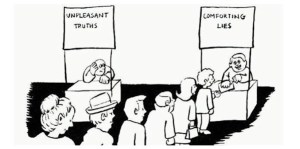
Consequently, the act of faith in accepting the prescription for salvation articulated by God in His Word, must also mean full acceptance of ALL other prescriptions in His Word: Full acceptance of even those truths that we find uncomfortable.

cognitive dissonance

In other words, if I yield my will to God for salvation, then I must also yield my will to Him for everything else. God, by definition, cannot be right about one thing and wrong about another.  Acknowledgment of God’s authority as Deity, cannot be compartmentalized.

Hence, my very cognition is, and must always be, open and subservient to God’s truth and dismissive of any other “truth”, including “truth” of my own invention.

Anything else is both cognitively and spiritually dissonant.

Christians and Politics: A Few Questions to Consider

Given how much governmental/legislative politics influences the lives of people, including Believers, there is often tremendous pressure on getting involved in partisan politics and picking sides. However, in surveying the political scene, a few questions come to mind regarding just how best Christians should navigate the political seas.

1. Planks, Platforms, and Policies

Political parties offer secular solutions for society’s struggles. However, God makes it quite clear in His Word that it is impossible for humans to find the solutions for life’s problems without Him.

“Enter ye in at the strait gate: for wide is the gate, and broad is the way, that leadeth to destruction, and many there be which go in thereat: Because strait is the gate, and narrow is the way, which leadeth unto life, and few there be that find it.” ~ Matthew 7:13-14

The strait gate is Jesus Christ.  The narrow way is God’s way, God’s solutions and God’s prescriptions for life. And that way leads to good results. The broad way is man’s way: man’s solutions and man’s prescriptions for life and it eventually results in destruction.

Highway Exit - Matthew 7:13Moreover, we humans are not equipped to function independently of God: We can’t love without God, for God is love; we can’t do right without God, because righteousness comes from God, we can’t be wise without God, because wisdom only begins when we walk with God in humble reverence.

“O Lord, I know that the way of man is not in himself: it is not in man that walketh to direct his steps.” ~ Jeremiah 10:23

Consequently, in supporting any political party, a Christian is also giving support to a set of manmade policies that are doomed to fail.

QUESTION 1: “Should Christians support any secular political party, which by definition seeks to implement manmade, ungodly, policies leading to the ultimate demise of the society they seek to govern?”


2. Peace, Prosperity, and Panaceas

Perhaps more dangerous than obviously unsuccessful manmade policies, are apparently successful manmade policies. Apparently, successful human solutions give the illusion that mankind has the answers to life: that we can provide our own salvation: that we do not need God.cross 1

In other words, the danger for Believers is that in supporting a particular political party, we (unintentionally?) send the message that success, happiness, even salvation can be found in manmade ideas.  In Scripture we see this warning:

“Woe to them that are at ease in Zion, and trust in the mountain of Samaria, which are named chief of the nations, to whom the house of Israel came!
…Ye that put far away the evil day, and cause the seat of violence to come near; that lie upon beds of ivory, and stretch themselves upon their couches, and eat the lambs out of the flock, and the calves out of the midst of the stall;” Amos 6:1, 3-4

The people in Zion (in Judah, the southern kingdom), had come to trust in the governing practices of Israel (the mount of Samaria) because of their economic success (as described in the books of Hosea and Amos).

In other words, they looked away from mount Zion where The Temple (and God’s mercy seat) was, and looked instead towards mount Samaria, the seat of government, which had instructed its people to worship idols it created for their salvation (1 Kings 12). God’s solutions in His Word was usurped by manmade solutions because of the apparent economic success and security of Israel.

QUESTION 2: “By supporting a political party, do Christians risk diminishing the message of (true) salvation in Jesus Christ alone?”

3. Perception, Perplexity, and Pontification

No political party has a monopoly on virtue; no political party has a monopoly sin. Consequently, it is typical that each political party, either in policy or practice, supports something clearly wrong or ignores something clearly right. (Note, this is not to say all political parties are necessarily “equally” evil.) Often Christians are called on to choose between the evils in one party versus the evils in another. However, the Bible teaches clearly that ALL evils/sins are the same. Consider the following teaching of Jesus:

“There were present at that season some that told him of the Galilaeans, whose blood Pilate had mingled with their sacrifices. And Jesus answering said unto them, “Suppose ye that these Galilaeans were sinners above all the Galilaeans, because they suffered such things?
“I tell you, Nay: but, except ye repent, ye shall all likewise perish.
“Or those eighteen, upon whom the tower in Siloam fell, and slew them, think ye that they were sinners above all men that dwelt in Jerusalem?
“I tell you, Nay: but, except ye repent, ye shall all likewise perish.” ~ Luke 13:1-5

choosing lesser of two evilsJesus makes it clear that the size or the egregiousness of the sin is not the issue. Rather the only thing that matters is repentance. Therefore, it is inconsistent with Jesus’ teaching to choose any political party based on the relative size of its sins versus another political party. It matters not whether a political party is on the right side of any issue. Rather the issue, the ONLY issue, that matters is whether the political party adopts and advocates repentance. But this is not usually a policy of any (modern?) political party.

It is possible to repent, to receive God’s salvation in Jesus Christ, and still be wrong on any number of issues. While Jesus works in our hearts to sanctify/perfect us, washing us with the Word of Truth, we still make mistakes and hold misconceptions: e.g., Paul was wrong about John Mark (Acts 15:36-39 and 2 Timothy 4:11), Peter was wrong about the Mosaic Law (Galatians 2:11-21).

It is possible to be saved and be on the wrong side of many issues, BUT remain saved.

It is also possible to be unsaved and be on the right side of many issues, BUT remain condemned.

Salvation is infinitely more important than political/ideological orthodoxy.

QUESTION 3a: “In supporting one political party over another because of its stance on a favorite issue, are we effectively saying one sin matters more than another?”
QUESTION 3b: “Is right thinking on an issue is more important than repentance for a life?”
QUESTION 3c: “If repentance/salvation is infinitely more important than orthodoxy, shouldn’t we spend infinitely more time preaching repentance/salvation than preaching orthodoxy?”

4. Putrefaction, Petrifaction, and Purulence

God does not change (James 1:17). However, man and manmade institutions change quite a bit. Those who are saved are being changed into the very image of Christ Jesus (1 Corinthians 15:49, 2 Corinthians 3:18). And those who are not saved are deteriorating, degrading into the image of satan (Revelation 19:20).flower-1042490_1920

Man does not stand still.

Accordingly, unconverted men and their secular institutions, without the sustaining power of Christ, degrade and fail.

“It is better to trust in the Lord than to put confidence in man.
It is better to trust in the Lord than to put confidence in princes.” ~ Psalm 118:8-9

Eventually, the political party one supports will degrade. Eventually, it will become more and more difficult to find sufficient rationale to support it, beyond tradition or that it appears the least of the available evils (i.e., “at least it’s better than _____”).

But [Jesus] answered and said, “Every plant, which my heavenly Father hath not planted, shall be rooted up.” ~ Matthew 15:13

Perhaps, like Daniel, if only evil choices are available one should refrain from choosing at all (see Daniel 1). Daniel and his friends rejected ALL of the food offered; requesting vegetables (pulse) instead.

Let us be clear, there is NO Biblical imperative for direct (partisan) political involvement of any kind. Rather, the Bible encourages us to PRAY (to God) for leaders in government (1 Timothy 2:1-6). That is, the Bible directs us to exclusively put our trust in The One Who cannot change: The One Who will never fail us: The One Who is good and is good ALL the time.

QUESTION 4: “Why should a Believer invest any hope in a political party that will eventually degrade and fail?”

Phinally, Phinale, and Phinish

If political parties were full of Godly men, we would have prayer meetings rather than elections. Candidates would be seeking to serve rather than to rule. Solutions would come from Bible studies rather than think-tanks.

"Thy kingdom come, Thy will be done in earth, as it is in heaven." ~Matthew 6:10

“Thy kingdom come, Thy will be done in earth, as it is in heaven.” ~Matthew 6:10

Any political party devoted to God rather than men would spend much more effort campaigning for God’s power than earthly power.

Perhaps Christians should spend more time and effort setting just that example.  This is more than just choosing to vote or not to vote; it is more that choosing who to vote for:  as Believers we must carefully consider our allegiances and our mindset towards political parties/issues.

We must realize that our lives and our well-being do not depend on political parties and/or political figures.  We must look to Christ for everything and nothing matters without Christ.  God alone is good.  Therefore, there is no good without God.  Let us put our trust, our hope, in Him alone.

“Some trust in chariots, and some in horses: but we will remember The Name of the Lord our God.” ~ Psalm 20:7

There is no love without God

“He that loveth not knoweth not God; for God is love.” ~ 1 John 4:8


If God is love, then to be Godless is to also be loveless. If God is love, then wherever God is rejected, love is rejected as well.

Accordingly, a Godless society must also be a loveless society. And a loveless society will feed on itself.

► Members of a loveless society cannot trust others, cannot give the “benefit of the doubt”.
► Members of a loveless society cannot empathize with the sufferings of others.
► Members of a loveless society can’t spare the time or energy to reach out to or learn to love those who are different: different in thinking, different in politics, different in culture, different in race/ethnicity.

If God is love, then there is no love without God.

As the society we live in continues to divest itself of God, both formally (legally) and informally (culturally), we can expect to see more hate, more acts of hate, and more fruits of hate.

“If a man say, ‘I love God’, and hateth his brother, he is a liar… And this commandment have we from Him, That he who loveth God love his brother also.” ~ 1 John 4:20a, 21

Believers cannot afford to be “members” of a Godless and loveless society. Rather, Believers must live true to the reality of their calling, which is to be members of the Body of Christ and citizens of God’s Kingdom of Heaven.

Those who claim to know God are called to demonstrate God’s love to ALL, not just to the “members of our tribe”. If God lives within us, then God’s love also lives within us and, like a cup running over, it must overflow from us unto ALL those around us.

► We can’t love our brother and speak evil of him.
► We can’t love our brother and ignore him.
► We can’t love our brother and never tell him about Jesus Christ.
► We can’t love our brother and curse him.
► We can’t love our brother and not welcome him.
► We can’t love our brother and fear him.


“There is no fear in love; but perfect love casteth out fear: because fear hath torment. He that feareth is not made perfect in love.” ~ 1 John 4:18

VESTED with VALUE | All Lives Matter

It is God and not men that impute value to human life. And, in God’s eyes, ALL lives matter.  Whether you value my life or not, God does.

How anyone (even me) values my life does NOT change my intrinsic God-derived value.

“For God so loved the world, that he gave his only begotten Son, that whosoever believeth in him should not perish, but have everlasting life.” ~ John 3:16

In the end, what really matters is whether we value our lives and the lives of others the way God does.

If I value life the way God does, then I won’t shoot/kill anyone unjustly.

If I value life the way God does, I ALSO won’t take advantage of anyone;

I ALSO won’t cheat anyone;

I ALSO won’t use anyone for sexual pleasure;

I ALSO won’t ignore anyone as if they don’t exist;

I ALSO won’t close my heart to my brother’s needs;

I ALSO won’t abuse my fellow humans with words or with deeds.

“My little children, let us not love in word, neither in tongue; but in deed and in truth.” ~ 1 John 3:18

If I value life the way God does, I will help those whom I can;

I will be fair;

I will take the time and effort needed to get to know my neighbor;

I will tell every one of God’s love and be a channel through which His love can flow unhindered to ALL men.

“No man hath seen God at any time. If we love one another, God dwelleth in us, and His love is perfected in us.” ~ 1 John 4:12

Murder is perhaps the starkest way in which we can demonstrate our disregard for the life of another human being. But, it’s not the ONLY way.

Real Knowledge Produces Real Humility

“Yet Michael the archangel, when contending with the devil he disputed about the body of Moses, durst not bring against him a railing accusation, but said, ‘The Lord rebuke thee.’
But these speak evil of those things which they know not: but what they know naturally, as brute beasts, in those things they corrupt themselves.” ~ Jude 1:9-10

The warnings against false teachers continue. In this segment, the focus is placed squarely on authority and knowledge. Specifically, the text contrasts real authority based on real knowledge, versus false authority based on false knowledge.

WAR IN THE HEAVENLIES | “…The Lord rebuke thee.”

Upon Moses’ death, the devil tried to take Moses’ body for reasons not made clear to us. God dispatched the archangel, Michael, to secure Moses’ body and a dispute with the devil resulted. The key here is Michael’s approach. As an archangel, God imbued Michael with both great power and great authority. How would Michael go about using his authority in his battle with the devil? Michael, we are told subdued his own authority, relying on The Lord’s authority instead. In other words, Michael magnified Jesus instead of himself, even though he had the occasion to demonstrate his power and importance. When challenging the devil, it was more important to Michael to look to Christ Jesus rather than to himself.

bible study group-3

Crucially, our text leaves out many details. And the reason for doing so is twofold. The first is simply to keep our focus on the main message of choosing humility over hubris.

The second reason for the lack of detail is to emphasize our own lack of knowledge. Nowhere else in Scripture gives us any insight on the details surrounding Jude 1:9. We don’t know why there was a battle over Moses’ body; we don’t know why God sent Michael; we don’t know when it happened or how long the dispute lasted. And since the details are not afforded us, we should avoid speculation (if the details were important for our spiritual growth, God would have provided them for us).

What is crystal clear, however, is how little we do know about the details of the spiritual warfare going on around us. We don’t know, BUT Michael did know. And BECAUSE of his knowledge, he depended on Christ rather than on himself.

WAR IN THE CHURCHES | “But these speak evil of those things which they know not…”

False teachers often claim “secret”/“superior” knowledge. This strategy is an old one, rearing its ugly head as far back as with the Gnostics who gained influence in the church within just a few decades of Christ’s ascension. And they might not have even been the first ones. Scripture warns against those who claim “special knowledge” that changes the gospel message presented in Scripture:

“I marvel that ye are so soon removed from Him that called you into the grace of Christ unto another gospel: Which is not another; but there be some that trouble you, and would pervert the gospel of Christ.
But though we, or an angel from heaven, preach any other gospel unto you than that which we have preached unto you, let him be accursed.
As we said before, so say I now again, if any man preach any other gospel unto you than that ye have received, let him be accursed.” ~ Galatians 1:6-9

“Now I beseech you, brethren, mark them which cause divisions and offences contrary to the doctrine which ye have learned; and avoid them.
For they that are such serve not our Lord Jesus Christ, but their own belly; and by good words and fair speeches deceive the hearts of the simple.” ~ Romans 16:17-18

Jesus foresaw the problem that those who claim “special” knowledge would cause in the church. Accordingly, He makes it clear (Matthew 23:5-8) that ALL Believers have equal access to the truth and we are all on the same level, no one has authority over another; no one is superior to another. No Believer has knowledge that isn’t equally available to every other Believer.

“But all their works they do for to be seen of men: they make broad their phylacteries, and enlarge the borders of their garments, And love the uppermost rooms at feasts, and the chief seats in the synagogues, and greetings in the markets, and to be called of men, Rabbi, Rabbi.
But be not ye called Rabbi: for one is your Master, even Christ; and all ye are brethren.” ~ Matthew 23:5-8

bible study group-2

No disciple can truthfully make any claim that by scholarship, or otherwise, he has elevated his knowledge beyond the reach of lesser disciples. The understanding of God’s Word, therefore, is solely due to the agency of The Holy Spirit. And, God’s Word is sufficient: no additional revelations are necessary.

No disciple is master over another. Rather, Christ is Master over us all.

Despite the teachings of Scripture, however, this error remains a major problem in the Church, from major organizations like the LDS (Mormons) to local congregations where the word of the pastor/bishop supersedes the teaching of Scripture.

How many times have we heard the special revelation “God told me…” followed by something that goes against the teachings of The Bible?

False teachers leverage their supposed special revelation/knowledge into authority: making themselves superior to the unenlightened. Since they have special revelation/knowledge it is easy to argue that they are most suited to lead/direct those who don’t. Unlike the archangel Michael, special revelation/knowledge leads to pride rather than humility; special revelation/knowledge leads to self-glorification rather than glorifying Christ.

Notice that since Scripture tells us that knowledge is available to ALL Believers, then any so-called special revelation/knowledge must be false; or in the words of Jude “…these speak evil of those things which they know not…”. God’s revealed truth is available to all disciples in His Word, The Bible.

bible study group-4

We must fight to maintain God’s truth in our local congregations. We must oppose those who would claim to have knowledge and authority beyond that which is given to us in the Bible.

The archangel, Michael’s approach contrasts with that of false teachers. His knowledge led to humility: he yielded his authority to Christ. The knowledge claimed by false teachers leads to pride: they grab authority that is not theirs to have.

WAR IN THE ‘FLESHLIES’ | “…but what they know naturally, as brute beasts, in those things they corrupt themselves.”

The last clause in our text highlights the hallmark of false teachers: corruption. False teachers do not serve Christ, they serve themselves and therefore corruption is always the eventual result of their ministry.

“For he that soweth to his flesh shall of the flesh reap corruption; but he that soweth to the Spirit shall of the Spirit reap life everlasting.” ~ Galatians 6:8

Things that are known naturally instead of spiritually are things of the flesh: our lusts. Having sown to their flesh, false teachers are eventually corrupted by their flesh and their ministries eventually demonstrate that corruption in the form of sexual sins, financial improprieties, power struggles (including nepotism) and so on. Just as brute beasts are subject to their appetites, so false teachers are eventually enslaved to theirs.

CLOSING THOUGHTS

As much as Jude condemns false teachers, the real indictment is against those of us who allow them to flourish because we are too lazy to fight, too lazy to learn the scriptures, too comfortable with the status quo. bible study groupThere are no false teachers where there aren’t also lazy Christians. The Berean Believers were commended because they checked the scriptures to make sure that what Paul was preaching to them was indeed true: they were not lazy: they were dedicated servants of our Lord Jesus Christ. We should be careful to follow their example.

“And the brethren immediately sent away Paul and Silas by night unto Berea… These were more noble… in that they received the word with all readiness of mind, and searched the scriptures daily, whether those things were so.” ~ Acts 17:10-11

Mission to the Masses: Feeding Sheep or Amusing Goats?

“…Jesus saith unto him, Feed my sheep.” ~ John 21:17b

“Preach the word; be instant in season, out of season; reprove, rebuke, exhort, with all longsuffering and doctrine.” ~ 2 Timothy 4:2

An evil is in the professed camp of the Lord, so gross in its impudence that the most shortsighted can hardly fail to notice it. During the past few years, it has developed at an abnormal rate, even for evil. It has worked like leaven until the whole lump ferments. The devil has seldom done a cleverer thing than hinting to the church that part of their mission is to provide entertainment for the people, with a view to winning them.

From speaking out as the Puritans did, the church has gradually toned down her testimony, then winked at and excused the frivolities of the day. Then she tolerated them in her borders. Now she has adopted them under the plea of reaching the masses.

Edify or Entertain?

My first contention is that providing amusement for the people is nowhere spoken of in the Scriptures as a function of the church. If it is a Christian work why did not Christ speak of it? Go into all the world and preach the good news to all creation (Matthew 28:18-20, Mark 16:15-16). That is clear enough. So it would have been if He had added. “And provide amusement for those who do not relish the gospel.” No such words, however, are to be found. It did not seem to occur to Him.

Then again, it was He who gave some to be apostles, some to be prophets, some to be evangelists, and some to be pastors and teachers, to prepare God’s people for works of service; so that the body of Christ might be built up….  Where do entertainers come in? The Holy Spirit is silent concerning them. Were the prophets persecuted because they amused the people, or because they refused? The concert has no martyr roll.

“And He gave some, apostles; and some, prophets; and some, evangelists; and some, pastors and teachers; For the perfecting of the saints, for the work of the ministry, for the edifying of the body of Christ:” ~ Ephesians 4:11-12

walking-690734_1920

Christ or Culture?

Again, providing amusement is in direct antagonism to the teaching and life of Christ and all His apostles. What was the attitude of the church to the world? “You are the salt of the earth…” not the sugar candy—something the world will spit out, not swallow (Matthew 5:13). Short and sharp was the utterance, “Let the dead bury their own dead…” (Matthew 8:22). He was in awful earnestness!

Had Christ introduced more of the bright and pleasant elements into His mission, He would have been more popular.  When they [turned] back, because of the searching nature of His teaching (e.g., John 6), I do not hear Him say, “Run after these people, Peter, and tell them we will have a different style of service tomorrow, something short and attractive, with little preaching. We will have a pleasant evening for the people. Tell them they will be sure to enjoy it. Be quick, Peter, we must get the people somehow!”

Jesus pitied sinners, sighed and wept over them, but never sought to amuse them. In vain will the Epistles be searched to find any trace of the gospel of amusement. Their message is, “Come out, keep out, keep clean out.” Anything approaching fooling is conspicuous by its absence. They had boundless confidence in the gospel and employed no other weapon (2 Corinthians 10:4).

street-performers-870119_1920

After Peter and John were locked up for preaching (Acts 4:1-22), the church had a prayer meeting (Acts 4:23-31), but they did not pray “Lord grant unto thy servants that by a wise and discriminating use of innocent recreation we may show these people how happy we are.” If they ceased not for preaching Christ, they had not time for arranging entertainment. Scattered by persecution, they went everywhere preaching the gospel. They turned the world upside down (Acts 17:6). That is the only difference!

Lord, clear the church of all the rot and rubbish the devil has imposed on her! And bring us back to apostolic methods.

“And the servant of the Lord must not strive; but be gentle unto all men, apt to teach, patient, in meekness instructing those that oppose themselves; if God peradventure will give them repentance to the acknowledging of the truth; and that they may recover themselves out of the snare of the devil, who are taken captive by him at his will.” ~ 2 Timothy 2:24-26

Effectual or Ephemeral?

Lastly, the mission of amusements fails to effect the end desired. It works havoc among young converts.

Let the careless and scoffers, who thank God because the church met them halfway, speak and testify.

Let the heavy laden who found peace through the concert not keep silent!

Let the drunkard to whom the dramatic entertainment had been God’s link in the chain of their conversion, stand up!

There are none to answer. The mission of amusement produces no converts.

The need of the hour for today’s ministry is believing scholarship joined with earnest spirituality, the one springing from the other as fruit from the root. The need is Biblical doctrine, so understood and felt, that it sets men on fire.

“So then faith cometh by hearing, and hearing by the word of God.” ~ Romans 10:17

by Charles Haddon Spurgeon

Sources

  1. The Cross Is All We Need
  2. Faith Bible Church
  3. Bible Bulletin Board

Gleanings from The Garden of Gethsemane

“…My soul is exceeding sorrowful unto death…” ~ Mark 14:34b

Jesus Christ did not approach the cross lightly. It was for Him a massive undertaking, which brought Him intense sorrow. The anticipation of what He soon had to face, was almost overwhelming.

To get the enormity of the sacrifice on the cross to purchase our redemption, consider this:
Jesus Christ is the one which holds the universe together,

“And He is before all things, and by Him all things consist.” ~ Colossians 1:17

And the universe was created by Him and for Him:

“For by Him were all things created, that are in heaven, and that are in earth, visible and invisible, whether they be thrones, or dominions, or principalities, or powers: all things were created by Him, and for Him:” ~ Colossians 1:16

Bearing our sins on the Cross was such a burden that the Creator and Sustainer of the entire (physical AND spiritual) universe was almost overwhelmed.

Grace is NOT cheap. Therefore, hollow Believism denigrates the great sacrifice Jesus Christ made for us.

“For ye are bought with a price: therefore glorify God in your body, and in your spirit, which are God’s.” ~ 1 Corinthians 6:20

Belief is nothing, unless that belief also transforms our hearts and minds and, thereby, our actions.

“Thou believest that there is one God; thou doest well: the devils also believe, and tremble.” ~ James 2:19

The price Jesus paid to redeem us is too great for salvation to be limited to a mindless agreement without a conscious commitment.


“…tarry ye here, and watch.”~ Mark 14:34c

This clearly exemplifies Jesus’ humanity. In His “hour of need”, at this very low point in His life, He sought human support: He wanted His closest friends to be there with Him. He was not self-sufficient as Deity, He was “needy” as humanity. Jesus shows us that He had emotional needs just like we do.

“So they sat down with [Job] upon the ground seven days and seven nights, and none spake a word unto him: for they saw that his grief was very great.” ~ Job 2:13

For we have not an high priest which cannot be touched with the feeling of our infirmities; but was in all points tempted like as we are, yet without sin.
Let us therefore come boldly unto the throne of grace, that we may obtain mercy, and find grace to help in time of need.” ~ Hebrews 4:15-16

Next time you feel down, saddened and stressed by the pressures of life. Remember Jesus felt it too… and He “tarry” with you, He will stay with you, He will comfort you through your gloom into His light.


“…nevertheless not what I will, but what Thou wilt” ~ Mark 14:36b

This is the attitude to which we must all aspire: The attitude of “The Son” who sought not His own will but the will of His Father.

This is, likely, the major stumbling block for many Believers. We are often so consumed with fulfilling our own wills that we are quite unaware, even unconcerned, about the Father’s will.

Conversely, Jesus Christ, from the beginning to the end, subjected His will to The Father’s will. He woke up with His Father’s will on His mind and fell asleep with it on His mind. For Him, to live was to walk in The Father’s perfect will and not in His own will.

“I can of mine own self do nothing: as I hear, I judge: and my judgment is just; because I seek not mine own will, but the will of the Father which hath sent me.” ~ John 5:30

We, Believers, are also challenged to be about our Father’s business rather than our own business:

“Not every one that saith unto me, Lord, Lord, shall enter into the kingdom of heaven; but he that doeth the will of my Father which is in heaven.” ~ Matthew 7:21


“Watch ye and pray, lest ye enter into temptation. The spirit truly is ready, but the flesh is weak.” ~ Mark 14:38

Succinctly, Jesus Christ illustrates that the flesh is the Believer’s constant challenge. He declared that, spiritually, His disciples were fine: “ready”. The hindrance they faced was not their spirit; it was their flesh.

Because of the flesh, the disciples missed out on one of Jesus’ greatest triumphs: His triumph over His own will in order to yield to the Father’s will. They missed out on the perfect example of how Jesus, in His humanity, could still triumph over sin (i.e., rejection of God’s will), even when facing great agony.

It is our flesh that so often denies us our spiritual triumphs.

We simply fall asleep when it is time to watch. We get distracted by physical needs even in the middle of spiritual battles.

If we were to watch and pray as we ought, how many more battles would we have won over the flesh/sin?

To gain victory over us, the flesh itself (or through satan’s influence) lulls us to sleep before luring us away: just like drugging the guards of a city before then overtaking and capturing it.

Nevertheless, God’s will was accomplished in spite of the fleshly weakness of Jesus’ disciples. And that is a great comfort, not to encourage our weakness, but that Jesus Christ does not hold our weaknesses against us. Always, encouraging us to join Him on the battlefield, despite the numerous times we have fallen down/asleep on it.

We must though accept the challenge to “watch and pray”: to have mastery over our flesh so that we don’t stumble so much.

“But I keep under my body, and bring it into subjection: lest that by any means, when I have preached to others, I myself should be a castaway.” ~ 1 Corinthians 9:27


“Rise up, let us go; lo, he that betrayeth me is at hand.” ~ Mark 14:42

Ultimately, we must get up and join the “fight”, we must step into the arena. We must join the battle against “principalities and powers”. We must face the enemy.

And Jesus made sure His disciples were prepared, that they got up (awakened) before the enemy came upon them.

Like the disciple must wake up and face the betrayer(s): those who would take Christ captive and seek to banish Him from view. To expunge His influence, to erase His message.

And the enemy often comes in the form of a “brother”, just like Judas. The enemy greets us with a kiss of “friendship” while scheming to put us in bondage to the world and its priests of the profane.

“For there are certain men crept in unawares, who were before of old ordained to this condemnation, ungodly men, turning the grace of our God into lasciviousness, and denying the only Lord God, and our Lord Jesus Christ.” ~ Jude 1:4

We, “the church” must resist the temptation to fall asleep, and then to sleep so soundly that we become unresponsive to Jesus’ prodding to “Rise up…”.

The Temptation of Jesus | Learning how to fight back under satan’s attack

“And Jesus, when he was baptized, went up straightaway out of the water: and lo, the heavens were opened unto him, and he saw the Spirit of God descending like a dove, and lighting on him: and lo a voice from heaven, saying, This is my beloved Son, in whom I am well pleased.”  ~ Matthew 3:16-17

This is a familiar scene to anyone who knows the Gospel, the baptizing and official start of Jesus time of ministry here on earth.  Surely the event itself would have been amazing to witness.  But, perhaps even more dramatic is the scene that unfolds immediately afterward.

“Then was Jesus led of the spirit into the wilderness to be tempted of the devil.”  ~ Matthew 4:1

No, in our earthly minds we would assume that, filled with the Spirit of God, Jesus would use this opportunity to launch into a powerful evangelical message, or perhaps perform some miracles.  The Jews of his day assumed he would storm the armies of Rome in a triumphant victory against earthly rulers.  Surely, Jesus could, at least, have started gathering some disciples, maybe amongst those who were witnesses to his baptism.

desert-scenics-land-725x483

If it were up to us, that would have been how the story unfolded; but that is not how God works.  While He stays always true to His nature and His promises, He also always manages to act in ways we could never anticipate.  Which is at is should be, if we want a true God to serve.  If you find yourself becoming more imaginative than your god, then you need to find a bigger god.

So, immediately after his baptism, the Spirit led Jesus into the wilderness.  There are many writings on the purpose of this, and I will not venture to repeat them.  But let me pose this: prior to his baptism, Jesus was a carpenter.  He was a member of a Jewish household with an occupation and a roof over His head.  But now he was about to become a traveling rabbi, with “no place to lay his head” (Matthew 8:20).

Anyone who has ever taken more than a short walk through the neighborhood knows that there are physical demands to roughing it on the road.  There were no tour buses in His time, no public transportation.  His vehicle was the body his heavenly Father had given Him. The wilderness was a harsh contrast to his earthly life till then, but it would have been a powerful teacher. Aside from the spiritual implications, it is entirely reasonable that Jesus simply needed some experience of physical endurance to prepare him for what his ministry would entail.

Thorn_Tree_Sossusvlei_Namib_Desert_Namibia_Luca_Galuzzi_2004a

“And when he had fasted forty days and forty nights, he was afterward an hungered.”  ~ Matthew 4:2

Let’s take a moment to appreciate how long 40 days really is.  When is the last time you waited for anything for 40 days?  How about for 4 days?  40 minutes?  There was really quite a long time where Jesus wandered in the wilderness, sustained and protected by His Father.  Long enough to feel secure in His communion with the Father.  Long enough to get bored.  Long enough to be eager to move into the ministry that was beckoning Him.

“And when the tempter came to him….”  ~ Matthew 4:3a

Only now, when the flush of excitement from the baptism is long worn off, when whatever temporal sense of commitment and resolution has faded, when all defenses have had time to slack off and become drowsy, when the body starts to demand care and there is no end in sight, this is when Satan begins the temptation.  We need to remember this; because it is a pattern we can expect from Satan.  He is crafty and without shame; he will wait for the time when we are most vulnerable to strike.

“…he said, If thou be the Son of God, command that these stones be made bread.” ~ Matthew 4:3b

night in the desert

Satan starts with his first and oldest trick – and his most reliable.  His first goal is always to question the Word of God, to try to paint God as the liar and himself as the speaker of truth.  In the Garden, the words were slightly different: “Hath God said, Ye shall not eat of every tree of the garden?”  The lie there is blatant, but the real hook there is in the question.  “Hath God said…?”  Are you SURE you heard God correctly?  Are you sure you heard Him at all?  Are you sure you can believe what He said?

The first Adam fell to this trick.  So Satan volleys it at the second Adam.

Where is the lie here in the wilderness?  It goes back to the chapter before.  Just three short verses ago God had declared “This is my beloved Son, in whom I am well pleased.”  A more clear and direct statement, issued from heaven itself, could not have been stated.  But here is the enemy, contradicting.  He does not say “Since you are the Son of God….”  He is questioning Jesus’ identity, which the Father had so recently declared.  Jesus’ hungry body, in its weakened state, was a vehicle for temptation: but what is at stake here is not bread, but the Bread of Life.

Arid desert landscape

Satan is not challenging Jesus to use His powers of creation to feed Himself.  As inappropriate as that would have been, that’s a superficial concern.  He is challenging Jesus to justify Himself, to openly question His Father’s words by using His own power to verify the Words of God.  He is asking Jesus to add to the Words of God by His own cleverness.

But Jesus doesn’t fall for it.

“But he answered and said, It is written, Man shall not live by bread alone, but by every word that proceedeth from the mouth of God.”  ~ Matthew 4:3

Do you see what Jesus did here?  He answered the challenge against the veracity of the Word of God with…..the Word of God.  He calls to nothing within Himself.  He justifies nothing.  He argues nothing.  He simply and clearly states the words of His Father.  That those words address the correct spiritual principle here—prioritizing the spiritual above the physical—is brilliant.  The fact that He replies with Scripture is crucial.

With those words, Jesus undid the fall in Eden.  The second Adam replied as the first should have done.  Millennia of sin and corruption was turned deftly aside with the ease and authority that the first Adam could have utilized.

desert-27

With those words, satan’s string of victories over the human heart shattered.  A new pattern was being laid out, one that brought us back to where we began.

“Then the devil taketh him up into the holy city, and setteth him on a pinnacle of the temple.” ~ Matthew 4:5

Confronted with failure, Satan swings right back into action.  Mustering his considerable power, he sweeps Jesus off to the highest point of the temple.  Perhaps he thinks to intimidate the Son of God with fear for his physical safety.  Perhaps he is afraid to wait too long to try again.  Never before has he met any man who has withstood his primary course of attack.

“And saith unto him, If thou be the Son of God, cast thyself down: for it is written, He shall give his angels charge concerning thee: and in their hands they shall bear thee up, lest at any time thou dash thy foot against a stone.” ~ Matthew 4:6

The interesting thing about Plan B is that it is essentially the same as Plan A. In this temptation, Satan dares Jesus to use His divine authority in a public demonstration, to satisfy the expectations of the people and to gain admiration for Himself.  It is a different hunger that Satan tempts this time, but it is still hunger, and it is still not the deeper issue.

1280px-Death_Valley,19820816,Desert,incoming_near_Shoshones

This time, Satan anticipates a Scriptural response; so he attempts to head off the Son of God with a quote of his own.   He even consents to quote the Scripture correctly:

“For he shall give his angels charge over thee, to keep thee in all thy ways. They shall bear thee up in thy hands, lest thou dash thy foot against a stone.” ~ Psalm 91:11-12

Mind you, this psalm does not even remotely suggest that this provision will be granted to those flinging themselves from high places, but the wording Satan uses is essentially correct.  But that still isn’t the deeper issue.  Look at how he begins: “If thou be the Son of God…”

It’s the same temptation as the bread in the wilderness.  He is still attacking the truthfulness of the Father. That he correctly quotes Scripture is of no matter; with that phrase preceding it, he nullifies its effectiveness. We would do well to remember this lesson: the enemy can and does accurately quote Scripture.  But he will always quote it in a way that demeans its meaning.  The accuser can lay no truthful accusation at a believer’s feet; he can only lash with words.  Because Jesus IS the Son of God, and because His victory over Satan was completed on the cross, Satan can never accuse with authority – only with corruption.

desert-sunrise-7-1-12c

So here, again, is a more trumped up version of the first temptation: “Doubt the words of your Father.  Here’s Scripture to back up why you should believe me instead of God.”

Jesus doesn’t fall for it.

“Jesus said, It is written again, Thou shalt not tempt the Lord thy God.” ~ Matthew 4:7

Jesus calmly exposes the discrepancy and says no more, because there is no more to say.  God’s Words stand under their own authority, and even the Messiah need not defend them.  Again, he answers not with cleverness but with Scripture, leaning on the veracity of God’s Words.

“Again, the devil taketh him up into an exceeding high mountain, and sheweth him all the kingdoms of the world, and the glory of them; and saith unto him, All these things will I give thee, if thou wilt fall down and worship me.” ~ Mathew 4: 8-9

Satan, for the first time in his history as a tempter, is now out of tricks.   He has failed twice, and in doing so shows how limited his repertoire really is.  In the absence of doubt, Satan’s temptations cannot find a toehold. So, this time, he resorts to the only option Satan has left: he puts on display all the physical wealth within his grasp and begs Jesus to worship him.

tracks-in-desert

Satan begs.

Because he has nothing left to do.  He has already tried to undermine God’s authority.  And he has utterly failed. He began with his most powerful weapon: and bereft of that he is utterly disarmed.  Notice, he does not launch into an argument against the reliability of the ancient writings, he doesn’t attack the character of the men who were God’s instruments in recording those writings, he doesn’t appeal to philosophy or science or logic – because they are weaker arguments.  He has nothing to fall back on except outright bribery.

And now, for the first and only time, Jesus issues a command:

“Then saith Jesus unto him, Get thee hence, Satan: for it is written, Thou shalt worship the Lord thy God, and him only shalt thou serve.”  ~ Matthew 4:10

Now He may answer the challenge and the Accuser directly.  Because the question is no longer against God’s absolute authority or nature, now Satan is requesting something that is not his to ask by offering something that is not his to give.  Now Jesus can rebuke him without rising to the taunt.  Jesus knows precisely how empty this offer is: it is by Himself that all these things were made.  Satan has no claim to earthly wealth, so Jesus rebukes him.

“Then the devil leaveth him, and, behold, angels came and ministered unto him.”  ~ Matthew 4:11

desert-sunrise-601

And Satan leaves.  It’s as simple as that.  Satan must obey the command of God when the target of his temptations stands firm on the Word of God.  And now the angels may come to attend to Jesus’ needs, provided by the Father in His timing and manner, with no underlying deception to corrupt or to diminish the holiness of the provision.

We need to realize the limitations of Satan’s attacks.  He will always do one of two things:

1) Tempt us to doubt in the authority of God’s words, or
2) Offer us something that is not his to give in order to bribe us to follow him.

desert-sunrise-602

Of the two, the first is by far the strongest; because if he can shake our faith in the veracity of an absolute God, then he can twist our thinking into the same greed and pride that evicted him from heaven.  In our fallen state, we are easily bribed if we have already succumbed to the seductive idea that we are wiser than God.

But on the authority of God and by our faith in His certainties, we have everything we need to withstand satanic attacks.  Jesus set for us a new pattern: first, we rest in the strength of our relationship with God, knowing that He is immeasurably good and kind and trustworthy.  Second, we wait for His timing and provision, trusting that He will never forsake us.  And third, when the time is right we have authority through Jesus to rebuke the enemy; and the enemy must always flee before a well-timed rebuke:

“Submit yourselves therefore to God. Resist the devil, and he will flee from you.” ~ James 4:7


by Joelle Heilemann

The Upside of Down | Disappointment, Depression and Spiritual Growth

“Hope deferred maketh the heart sick: but when the desire cometh, it is a tree of life.” ~ Proverbs 13:12

As we get older, we often become masters at “lowering expectations”. It is a way of protecting ourselves that we learn from dealing with past disappointments. However, the lowered expectations are, at best, a shield thick enough to guard our conscious minds, but too thin to guard our hearts. The result is that we still have hopes/expectations, but we are less consciously aware of them and less consciously aware of our feelings about them. Therefore, we become less aware of our disappointments (unfulfilled hopes) and even less in touch with the feelings (e.g., sadness, depression) that they produce.

Observe children, they rarely have any sad feelings that they cannot pinpoint and they know precisely what will “fix” the sad feelings. They wanted a bike and didn’t get it so they are sad. They get the bike they wanted so they are happy.

God, our Father, often seems to deny us the things we want. Our imperfect faith and limited vision cause us to be disappointed by His failure to deliver our desires. But as “mature” Christians we learn not to “complain” about it: we try to accept His will and “move on”. But life just doesn’t work like that. Until our faith in Him truly grows, we CAN’T move on.

Disappointments, and the “heart-sickness” that accompanies them, create opportunities for reflection: they challenge us to confront our (limited) faith in God. They demand that we stay in place and wrestle with God: that we wrestle with our perception of who God is and who He should be. And wrestle we must until our faith in Him grows enough for us to thence move forward.

Disappointments in a child’s life work the same way. When Mom/Dad fails to deliver on a promise, it forces the child to confront the humanity, the fallibility, of their parents. It is at that time that they begin to realize that their parents are not perfect, that their parents sometimes fail, their parents are not superheroes. The child then has to decide if their parents are worth loving and trusting anyway.

Some parents fail so badly and so often that the child decides they cannot be trusted.

Some parents don’t do so badly. And the child learns that their parents love them and are trying to do their best, and the child puts their trust in that love, despite their failures.

But the parent-child relationship NEVER “moves on” before those issues are resolved. Indeed, sometimes it takes years, even decades, to find a resolution. But, until a resolution comes, all parties are relationally stuck.

comfort bears-1

“Hope deferred maketh the heart sick: but when the desire cometh, it is a tree of life.” ~ Proverbs 13:12

Often, a child who desperately wanted a toy that their parents never gave them grows up and does not want that toy anymore. Then they grow up some more, and they realize their parents’ wisdom in not giving them that toy.

The point is this: they had to grow to get there. It was growth, maturity, that took the child from the first stage to the last. We too must grow in our faith to get to the point where we agree with God. However, ignoring our disappointments only undercuts our ability to grow, because we never face our feelings.

In the Bible, Job confronted God with his feelings, he voiced his disappointment with God; he aired his grievances. And, by the final chapters of his book, Job grew and depression left him. The man who could find comfort, in the end, was comforted.

“Then came there unto him all his brethren, and all his sisters, and all they that had been of his acquaintance before, and did eat bread with him in his house: and they bemoaned him, and comforted him over all the evil that the Lord had brought upon him:” ~ Job 42:11

Rather than deny our disappointments with God, it is far more helpful to face them head on. Yes, even it means we complain, whine, and fuss just like a child would. We must confront the reality that our expectations of God often do not match the character of God. As we confront Him with His “failure” to meet our demands we might learn that God’s demands of us are more important than our demands of Him. As we wrestle with Him about whether He really kept His promises to us, we might learn that God’s faithfulness does not support our selfishness.

In closing, neither disrespectfulness nor irreverence is being suggested here. Rather, the proposal is that we are honest with God, our Father, and with ourselves about how we feel when things don’t work out the way we thought they should. As we pour out our disappointments to Him, He will give us a new and correct perspective as He did with Job (Job 38-42). It is that new perspective that allows us to grow spiritually as we get a better understanding of God and a better understanding of ourselves.

Perspective on Prayer Projects

Sometimes well-meaning groups gather together to pray for a cause: some issue of great (and often national/regional) importance. The intent is to ask God to intervene into a devastating problem to bring about a much-needed solution. However, as well-meaning as these efforts are, there are some oft-made mistakes that limit the witness and power of genuine prayer. Here are three points to consider when assembling for prayer:

1. RESULTS depend on RIGHTEOUSNESS

“…The effectual fervent prayer of a righteous man availeth much.” ~ James 5:16b

As James 5:16 tells us, the essential requirement for effectual prayer is the righteousness of the one praying. Conversely, the prayer of an UNrighteous man is ineffectual and avails LITTLE.  Therefore, simply gathering together a group of people to pray for a particular problem will ONLY be productive if the participants are themselves living righteously.

prayer, praying hands

Consequently, the prayer meeting must be exclusively Christian. Because non-Christians, by definition, are unrighteous, having not been made righteous by accepting Jesus Christ as Saviour and Lord.

In addition, the participants must believe in the God of the (unabridged) Bible. It is impossible to be righteous if the god you serve is concocted only from Bible verses you like while ignoring the parts of the Bible that you find unpalatable.

Without real righteousness, we are simply playing a foolish game:

“Now we know that God heareth not sinners: but if any man be a worshipper of God, and doeth His will, him He heareth.” ~ John 9:31

2. FREE WILL is FUNDAMENTAL

IF my people, which are called by my name, shall humble themselves, and pray, and seek my face, and turn from their wicked ways; then will I hear from heaven, and will forgive their sin, and will heal their land.” ~ 2 Chronicles 7:14

Solutions to problems in a social group require that the members of that social group each have a change of heart and mind. Specifically, real change requires salvation first, and then sanctification. Otherwise, at best, solving a social problem is effectively just changing one social ill for another.

How can men improve their lives without first coming to God?

However, God does not force anyone to accept salvation: God allows each person to exercise his/her free will. Therefore, real change cannot occur if the individuals that are being prayed for use their free will to reject God.

Change for the good starts with an act of will from those involved. Prayer does not usurp free will. If the people in the problem WILL not humble themselves before God, if the people in the problem WILL not pray, if the people in the problem WILL not seek God and turn from wicked living, then no change will ever occur, no matter how much others pray for them.

“For what shall it profit a man, if he shall gain the whole world, and lose his own soul?” ~ Mark 8:36

3. PRAYER is not a PROXY for PERFORMANCE

“If a brother or sister be naked, and destitute of daily food, And one of you say unto them, Depart in peace, be ye warmed and filled; notwithstanding ye give them not those things which are needful to the body; what doth it profit?
Even so faith, if it hath not works, is dead, being alone.” ~ James 2:15-17

Prayer is popular because it is usually easier than doing the hard work of ministering to those in need. Most prefer the “work” of prayer than the work of visiting, or the work of giving, or the work of mentoring.

2334183401_bf5ce504c7_o

To be clear, prayer is a valid and critical aspect of the life of a Christian. But, like any tool, it can be overused and misused. And prayer is so easy to do that it becomes a proxy for actually meeting the needs of the ones in trouble.

  • The hungry man needs food; if you have food, then give him food and prayers, not just prayer alone.
  • The lonely senior citizen needs a friend to talk to, give her your time and your prayers, not just prayers alone.
  • The ex-convict needs a chance, give him a job and your prayers, not just prayers alone.

If prayer is all we are WILLING to give then we are not WILLING to give much.

If prayer is  all we are willing to give, then we don’t really want a solution, we just want absolution.

When prayer is all we can give, then it is a great gift indeed. But, if we can give more today, then we must do more than just pray.

“Yea, a man may say, Thou hast faith, and I have works: shew me thy faith without thy works, and I will shew thee my faith by my works.” ~ James 2:18