Latest Posts

Elijah and the Captains of Fifty | The Good, The Bad and the Uh… Seriously??

Bookmark and Share

Then the king [Ahaziah] sent unto him [Elijah] a captain of fifty with his fifty. And he went up to him: and, behold, he sat on the top of an hill. And he spake unto him, “Thou man of God, the king hath said, Come down.”
And Elijah answered and said to the captain of fifty, “If I be a man of God, then let fire come down from heaven, and consume thee and thy fifty.” And there came down fire from heaven, and consumed him and his fifty.
Again also he sent unto him another captain of fifty with his fifty. And he answered and said unto him, “O man of God, thus hath the king said, Come down quickly.”
And Elijah answered and said unto them, “If I be a man of God, let fire come down from heaven, and consume thee and thy fifty.” And the fire of God came down from heaven, and consumed him and his fifty.
And he sent again a captain of the third fifty with his fifty. And the third captain of fifty went up, and came and fell on his knees before Elijah, and besought him, and said unto him, “O man of God, I pray thee, let my life, and the life of these fifty thy servants, be precious in thy sight. Behold, there came fire down from heaven, and burnt up the two captains of the former fifties with their fifties: therefore let my life now be precious in thy sight.”
And the angel of the LORD said unto Elijah, “Go down with him: be not afraid of him.” And he arose, and went down with him unto the king.
~ 2 Kings 1:9-15

The Second Book of Kings opens up with king Ahaziah of Israel (the northern kingdom) injuring himself badly in a fall. Instead of seeking God, he sent his servants to inquire from the idol Baalzebub to find out whether he will recover or not. On the way, the prophet Elijah met them. Elijah expressed God’s displeasure with king Ahaziah’s idolatry and prophesied his death from his injury.

For thou, LORD, art high above all the earth: thou art exalted far above all gods. ~ Psalm 97:9

When Ahaziah heard the prophecy, he angrily sent his soldiers (in groups of fifty plus a captain) to capture Elijah. The first captain with his fifty men confronted Elijah and demanded he come with them, because the king (Ahaziah) ordered it. Notably, the captain addressed Elijah as “man of God”, which is a way of saying “servant of Elohim”.

Elohim was the first name God used in the Scripture (Genesis 1:1) to identify Himself as he initiated the creation of the universe. The scene between Elijah and the Soldiers can then be described as one in which the servant of an earthly king is ordering the servant of the King of the universe to obey his king. This was a grave error for the captain and his men. If Elijah went with them, because of Ahaziah’s order, it would mean Ahaziah was a bigger, more powerful, king that Elohim.

Elijah’s response to the captain’s demand, therefore, was to simply, but quite devastatingly, to ask God (Elohim) to clarify who was the real King: “If I be a man of God, then let fire come down from heaven, and consume thee and thy fifty.” In other words, Elijah responded to the captain: “Let’s see whose King is bigger”. The captain came with fifty men to apprehend the (singular) man of God. Who would win this battle?

The Scripture tells us that fire did come down from heaven and consume the captain and his fifty men. Elohim’s army was more powerful, much more powerful.

Just like the captain and Elijah, we must wrestle/confront the same two questions: “Who is king?’ and “Which king am I serving?” It is clear that the first captain never properly recognized that God was King with total power and that he was serving an earthly king with no real power. Many are like that captain, never truly acknowledging Elohim as Lord of the universe and never choosing to serve Him. And just like that captain they are in danger of being consumed by fire:

And whosoever was not found written in the book of life was cast into the lake of fire ~ Revelation 20:15

Conversely, the servants of Elohim, who recognize Him as King of the universe and King of their lives, have nothing to fear as they walk in His will. Elijah could stare down the captain and his fifty soldiers because he knew God was in perfect control of the situation. What could fifty-one soldiers do to overcome a servant of God? Could fifty-one soldiers overcome the power of God?

Like Elijah, believers should never live in fear of what men can do because we know the security of living in the service of the Almighty, Elohim. No one can harm us as we walk in His will.

Elijah’s and our only fear is to walk/live outside of the will of God. Certainly, if believers choose to live like the captain, ignoring the Lordship of Elohim over their lives, then there is much to fear. As Jesus told His disciples:

Thine, O LORD is the greatness, and the power, and the glory, and the victory, and the majesty: for all that is in the heaven and in the earth is thine; thine is the kingdom, O LORD, and thou art exalted as head above all. ~ 1 Chronicles 29:11

Fear not them which kill the body, but are not able to kill the soul: but rather fear him which is able to destroy both soul and body in hell. ~ Matthew 10:28

After the first captain and his fifty men had lost their lives, king Ahaziah sent a second detail to arrest Elijah. Sadly, they made the same errors of judgment as the first detail, and suffered the same fate. So, king Ahaziah sent out a third detail of men. However, this time there is a change.

The third captain, having seen the fate that befell his two predecessors, decided to think more carefully about the situation. The first thing he realized is that Elohim is King: “and fell on his knees before Elijah, and besought him”. The third captain realized that he should not make any demands of the servant of the Most High, Elohim. But that he should plead with Elohim’s servant to ask Elohim, the true King, for mercy on him and his soldiers. It mattered not what king Ahaziah had said, it mattered only what Elohim, the King of the Universe, would declare.

The third captain got it right!  Knowing that rejection of God as his King meant a fiery death, he reconsidered his allegiances: Oh, that we would all do the same!

Undoubtedly, king Ahaziah could arrest and even execute him if he returned without Elijah. But the third captain realized, as should we, that the Ultimate power belonged to God. Earthly king Ahaziah could do nothing (to Elijah or him) without Elohim’s permission.

However, the third captain teaches us one more lesson: the primacy of wisdom over experience. It is often (wrongly) said that “Experience if the best teacher.” However, that is very far from the truth; just ask the first and second captains. When the first and second platoons experienced the wrath of God, it was too late to learn from it.

Similarly, when a speeding driver crashes and dies, it’s too late for him/her to learn the importance of safe driving. Or when a teen overdoses on drugs and dies it also too late for them to learn the dangers of substance abuse. And when Jesus returns as King of Kings, it will be too late for unbelievers to learn the dangers of unbelief.

The third captain, learned from the experience of OTHERS!!! He looked on the situation and refused to ignore the obvious: Elohim alone is King. He didn’t have to experience the wrath of God himself to know it is true. Wisdom taught him to humble himself before Elohim:

O Lord, thou art my God; I will exalt thee, I will praise thy name; for thou hast done wonderful things; thy counsels of old are faithfulness and truth. ~ Isaiah 25:1

The fear of the LORD is the instruction of wisdom; and before honour is humility. ~ Proverbs 15:33

To live life victoriously we don’t need experiences, we need wisdom. We need God to teach us to walk in humble obedience to Him. He will guide us and He will protect us.

He hath shewed thee, O man, what is good; and what doth the LORD require of thee, but to do justly, and to love mercy, and to walk humbly with thy God? ~ Micah 6:8

The third captain realized that, and it saved his life and the life of his men.

Finally, the story ends with the most ironic of twists: God told Elijah to go with the third captain to Ahaziah. This means that the first and second captains could have accomplished their tasks if they had only humbled themselves to God!!!

Before destruction the heart of man is haughty, and before honour is humility. ~ Proverbs 18:12

By humility and the fear of the LORD are riches, and honour, and life. ~ Proverbs 22:4

The third captain was able to accomplish what his predecessors couldn’t and so he would receive honor in king Ahaziah’s courts. But the honor came because he humbled himself to the real King, Elohim.

But seek ye first the kingdom of God, and his righteousness; and all these things shall be added unto you. ~ Matthew 6:33

Likewise if we humble ourselves to God, we too will enjoy success (as God defines it) in this earthly life and in eternity; and we will avoid the fires of judgment. Don’t force God to show you who is King: serve Him and be fireproof; challenge Him and you will get fire proof.

Bookmark and Share

Be ALL you SHOULD Be | Part 4: UNDEFEATED, UNBOWED, UNDIMINISHED

Bookmark and Share

“For, behold, I have made thee this day a defenced city, and an iron pillar, and brasen walls against the whole land, against the kings of Judah, against the princes thereof, against the priests thereof, and against the people of the land. And they shall fight against thee; but they shall not prevail against thee; for I am with thee, saith the LORD, to deliver thee.” ~ Jeremiah 1:18-19

Part 4: UNDEFEATED, UNBOWED, UNDIMINISHED

God made Jeremiah, a defenced city, an iron pillar and a brasen wall to contrast His values with the values of the people of Judah. The people of Judah valued security, but the walls of their city would be destroyed. They valued human wisdom, knowledge and cunning (necessary to make iron pillars, a technological feat of that time), but their knowledge would make them a target of their enemies for exile and enslavement.  They valued material wealth (to afford luxuries such as brasen walls) but their wealth could not save them from peril. The Judeans chose to go their own way: they walked according to their wills, and they carved out their own pathways to a success they defined. But Jeremiah chose God’s way.

UNDEFEATED

Though they imprisoned him, beat him and attempted to kill him, Jeremiah was undefeatable. Jeremiah could not be defeated because he walked in the will of God to accomplish the purposes of God. Who can stop the man/woman of God? Nothing his enemies did could prevent Jeremiah from accomplishing the tasks God had set for him, because no one can thwart the LORD of HOSTS.

“But thou, O LORD, art a shield for me; my glory, and the lifter up of mine head.” ~ Psalm 3:3

The Israelites would be defeated because they had long since abandoned God and His righteous purposes. They were living for themselves, pursuing their own goals. Over their history, when they were in a right relationship with God, God had always fought for them: they were undefeatable; their enemies shuddered at their approach. But they now looked for protection in walls of man rather than in the Will of God.

If we, believers today, are to live triumphant undefeated lives we must learn from the Judeans mistakes: we must choose the path of Jeremiah and look to God for our security. God has everything under his control: we have nothing to fear except being outside of His will for us where we become vulnerable to the attacks and tricks of the devil. There is evil in this world, and like Job god may allow it to touch our lives. But as long as we stay in the will of God, as long as we are obedient to Him, evil can’t defeat us. Nothing can stop us!!!

The LORD hear thee in the day of trouble; the name of the God of Jacob defend thee ~ Psalm 20:1

Our victory doesn’t come from earthly security, it comes from eternal security. Our victory isn’t in physical safety, it is in spiritual strength: we are victorious because God accomplishes His will through us, not because we escape the travails, sicknesses, and sorrows of life. Like Jeremiah, if we put our trust in God, we will be undefeated, like a city defended by God!

UNBOWED

Instead of learning a trade as other young men were doing, Jeremiah chose to learn of God. For Jeremiah, knowledge of God was the path to success rather than the knowledge of man. So, when the Babylonians came, the craftsmen had to find strength in their craftsmanship while Jeremiah would find strength in God. Therefore the craftsmen who never knew God were crushed by the crisis while Jeremiah could stand strong: unbowed, unbroken.

“The joy of the LORD is your strength.” ~ Nehemiah 8:10

In the eyes of the people of Judah, Jeremiah would have been just another priest from Anathoth, and a young low-level one at that. Priests were increasingly insignificant because the people worshipped their own (false) gods. But even worse, priests were just a drain on precious resources and they couldn’t help a young man advance in life. The spiritual education the priests were supposed to give didn’t matter. If you wanted to get ahead, learn a valuable trade. For many knowledge of a trade was more valuable than knowledge of The WORD.

The same value choices confront believers today. Is it more important to study to show ourselves approved unto the world or unto God?

Study to shew thyself approved unto God, a workman that needeth not to be ashamed, rightly dividing the word of truth. ~ 2 Timothy 2:15

Expertise in the fields of human knowledge has very tangible human rewards; comfortable lifestyles are very appealing. Conversely, the knowledge of God has heavenly rewards. The two are not mutually exclusive: it is a blessing to have both. But in God’s measurement system their values are not the same. Knowledge of God far outweighs all human knowledge. Therefore, it is critical for believers seek the Lord with all our hearts. Our search for the knowledge of God must supersede our efforts to gain human knowledge

And ye shall seek me, and find me, when ye shall search for me with all your heart. ~ Jeremiah 29:13

For, as the people of Judah discovered, when crises like the Babylonians come calling, only the knowledge of God can sustain; only our knowledge of God will leave us unbowed, like an iron pillar fashioned by the Master craftsman Himself.

UNDIMINISHED

In a materialistic society, Jeremiah valued righteousness over riches. The course God had charted for him would never lead to wealth. Jeremiah knew that ahead of him was adversity and rejection. Yet righteousness, the state of being in a right relationship with God, was more important to Jeremiah than the comfort and acceptance that earthly wealth brings. While others valued the fruits (the brasen walls) of wealth. Jeremiah valued the fruits of the Spirit.

“The steps of a good man are ordered by the LORD: and he delighteth in his way. Though he fall, he shall not be utterly cast down: for the LORD upholdeth him with his hand.” ~ Psalm 37:23-24

Jeremiah was a citizen of the Kingdom of God and sought the riches of that kingdom. The people of Judah had exchanged their citizenship in the Kingdom of God for citizenship in the kingdom of man; and they sought the riches of that kingdom. From God’s perspective, Jeremiah was not only wealthy, but also of high value: a great prize, a beautiful feature of His Kingdom.

The people of Judah were about to realize how fleeting and how ineffectual wealth can be. The Babylonians would relieve them of their wealth and there was nothing their wealth could do to stop their invaders. On the other hand, the Babylonians were unable to take away Jeremiah’s wealth or his value, for his wealth was secure in the Kingdom of God, to which the Babylonians had no access.

Riches profit not in the day of wrath: but righteousness delivereth from death. ~ Proverbs 11:4

Today, believers face the same choices that the people of Judah faced: What is wealth to us? And where will we choose to accumulate that wealth? We will spend our days acquiring and storing the riches that we value in the kingdom of our citizenship.

Jeremiah made his choice and was undiminished by the Babylonians; his value and wealth could neither be taken or tainted by the children of the world because he was a child of God.

CLOSING

Like Jeremiah, let us choose God’s way instead of the way of the world and in the end, we too will be UndefeatedUnbowed and Undiminished.

For God, who commanded the light to shine out of darkness, hath shined in our hearts, to give the light of the knowledge of the glory of God in the face of Jesus Christ. But we have this treasure in earthen vessels, that the excellency of the power may be of God, and not of us.

  • We are troubled on every side, yet not distressed;
  • We are perplexed, but not in despair;
  • Persecuted, but not forsaken;
  • Cast down, but not destroyed;

Always bearing about in the body the dying of the Lord Jesus, that the life also of Jesus might be made manifest in our body. For we which live are always delivered unto death for Jesus’ sake, that the life also of Jesus might be made manifest in our mortal flesh. ~ 2 Corinthians 4:6-11

Bookmark and Share

Man of Contrasts

Bookmark and Share

“And the disciples went, and did as Jesus commanded them, And brought the ass, and the colt, and put on them their clothes, and they set him thereon. And a very great multitude spread their garments in the way; others cut down branches from the trees, and strawed them in the way. And the multitudes that went before, and that followed, cried, saying, Hosanna to the son of David: Blessed is he that cometh in the name of the Lord; Hosanna in the highest.” ~ Matthew 21:6-9

On that first Palm Sunday, one might have expected Jesus the King to enter Jerusalem on a mighty steed. But He chose instead a lowly donkey. Before He could come as a King to reign, He had to come as a Savior to die. Throughout His life on earth, Jesus was a man of striking contrasts—reflecting both His genuine humanity and His full deity.

Someone has written of Jesus, “He who is the Bread of Life began His ministry hungering. He who is the Water of Life ended His ministry thirsting. Christ hungered as a man, yet fed the hungry as God. He was weary, yet He is our rest. He paid tribute, yet He is the King. He was called a devil, but He cast out demons. He prayed, yet He hears prayer. He wept, and He dries our tears. He was sold for 30 pieces of silver, yet He redeems sinners. He was led as a lamb to the slaughter, yet He is the Good Shepherd. He gave His life, and by dying He destroyed death.”

We would expect to find such contrasts in the life of One who was fully God and fully man. Jesus, the sovereign Lord of the universe, became a man to provide for our redemption. But one day He will return as King of kings.

Adapted from Man of Contrasts by Richard De Haan

Bookmark and Share

Loneliness can be Left Alone

Bookmark and Share

A famous poem by Ella Wheeler Wilcox presents the journey though life as bitterly lonely by dint of the shallow selfishness of our fellow man. Indeed, while not universally true, Ella does strike a chord familiar to us all. It is easier to find people to celebrate with you than to find people to share your grief. However, the world Ella paints is missing the most vital ingredient, Fellowship with God. God is not like man, He is not a “fair weather friend”. He promises to be with us when the days are dreary and life is hard to live.

But now thus saith the LORD that created thee… that formed thee… ‘Fear not: for I have redeemed thee, I have called thee by thy name; thou art mine. When thou passest through the waters, I will be with thee; and through the rivers, they shall not overflow thee: when thou walkest through the fire, thou shalt not be burned; neither shall the flame kindle upon thee. For I am the LORD thy God… thy Saviour’ ~ Isaiah 43:1-3a

Can a woman forget her sucking child, that she should not have compassion on the son of her womb? yea, they may forget, yet will I not forget thee. Behold, I have graven thee upon the palms of my hands; thy walls [your salvation, your security] are continually before me. ~ Isaiah 49:15-16

So, here is Ella’s poem, which is from the perspective of one apart/away from God. And following it is a poem Ella could have written (if, indeed, she knew God’s tender-hearted compassion for every woman and every man); this poem is from the perspective of walk walking with the LORD.

Solitude

Laugh, and the world laughs with you;
Weep, and you weep alone.
For the sad old earth must borrow its mirth,
But has trouble enough of it’s own.

“I am weary with my groaning; all the night make I my bed to swim; I water my couch with my tears.” ~ Psalm 6:6

Sing, and the hills will answer;
Sigh, it is lost on the air.
The echoes bound to a joyful sound,
But shrink from voicing care.

Rejoice, and men will seek you;
Grieve, and they turn and go.
They want full measure of all your pleasure,
But they do not need your woe.

Be glad, and your friends are many;
Be sad, and you lose them all.
There are none to decline your nectared wine,
But alone you must drink life’s gall.

Feast, and your halls are crowded;
Fast, and the world goes by.
Succeed and give, and it helps you live,
But no man can help you die.

There is room in the halls of pleasure
For a long and lordly train,
But one by one we must all file on
Through the narrow aisles of pain.

Ella Wheeler Wilcox

Solitude (Re-Spirited)

Laugh, and the LORD laughs with you;
Weep, for you’re not alone.
For the sad old earth must borrow its mirth,
But you can have the joy from God’s throne.

“Thou art near, O LORD; and all thy commandments are truth.” ~ Psalm 119:151

Sing, the angels will answer;
Sigh, it wings fast to God’s ear.
God’s hosts do bound to a joyful sound,
And rush to wipe each tear

Rejoice, and men will seek you;
Grieve, and they turn and go.
They want full measure of all your pleasure,
But they do not need your woe.

Be glad, when your friend is Jesus;
Be sure, He’ll stay by your side.
In His love He’ll confine, your soul and mine,
He’ll rescue you from sorrow’s tide.

Feast, and your halls are crowded;
Fast, and the world goes by.
One soul to give, look to God and LIVE!,
He’ll be there too, when you die.

There is room in the house of Jesus
For each sad and sin-sick heart,
Washed clean from sin, we can all go in
For He loved us from the start.

.

These poems tell a tale of two perspectives. Without God, life can be and often is overwhelmingly depressive; especially for those who are sensitive enough to see the shallowness and capriciousness of many human relationships.

On the other hand, WITH God we can see life through a different lens. Yes, people are still fickle, but GOD is faithful. People change, they change they allegiances, they change their affections. But God remains the same forever. His love for us is both CONSTANT and CONSISTENT. Indeed, the Bible has several poems that declare this truth, here is one:

.

For God, who commanded the light to shine out of darkness,
Hath shined in our hearts,
To give the light of the knowledge of the glory of God
In the face of Jesus Christ.
But we have this treasure in earthen vessels,
That the excellency of the power may be of God,
And not of us.
We are troubled on every side, yet not distressed;
We are perplexed, but not in despair;
Persecuted, but not forsaken;
Cast down, but not destroyed;
Always bearing about in the body the dying of the Lord Jesus,
That the life also of Jesus might be made manifest in our body. ~ 2 Cor. 4:6-10

.

Here is (part of) another:

.

O lord, thou hast searched me, and known me.
Thou knowest my downsitting and mine uprising, thou understandest my thought afar off.
Thou compassest my path and my lying down, and art acquainted with all my ways.
For there is not a word in my tongue, but, lo, O LORD, thou knowest it altogether.
Thou hast beset me behind and before, and laid thine hand upon me.
Such knowledge is too wonderful for me; it is high, I cannot attain unto it.
Whither shall I go from thy spirit? or whither shall I flee from thy presence?
If I ascend up into heaven, thou art there: if I make my bed in hell, behold, thou art there.
If I take the wings of the morning, and dwell in the uttermost parts of the sea;
Even there shall thy hand lead me, and thy right hand shall hold me. ~ Psalm 139:1-10

.

If we trust in God we can be sure that we’ll never be alone/lonely, for he has promised, “I will never leave thee, nor forsake thee”. God is our Heavenly Father and our true friend.

Bookmark and Share

Where is Your Heart?

Bookmark and Share

“Lay not up for yourselves treasures upon earth, where moth and rust doth corrupt, and where thieves break through and steal: But lay up for yourselves treasures in heaven, where neither moth nor rust doth corrupt, and where thieves do not break through nor steal: For where your treasure is, there will your heart be also.” ~ Matthew 6:19-21

Where is your heart? Jesus told us we should not lay up treasures on earth where they depreciate and thieves steal them from us. He told us we should lay up treasures in heaven, or in the spiritual dimension, where they will not depreciate or be stolen. He added that our hearts will be where our treasures are. In other words, Jesus told us, “If you really want to know where your heart is, show me your treasures.”

A practical application of this, if you really want to know where your heart is, look over your old check stubs and calendars for the past five years. Consider how you are spending your money and time. Then you will know where your treasures are, and where you heart is.

Millions of people are crushed and depressed these days because they have lost their treasures on Wall Street where greedy and corrupt men have stolen them. If their hearts were in their treasures on earth, and the way they were laying up treasures on earth, they need to listen to and understand Jesus as He tells them where their heart should be.

Where is your heart?

Adapted from Where is Your Heart? by R. Woodward.

Bookmark and Share

Be ALL you SHOULD Be | Part 3: BRASEN WALLS


Facebook Twitter More...

“For, behold, I have made thee this day a defenced city, and an iron pillar, and brasen walls against the whole land, against the kings of Judah, against the princes thereof, against the priests thereof, and against the people of the land. And they shall fight against thee; but they shall not prevail against thee; for I am with thee, saith the LORD, to deliver thee.” ~ Jeremiah 1:18-19

The first chapter of Jeremiah closes with God announcing that He had (while speaking) made Jeremiah into three things:

  1. A Defenced City
  2. An Iron Pillar
  3. Brazen Walls

God used these symbols to send a message through Jeremiah to the people of Judah, and He is still using them to speak to believers today.

Part 3: BRASEN WALLS

Except in Jeremiah 15:20, which is a reiteration of Jeremiah 1:18 (above), there are no other references to a brasen wall (a wall made of brass/bronze http://www.merriam-webster.com/dictionary/brazen) in Scripture. Most brasen artifacts mentioned in the Bible were utensils, tools or artwork. The brasen pillars in the temple may have been (primarily) ornamental to match the Temple décor (1 Chronicles 18:8). The construction of a brass wall, though perhaps not as technologically challenging as an iron pillar, would have been very expensive: a luxury that only the wealthiest Hebrew families could afford.

Therefore, by making Jeremiah a brasen wall, God declared His definition of wealth, true wealth. For mankind, wealth has to do with the accumulation of things that other men value. However, God defines wealth as righteousness: a right relationship with Him.

He hath shewed thee, O man, what is good; and what doth the LORD require of thee, but to do justly, and to love mercy, and to walk humbly with thy God? ~ Micah 6:8

“A faithful man shall abound with blessings: but he that maketh haste to be rich shall not be innocent.” ~ Proverbs 28:20

Lay not up for yourselves treasures upon earth, where moth and rust doth corrupt, and where thieves break through and steal: But lay up for yourselves treasures in heaven, where neither moth nor rust doth corrupt, and where thieves do not break through nor steal: For where your treasure is, there will your heart be also. ~ Matthew 6:19-21

For God, who commanded the light to shine out of darkness, hath shined in our hearts, to give the light of the knowledge of the glory of God in the face of Jesus Christ. But we have this treasure in earthen vessels, that the excellency of the power may be of God, and not of us. ~ 2 Corinthians 4:6-7

In God’s economy, the righteous are rich for they are sons joint heirs (with Jesus) to His Kingdom (Romans 8:17). Conversely, in God’s economy, the poor are the unrighteous and they will have no inheritance (1 Corinthians 6:9; Galatians 5:21).

The people of Judah, like every other society, valued wealth over righteousness. But they should have known better, for they were God’s people: they knew the true and living God and they had His Word. However, they had rejected God’s truth and embraced the materialistic culture of their neighbors. So, God made His righteous representative, Jeremiah, a brasen wall to symbolize His value-system.  Thus, He challenged the people to reverse their perspective and their priorities: to choose righteousness over riches.

Thus saith the LORD… Let not the rich man glory in his riches. But let him that glorieth glory in this, that he understandeth and knoweth me, that I am the LORD which exercise lovingkindness, judgment, and righteousness, in the earth: for in these things I delight, saith the LORD. ~ Jeremiah 9:23b-24

Indeed, it was their wealth that made them so desirable to the Babylonians (2 Kings 20:12-18). An earlier king, Hezekiah, had unwisely invited the Babylonians to see the vast extent of the wealth in both the royal treasury and the Temple (including the brasen pillars and the brasen sea (floor) 1 Chronicles 18:8). So, later when the Babylonians wanted money to finance their quest for world domination, they knew where to come. And all the wealth that the nobles/princes of Judah had accumulated couldn’t stop them.

He [Nebuchadnezzar] carried away all Jerusalem, and all the princes [the wealthy]… none remained, save the poorest sort of the people of the land. ~ 2 Kings 24:14

“But they that will be rich fall into temptation and a snare, and into many foolish and hurtful lusts, which drown men in destruction and perdition.” ~ 1 Tim. 6:9

Where wealth would (always) fail, righteousness would (always) triumph. The Babylonians could steal wealth but they couldn’t rob righteousness. When Daniel (himself a young noble) was stripped of his wealth and taken to Babylon, he purposed in his heart to remain faithful to God (Daniel 1:8). Daniel’s relationship with God sustained him in Babylon and he became instrumental in securing the repatriation of his people back to Judah. The loss of his wealth and his home didn’t matter, because righteousness kept him going from strength to strength, even in a foreign land.

The challenge for us today is the same as in the days of Jeremiah: Do we want to own brasen walls or be God’s brasen wall? Do we want to live in material treasure or have God’s true treasure live in us?  The Babylonians of today, the greedy and corrupt both on Wall Street and Main Street, can still steal our material wealth (big or small).  But who can steal the righteousness God invests in us because of His Son?

To be clear, wealth is not in itself a sin and the wealthy aren’t inherently more sinful than the un-wealthy, or vice-versa. Money/Material only becomes a problem when we value it more than the things of God. When (any amount of) money/material becomes our property, unavailable to God (before OR after tithings/offerings), then we have a problem. Judah was materially wealthy BECAUSE God had blessed them with it. But they were spiritually enslaved because the blessing had become more important to them than the Blesser.

But they that will be rich fall into temptation and a snare, and into many foolish and hurtful lusts, which drown men in destruction and perdition. For the love of money is the root of all evil: which while some coveted after, they have erred from the faith, and pierced themselves through with many sorrows. But thou, O man of God, flee these things; and follow after righteousness, godliness, faith, love, patience, meekness. ~ 1 Timothy 6:9-11

To succeed in life (both before and after death of the body) we don’t need brasen walls, real wealth is not found in the accumulation of the things that men say are valuable. We become truly wealthy when God makes us His brasen wall, when He declares us valuable to Him because He can use us in His Kingdom. We don’t need brasen walls, we need God to make us righteous.

Bookmark and Share

The Lord is my Shepherd, BUT. . .

Bookmark and Share

“The Lord is my Shepherd…” ~ Psalm 23:1a

These are some of the most familiar words in the Bible. They are loved by Jews, Catholics, Protestants and devout people everywhere. According to the Shepherd Psalm of David, the key to the real blessings of this life and the next is a relationship with God. The green pastures, the still waters, the table of provision, the blessing of God described as anointing oil and the cup that runs over all the time are all conditioned on that relationship. David tells us how that relationship is established in the second verse when he writes that, “He makes me to lie down”.

However, the spirit in which these words are often recalled can be something like this:

“The Lord is my Shepherd—but I have a health problem.”

Or, “The Lord is my Shepherd—but I have marriage problems.”

Or, “The Lord is my Shepherd—but I cannot control my children.”

When we say “The Lord is my Shepherd—but” we are putting our “but” in the wrong place. We need to get our “but” in the right place and recall the precious promise of these words this way:

“I have a health problem, BUT the Lord is my Shepherd!”

“I have marriage problems, BUT the Lord is my Shepherd!”

“I cannot control my children, BUT the Lord is my Shepherd!”

One way the Lord makes us lie down is to use health problems, marriage problems, problems with our children, financial problems, career and professional problems and any other kind of problems we can imagine to teach us about the relationship which is the key to all the blessings profiled in these beautiful words.

Will you let the Great Shepherd use problems to establish the relationship with you today David described so beautifully three thousand years ago?

Adapted from The Lord is my Shepherd, BUT… by R. Woodward

Bookmark and Share

Be ALL you SHOULD Be | Part 2: AN IRON PILLAR


Facebook Twitter More...

“For, behold, I have made thee this day a defenced city, and an iron pillar, and brasen walls against the whole land, against the kings of Judah, against the princes thereof, against the priests thereof, and against the people of the land. And they shall fight against thee; but they shall not prevail against thee; for I am with thee, saith the LORD, to deliver thee.” ~ Jeremiah 1:18-19

The first chapter of Jeremiah closes with God announcing that He had (while speaking) made Jeremiah into three things:

  1. A Defenced City
  2. An Iron Pillar
  3. Brazen Walls

God used these symbols to send a message through Jeremiah to the people of Judah, and He is still using them to speak to believers today.

Part 2: AN IRON PILLAR

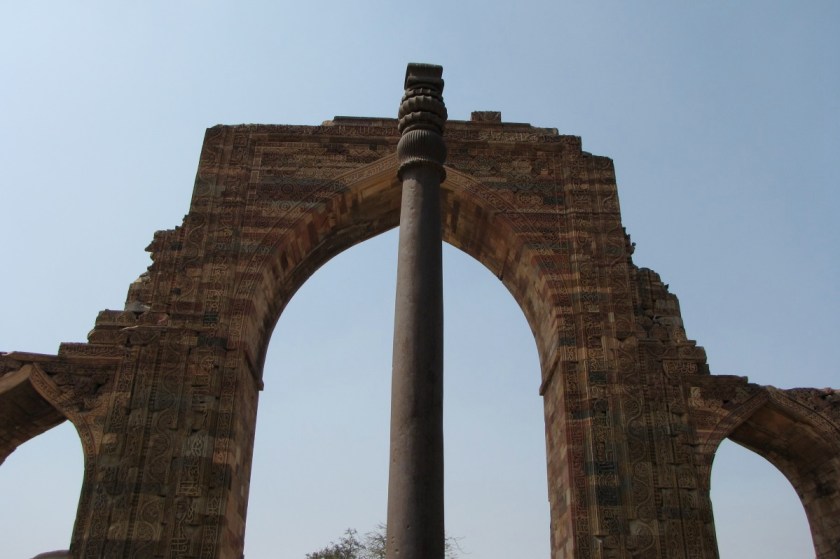
Iron was a well known metal in Jeremiah’s time and Judah had developed iron-working expertise (2 Chronicles 24:12). In those days, craftsmanship was considered a “high tech” field requiring craftsmen of great cunning (2 Chronicles 2:14). Hence, the production of an iron pillar would have been highly regarded as a great technological achievement capable of only the smartest metallurgists (e.g., the Iron Pillar of Delhi). So, by making Jeremiah an iron pillar, God was telling everyone that Jeremiah was His idea of a technological marvel; that Jeremiah was the product of His great wisdom.

At that time, learning a metal working craft was something many ordinary/common young men aspired to. If you were good at it, becoming an artisan was a sure way of getting out of poverty and securing a good middle-class lifestyle for your family.

The modern day equivalent, for us, would be going to a good college and getting a degree (or two, or three). Both then and now, many people look to education (human wisdom) as a solution to life’s problems: as a pathway to success in this world.

“Of making many books there is no end; and much study is a weariness of the flesh. Let us hear the conclusion of the whole matter: Fear God, and keep his commandments: for this is the whole duty of man.” Eccles. 12:12-13

God, however, has a different metric and a different prescription. Man has always measured success by material (financial) security and social standing. So, the means to acquire these attributes have always been highly prized. God, however, measures success by spiritual security (salvation) and spiritual standing (righteousness), which are not obtained by human wisdom/knowledge, but by faith and obedience.

Therefore, when the people of Judah focused on becoming great craftsmen to produce the next great works, God lifted up Jeremiah as the greatest work of His craftsmanship.

Clearly, there is nothing wrong with being a great craftsman or being highly educated. Indeed, God used great craftsmen to build the temple in Jerusalem (2 Chronicles 2:7, 14).  This is not an anti-intellectual diatribe. But, education, human knowledge/expertise/skill, must never be the primary goal for our lives.

Our primary goal must be to become moldable lumps of material on the Master’s workbench; lumps that He fashions into marvelous masterpieces for His glory (not ours). Some lumps will be fashioned into scholars and craftsmen, but that will be according to the Master’s plan not a man’s desires.

In the end, the expertise of the craftsmen of Judah worked against them

He [Nebuchadnezzar] carried away all… the craftsmen and smiths: none remained, save the poorest sort of the people of the land. ~ 2 Kings 24:14

They were a prime target to be taken into exile in Babylon because their skills would be a great asset to Babylonian society and economy. In a sense, they were ‘victims’ of their own success. And all their knowledge of craftsmanship could not help them survive spiritually in Babylon.

Thus saith the LORD, Let not the wise man glory in his wisdom… But let him that glorieth glory in this, that he understandeth and knoweth me, that I am the LORD which exercise lovingkindness, judgment, and righteousness, in the earth: for in these things I delight, saith the LORD. ~ Jeremiah 9:23b-24

Similarly, when education (of any type) becomes the driving force for our lives because of the benefits it brings, we too become vulnerable to being ‘swallowed up’ by the world. The world values the abilities of the educated/skilled and wants the educated/skilled to be in its service, not in the service of God. All the skill and knowledge acquired by a believer is to be used to honor and serve God, not self.

“And why take ye thought for raiment? Consider the lilies of the field, how they grow; they toil not, neither do they spin: And yet I say unto you, That even Solomon in all his glory was not arrayed like one of these.” (Matthew 6:28-29 )

The man/woman of God is not a scholar/craftsman for the sake of scholarship/craftsmanship (or what scholarship/craftsmanship affords), but for the sake of God!  Paul became a tent maker, not for the sake of making tents, but because it was a way to support his work as an apostle and missionary (Acts 18:1-4).

Jeremiah was made into an iron pillar, God’s technological masterpiece, because he was consumed with the knowledge of God, much more than the knowledge of metalworking. Jeremiah was not concerned with material security; he was concerned with salvation… and so should we! Jeremiah was not motivated by social mobility, he aspired to righteousness… and so should we!

Jesus put it this way:

Therefore I say unto you, Take no thought for your life, what ye shall eat, or what ye shall drink; nor yet for your body, what ye shall put on. Is not the life more than meat, and the body than raiment? …But seek ye first the kingdom of God, and his righteousness; and all these things shall be added unto you. ~ Matthew 6:25, 33

Bookmark and Share

Be ALL you SHOULD Be | Part 1: A DEFENCED CITY

Bookmark and Share

“For, behold, I have made thee this day a defenced city, and an iron pillar, and brasen walls against the whole land, against the kings of Judah, against the princes thereof, against the priests thereof, and against the people of the land. And they shall fight against thee; but they shall not prevail against thee; for I am with thee, saith the LORD, to deliver thee.” ~ Jeremiah 1:18-19

The first chapter of Jeremiah closes with God announcing that He had made Jeremiah into three things:

  1. A Defenced City
  2. An Iron Pillar
  3. Brazen Walls

God used these symbols to send a message through Jeremiah to the people of Judah, and He is still using them to speak to believers today.

Part 1: A DEFENCED CITY

The capital (and other prominent) cities of almost every nation in Jeremiah’s time would have been walled (i.e., defenced). A city encircled by a wall offered its inhabitants the greatest possible security from foreign invaders. Moreover, when the nation came under attack, people from nearby communities could also find refuge in the walled cities. Lastly, the security afforded by the walls enabled those cities to flourish economically as trading centers for their nation.

Therefore, a defenced city was a tangible symbol of salvation to a nation: salvation from their enemies and salvation unto (material) prosperity. And, since Jerusalem’s walls had never been breached, not even by the mighty Assyrian army (who had destroyed Israel) the people of Judah had (mistakenly) come to value their wall as THE essential line of protection from their enemies, it had become their salvation.

However, God had already predicted the destruction of Jerusalem and the defeat of the people of Judah (Jeremiah 1:13-16): their defenced city would not protect them. However, by making Jeremiah a defenced city, God reminded the people of Judah that security came from being in God’s will, not behind giant walls.  It is God who provides protection, not stacks of bricks.

Jerusalem would be destroyed by the Babylonians because the people had abandoned God, going their own way, living in disobedience and trusting in their own strength.

He [Nebuchadnezzar] carried away… ALL the mighty men of valour~ 2 Kings 24:14b

“Because thou hearkenedst not unto the voice of the LORD thy God, to keep his commandments and his statutes… Because thou servedst not the LORD thy God with joyfulness, and with gladness of heart… The LORD shall bring a nation against thee… And he shall besiege thee in all thy gates, until thy high and fenced walls come down, wherein thou trustedst” (Deut. 28:45b, 47, 49a, 52a)

The people of Judah focused on a physical battle, but the real battle was spiritual.   The reason for their downfall would not be their walls, but their sins: their idolatry (Jeremiah 1:16). Hence, the real battle was not against the Babylonians, it was against their own iniquity/wickedness.  And true victory was obedience to God’s will: fulfilling His perfect plan for their lives, both as individuals and as a nation.

However, they chose the losing side of the spiritual battle, living by their wills rather than God’s will. Consequently, with God’s judgment (to be executed by the Babylonians) on the horizon, the size/strength of their walls was immaterial: What human walls can stand up to God’s judgment?

Thus saith the LORD, Let not the… mighty man glory in his might… But let him that glorieth glory in this, that he understandeth and knoweth me, that I am the LORD which exercise lovingkindness, judgment, and righteousness, in the earth: for in these things I delight, saith the LORD. ~ Jeremiah 9:23b, 24

Conversely, Jeremiah, who symbolized God’s defenced city, was undefeatable, because he walked in obedience to God, trusting in God alone for his salvation. Indeed, the people, the nobles and the kings of Judah would all try to get rid of Jeremiah. But all their efforts failed. Though, Jeremiah suffered physically and even emotionally, he lived to see the prophecies God spoke through him come true; God’s will was accomplished in his life: he was victorious.

The people looked to human-built walls for salvation and perished; Jeremiah looked to God for salvation and triumphed.

Like Jeremiah, God has appointed believers to be His ‘defenced city’. The world around us looks to its own strength for security. Individuals try to protect themselves with security systems, with safe gated (walled?) neighborhoods, and even personal weaponry. Cities protect themselves with police forces and nations protect themselves with military might.

Now, to be clear, there is nothing intrinsically wrong with any of these artifacts: it is okay to lock the doors at night. However, the sweetness of a believer’s sleep doesn’t depend on the size of his/her door locks. The strength of a nation does not rest on the strength of its military.

“I will both lay me down in peace, and sleep: for thou, LORD, only makest me dwell in safety.” (Psalm 4:8)

It is God’s grace, not security gates, that provides the salvation we need (Ephesians 2:8-9). It is righteousness, not nukes, that exalts a nation (Proverbs 14:34). If we are to be God’s defenced city then, like Jeremiah, we must rely on God’s protection: knowing that there is perfect peace and perfect security in the center of His will, regardless of the size of our personal or national armory. If we are to be God’s defenced city then, our battle is not against flesh and blood; the weapons of our warfare are NOT carnal (2 Corinthians 10:4)

And fear not them which kill the body, but are not able to kill the soul: but rather fear him which is able to destroy both soul and body in hell. ~ Matthew 10:28

For we wrestle not against flesh and blood, but against principalities, against powers, against the rulers of the darkness of this world, against spiritual wickedness in high places. ~ Ephes. 6:12

Truly, this world can often be a frightening place: children can’t play freely because of predators; there is the threat of home invasions; some of us live in crime-riddled neighborhoods where even stray bullets are a threat; when and where will the next terrorist attack be? However, the lesson of Jeremiah teaches us that the only thing to be afraid of is unrighteousness. Like the people of Judah, it is our own sinfulness that truly endangers our existence.

He that hath no rule over his own spirit is like a city that is broken down, and without walls. ~Proverbs 25:28

Nothing we do of our own strength can protect us from the evils of this world. Indeed, some of the evils will befall us because of our own bad judgment, because of our disobedience to God. But, while we are walking in God’s will, though the evil of the world may touch us, it can’t defeat us, because a believer’s victory is not in earthly security, it is in eternal security. Our victory isn’t in physical safety, it is in spiritual strength: we are victorious when God’s will is accomplished in us, not when we escape the travails/struggles of life.

They had moved to an address within God’s will. They realized that security was found within the will of God not the walls of man.

“Do good in thy good pleasure unto Zion: build thou the walls of Jerusalem. Then shalt thou be pleased with the sacrifices of righteousness” (Psalm 51:18-19a)

…Jerusalem shall be inhabited as towns without walls… For I, saith the LORD, will be unto her a wall of fire round about, and will be the glory in the midst of her. ~ Zech. 2:4b-5

In that day shall this song be sung in the land of Judah; We have a strong city; salvation will God appoint for walls and bulwarks. ~ Isaiah 26:1

Violence shall no more be heard in thy land, wasting nor destruction within thy borders; but thou shalt call thy walls Salvation, and thy gates Praise. ~ Isaiah 60:18

Let us find our security walking in the will of God, rather than behind the walls of man. For if we walk outside of God’s salvation, there are no walls that can stand up to God’s judgment.

Bookmark and Share

A Majority of One

Bookmark and Share

“Be strong and courageous, be not afraid nor dismayed for the king of Assyria, nor for all the multitude that is with him: for there be more with us than with him: With him is an arm of flesh; but with us is the LORD our God to help us, and to fight our battles.” ~ 2 Chronicles 32:7-8a

When Sennacherib, king of Assyria, invaded Judah, Hezekiah knew that the city of Jerusalem would come under attack, so he went into action to defend the city. He built up the broken wall and raised up another outside of it. He also “made weapons and shields in abundance” and “set military captains over the people” (2 Chronicles 32:5-6).

But it would take more than that to save the city from the onslaught of the powerful armies of Sennacherib. So Hezekiah called the people together to encourage them. In the face of their seemingly hopeless situation, he declared, “There are more with us than with him” (v.7).

How could he say this? He gives the answer in the very next verse: “With [Sennacherib] is an arm of flesh; but with us is the Lord our God, to help us and to fight our battles.” That was their hope. Sennacherib had power, men, and prestige—“an arm of flesh”—but the inhabitants of Jerusalem had the Lord!

Is there some “enemy” pressing in on you today? Do you feel as though the opposition is about to crush and destroy you? Does everything seem hopeless? Take heart, child of God! With the Lord on your side, you are never outnumbered.

One plus God is always a majority.

.

Adapted from A Majority of One by Richard De Haan

Bookmark and Share