Latest Posts

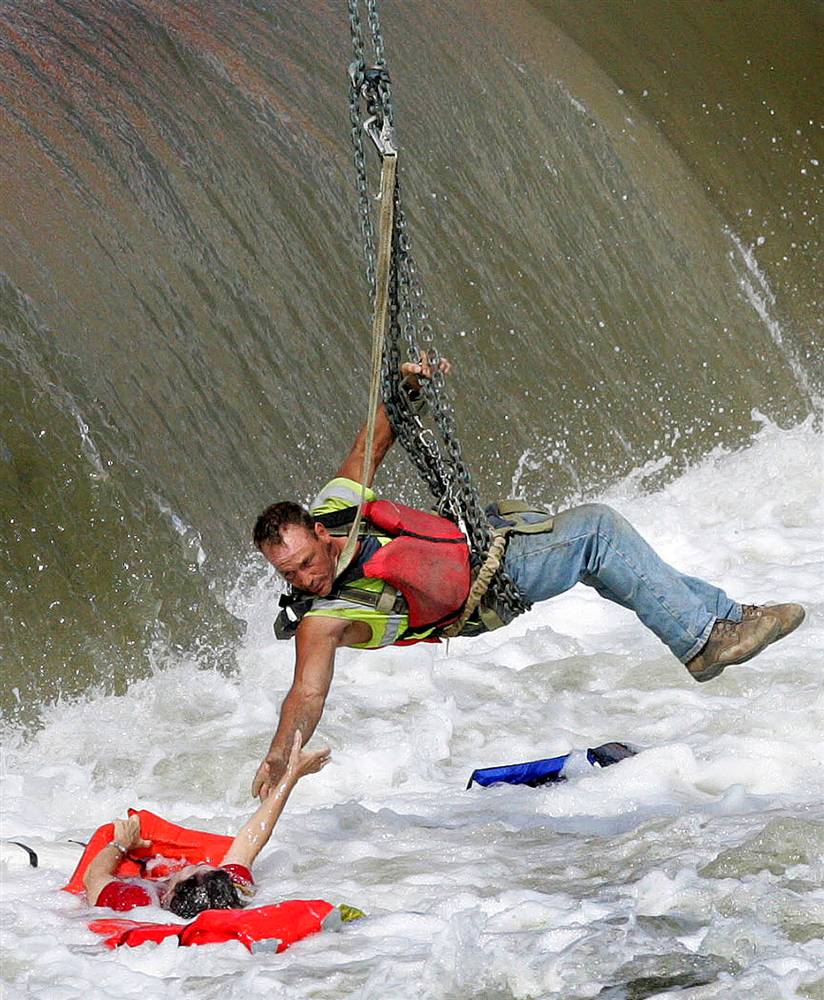
In Danger? Don Deer Feet!

Bookmark and Share

Habakkuk 3:19a
The LORD God is my strength, and he will make my feet like hinds’ feet, and he will make me to walk upon mine high places…

Habakkuk was one of the pre-captivity prophets to whom God revealed the impending defeat, destruction and forced exile Judah (the southern part of Israel) would suffer at the hands of the powerful Babylonian empire to their north. This revelation so perplexed Habakkuk that he asked God to explain why He would allow the wicked Babylonians to have victory over His people.

“…The just shall live by his faith.” (Habakkuk 2:4b)

God gave Habakkuk two answers: First, the only way for the righteous to cope with the approaching crisis was to live by faith (Habakkuk 2:2-4). Second, though the Babylonians were being used to punish the Israelites for their sins, they themselves would not escape punishment for their own wickedness (Habakkuk 2:5-20). It appears these answers satisfied Habakkuk and dispelled his confusion. Indeed, he responds to God’s answer with a beautiful song (Habakkuk 3) culminating in the verse above.

Living in and around Jerusalem, Habakkuk would have seen hinds on the hillsides of that mountainous area. Hinds are female red deer; they have no antlers for protection and weigh about half as much as a stag (male red deer). Therefore the only skill the hind could depend on to escape predators was her surefootedness. When chased by a predator a hind could escape to safety up the rocky slopes where other animals would slip and stumble.

Habakkuk realized that like the hind, the righteous had no weapons to protect themselves with in the imminent crisis. Their only hopes of not being killed by the Babylonians, was for God to guide their decisions: to make them surefooted like the hind. Indeed, the prophet Jeremiah was more explicit when he warned them that neither strength, nor power, nor wealth would be of any help in the looming affliction.

Thus saith the LORD, Let not the wise man glory in his wisdom, neither let the mighty man glory in his might, let not the rich man glory in his riches ~ Jeremiah 9:23

The only thing that would sustain the people of God in tribulation was their faith-based relationship with God.

But let him that glorieth glory in this, that he understandeth and knoweth me, that I am the LORD which exercise lovingkindness, judgment, and righteousness, in the earth: for in these things I delight, saith the LORD. ~ Jeremiah 9:24

“Order my steps in thy word: and let not any iniquity have dominion over me.” (Psalm 119:133)

God had already set the course of history, the Babylonians were going to defeat Judah and take her inhabitants into captivity. In this circumstance, the only hope for the righteous (i.e., those who put their trust in God) was to live by faith: to depend on Him to guide their steps to safety in treacherous times.

Now, as in the days of Habakkuk, we are also facing treacherous times. The Believer today has to contend with difficult issues such as joblessness, growing social immorality, crime, tribalism and godlessness; to name a few. How can we cope? The truth is there is little that can be done to (permanently) halt the moral meltdown of society. As Jesus told us, the world is moving inexorably into deeper and deeper apostasy.

And many false prophets shall rise, and shall deceive many. And because iniquity shall abound, the love of many shall wax cold. But he that shall endure unto the end, the same shall be saved. ~ Matthew 24:11-13

Like the Israelites in Habakkuk’s time, we can’t “turn back the clock”: the Babylonians are at our doorstep. Scripture makes it clear that we in a Spiritual battle with the devil and his entourage (Ephesians 6:12) and the devil is trying to destroy whoever he can (1 Peter 5:8). But knowledge of the enemy doesn’t make us immune to his traps. As humans, even the best of us are unable to see all of the enemy’s tricks.

For NOW we see through a glass, darkly… ~ 1 Corinthians 13:12a

But God has not left us alone to fight a battle we can’t win. God has opened a path to victory over the snares of the devil: “The just shall live by faith”. If we walk in faith, He will prevent us from falling.

When thou goest, thy steps shall not be straitened; and when thou runnest, thou shalt not stumble. ~ Proverbs 4:12

“Fear thou not; for I am with thee: be not dismayed; for I am thy God: I will strengthen thee; yea, I will help thee; yea, I will uphold thee with the right hand of my righteousness.” (Isaiah 41:10)

So as we go about our lives, making decisions about finances, health, relationships, employment, education and family (to name a few) let us call on our God, let us seek His face, let us search out His will. Life is a struggle and we can’t see all the dangers ahead; it is difficult to know what choices to make. Truly, we have no hope of surviving on our own. But God is faithful: if we live by faith He will make our feet like hinds’ feet so that our steps are assured and we can escape to safety. If we trust in God, He will make our feet surefooted so that we can escape the wiles of the devil.

Now unto him that is able to keep you from falling, and to present you faultless before the presence of his glory with exceeding joy, To the only wise God our Saviour, be glory and majesty, dominion and power, both now and ever. Amen. ~ Jude 1:24-25

Bookmark and Share

God’s Power can Only be Perceived through the Eyes of Faith


Bookmark and Share


1 Chronicles 29:11
Thine, O LORD is the greatness, and the power, and the glory, and the victory, and the majesty: for all that is in the heaven and in the earth is thine; thine is the kingdom, O LORD, and thou art exalted as head above all.

This verse declares the unequivocal absoluteness of God’s supremacy in both heaven and earth. The importance of referencing heaven separate from earth is to make us aware that God’s power encompasses both the spiritual and the physical.

“…I will publish the name of the LORD: ascribe ye greatness unto our God. He is the Rock, his work is perfect: for all his ways are judgment: a God of truth and without iniquity, just and right is he.” (Deuteronomy 32:3-4)

For many Believers, it is easy to accept God as all powerful spiritually. We know there is a heaven and that God rules over it. We know that we are to have a spiritual relationship with God: to pray regularly, to worship Him. We even believe in miracles: that God reaches out from the spiritual realm to touch events in our earthbound lives.

But, what does it mean to us that God has all greatness, power, victory and majesty in the earth? How does God have greatness in secular humanistic (atheistic) communities? Where is God’s power in crime-infested inner cities? Where is God’s glory in Islamic communities? Where is God’s victory in child-abuse? Where is God’s majesty in nuclear accidents (e.g., Chernobyl) and oil spills (e.g., the Gulf of Mexico)? If God reigns supreme on earth, why can’t we see it? What kind of King could God be to allow such injustice and needless tragedy in His Kingdom?

These questions have bedeviled mankind for centuries and are very hard to answer, especially where they pertain to the personal experiences. Nevertheless, Scripture does give us a framework for understanding, the most important aspect of which is given in this verse. Specifically, the verse considers the unequivocal absoluteness of God’s supremacy in the earth to be ‘axiomatic’. In mathematics (logic theory) an axiom is defined as: “a basic proposition of a system that, although unproven, is used to prove the other propositions in the system”. In other words, an axiom is an unproved truth which, therefore, is accepted by faith and then used to prove everything else. This is exactly the approach of Scripture.

First, we are challenged to accept, by faith, the truth of God’s unequivocally absolute supremacy in the earth.

Trust in the LORD with all thine heart; and lean not unto thine own understanding. ~Proverbs 3:5

Second, we are commissioned to use that principle to prove everything else (in our daily walk with God).

In all thy ways acknowledge him, and he shall direct thy paths. ~Proverbs 3:6

This way of thinking radically shifts our approach to life from questioning God’s activity and purpose in the tragedies of life. Instead, it shifts our approach to one of waiting to see/perceive God’s loving-hand, because we KNOW He is supreme.

“Although the fig tree shall not blossom, neither shall fruit be in the vines; the labour of the olive shall fail, and the fields shall yield no meat; the flock shall be cut off from the fold, and there shall be no herd in the stalls: Yet I will rejoice in the LORD, I will joy in the God of my salvation.” (Habakkuk 3:17-18)

For example, the disciples trudged away in despair after Jesus’ death because they doubted God’s pre-eminence in that tragedy: they could not comprehend God’s victory in Jesus’ death. But even in the greatest tragedy, the earth has ever experienced, the crucifixion of the Christ, God reigned supreme: satan was defeated, salvation came to mankind and God was glorified.

Similarly, it was unthinkable that any good could be salvaged from Hitler’s vile slaughter of the Jews in World War II. Certainly, some would declare, such a heinous event proves God is unconcerned about the affairs of man. However, historical analysis reveals that the formation of Israel in 1948 was a direct consequence of the events of World War II. And Biblical analysis suggests this event is the fulfillment of divine prophecy (Ezekiel 4:3-6).

So, though many people (Jews and non-Jews, soldiers and civilians) died horrible deaths in World War II, many more were saved, physically and spiritually, by the modern-day manifestation of Biblical prophecy.

To be clear, this neither discounts nor de-emphasizes the real pain and suffering experienced in the tragedies of life. But it tells us that, even in the midst of anguish, God remains victorious. And, therefore, if we are with Him, then we are triumphant too. The pain of beatings Paul endured were real…

Of the Jews five times received I forty stripes save one. Thrice was I beaten with rods, once was I stoned, thrice I suffered shipwreck, a night and a day I have been in the deep… In weariness and painfulness, in watchings often, in hunger and thirst, in fastings often, in cold and nakedness. ~2 Corinthians 11:24-25, 27

…but so too was the triumph of his ministry that saved innumerable lives from the eternal anguish of Hell.

Even as I please all men in all things, not seeking mine own profit, but the profit of many, that they may be saved. ~1 Corinthians 10:33

“For in the time of trouble he shall hide me in his pavilion: in the secret of his tabernacle shall he hide me; he shall set me up upon a rock.” (Psalm 27:5)

If we, by faith, accept the God described in the Bible, then we know that nothing can stop God’s overarching will for and in this world. Therefore, every circumstance of life must work together to execute God’s plans. Even the evil that men choose to do cannot escape His inexorable (unstoppable) will from being accomplished. It is only with this understanding that we can have hope rather than despair in the various tragedies, big and small, that beset our lives.

But we have this treasure in earthen vessels, that the excellency of the power may be of God, and not of us.
We are troubled on every side, yet not distressed; we are perplexed, but not in despair;
Persecuted, but not forsaken; cast down, but not destroyed;
Always bearing about in the body the dying of the Lord Jesus, that the life also of Jesus might be made manifest in our body.
For we which live are always delivered unto death for Jesus’ sake, that the life also of Jesus might be made manifest in our mortal flesh. ~2 Corinthians 4:7-11

Yes, God is good ALL the time. And He is unequivocally and absolutely supreme in heaven as well as right here on the earth.


Bookmark and Share


Encounters with Jesus: The Widow’s Mite… “Only Faith enables us to give until we have nothing left.”

Bookmark and Share

Mark 12:41-44
41 And Jesus sat over against the treasury, and beheld how the people cast money into the treasury: and many that were rich cast in much. 42 And there came a certain poor widow, and she threw in two mites, which make a farthing. 43 And he called unto him his disciples, and saith unto them, Verily I say unto you, That this poor widow hath cast more in, than all they which have cast into the treasury: 44 For all they did cast in of their abundance; but she of her want did cast in all that she had, even all her living.

NOTES

  1. It’s not the size of our gift; it’s the size of our faith.
  2. It’s not how much we GIVE; it’s how much we KEEP

CHORDS

Jesus observes a poor widow putting money into the temple treasury and uses the opportunity to teach his disciples, and us, God’s perspective on giving. Jesus shows us that instead of how much we give, God looks at (a) the circumstances in which we give and (b) how much we keep for ourselves.

Riches profit not in the day of wrath: but righteousness delivereth from death. (Proverbs 11:4)

In teaching His disciples, Jesus first focused on the person giving, rather than the gift given (vs. 43). The gift giver was a poor widow. The significance of this would not be lost on the disciples, because most widows in those days were greatly disadvantaged.

“Under the Mosaic dispensation no legal provision was made for the maintenance of widows. They were left dependent partly on the affection of relations, more especially of the eldest son, whose birthright, or extra share of the property, imposed such a duty upon him…” [Smiths Bible Dictionary]

“…The loss of a husband in ancient Israel was normally a social and economic tragedy. In a generally patriarchal culture, the death of a husband usually meant a type of cultural death as well… Her crisis was aggravated if she had no able-bodied children to help her work the land of her dead spouse. To provide for her children, to maintain the estate, and to continue payments on debts accrued by her husband imposed severe burdens. Since she was in an extremely vulnerable economic position, she became the prime target of exploitation. The fact that she was classed with the landless stranger and Levite indicates that she was often unable to keep her husband’s land.” [Baker’s Evangelical Dictionary]

Jesus wanted them to realize was that the poor widow’s gift was a great value, because she gave even though she was in need herself. Paul echoes this principle in when he praised the generosity of the Macedonian churches, which though poor gave liberally.

2 Corinthians 8
1 Moreover, brethren, we do you to wit of the grace of God bestowed on the churches of Macedonia;
2 How that in a great trial of affliction the abundance of their joy and their deep poverty abounded unto the riches of their liberality.
3 For to their power, I bear record, yea, and beyond their power they were willing of themselves;
4 Praying us with much intreaty that we would receive the gift, and take upon us the fellowship of the ministering to the saints.

Give to every man that asketh of thee; and of him that taketh away thy goods ask them not again. (Luke 6:30)

The message to us is that we are never too poor to give. We are never too impoverished to help someone else. Even if, like another famous widow (1 Kings 17: 9-16), we have one morsel of food left to eat, we still can share.

The truth is that most of us will never face such dire need, though many of us do face financial difficulties of varying degree. But, the challenge is: Do we look at our circumstances and think we should give more or give less? When economic pressures threaten to smother us, do we close the purses/wallets tighter or do we open them wider? Jesus, through the example of the poor widow, dares us to give; to give even when it hurts. It’s when we can least “afford” to give that God values our gift the most.

Everyone else (rich, poor and in-between), Jesus tells us, gave out of “their abundance” (vs. 44). And such gifts, no matter how much, had less value to God. God is not concerned about the size of our gifts. God cares about the “size” of our faith.

Next, Jesus focuses on the poor widow’s gift. But notice His words (vs. 44b), “…she of her want did cast in all that she had, even all her living”. Of necessity, the Scripture tells us that the widow gave 2 mites (less than two-percent of a day’s wage). But pointedly Jesus addresses the fact that she had nothing left. God determines the value of a gift by what the giver keeps, not what the giver gives. This is counter-intuitive.

…I live by the faith of the Son of God, who loved me, and gave himself for me. (Galatians 2:20b;)

Most Christians consider tithing, giving ten-percent of one’s income, to be a virtue. However, it is clear that ten-percent is a bigger sacrifice for the person earning ten dollars a day, than the person earning one thousand dollars a day. It’s takes more faith to live on nine dollars a day, than on nine hundred dollars a day.

Jesus asserts that the widow’s gift was of greater value, not because of the amount she gave, but because of the amount she kept for herself, which was zero. Likewise, to understand how much we are really giving to God we must consider how much we keep for ourselves.

Finally, one theme that arises from this encounter with Jesus is the triumph of faith over rationality/logic/reason. The actions of the widow could not be supported by a rational argument. Indeed, if we knew her, many of us would have advised her to keep what she had for she didn’t have enough to give; God would understand. Two mites were too small for her to give a tenth; they didn’t make any smaller money. Yet, she could have given one mite and kept the other. Instead the widow gave it all.

Her act could only have come from her faith in God to supply her needs. She believed that the same God that allowed her husband to die, the same God that watched as she became destitute, was still merciful. That same God would supply her needs; that same God was worthy of praise; that same God loved her and had a purpose for her life.

In the midst of difficulties, trials, tribulations and all types of storms, faith is what allows the believer to keep going. Faith, NOT logic, NOT reason, NOT rationality, Faith will sustain believers to the end.

Lamentations 3:18-26
18 And I said, My strength and my hope is perished from the LORD:
19 Remembering mine affliction and my misery, the wormwood and the gall.
20 My soul hath them still in remembrance, and is humbled in me.
21 This I recall to my mind, therefore have I hope.
22 It is of the LORD’s mercies that we are not consumed, because his compassions fail not.
23 They are new every morning: great is thy faithfulness.

Only Faith will enable us to give when we have almost nothing left, and give until we have nothing left.

CODA

  • How much of God’s provision are you keeping for yourself?
  • As the economy gets harder, are you becoming more generous?
  • Is your faith as big as a poor widow’s?

Bookmark and Share

Miracles of Jesus: The Nobleman’s Son… Faith produces Miracles, but Miracles don’t produce Faith!

Bookmark and Share

John 4:46-53

“And the LORD said unto Moses, How long will this people provoke me? and how long will it be ere they believe me, for all the signs which I have shewed among them?” ~Numbers 14:11

…There was a certain nobleman, whose son was sick at Capernaum. When he heard that Jesus had come out of Judea into Galilee, he went unto Him and besought Him that He would come down and heal his son, for he was at the point of death. Then Jesus said unto him, “Unless ye see signs and wonders, ye will not believe.” The nobleman said unto Him, “Sir, come down ere my child die!” Jesus said unto him, “Go thy way; thy son liveth.”

And the man believed the word that Jesus had spoken unto him, and he went his way. And as he was going down, his servants met him and told him, saying, “Thy son liveth!” Then he inquired of them the hour when he began to be healed. And they said unto him, “Yesterday at the seventh hour the fever left him.” So the father knew that it was at the same hour in which Jesus had said unto him, “Thy son liveth.” And he himself believed, and his whole house.

NOTES

  1. Signs can be obstacles
  2. Signs can be wonderful
  3. Faith is the best “sign”
  4. Zero faith x signs = zero faith
  5. Faith x signs = more faith

CHORDS

A desperate father begs Jesus to heal his son and Jesus points out that “Unless ye see signs and wonders, ye will not believe“. Many refuse to believe unless God “proves” Himself to them, by passing arbitrary tests. Alternatively, God cannot be believed since there is no supernatural “evidence”. Moreover, the plights suffered by many surely show that God is either not real or (at least) can’t be trusted. In short, a lack of signal evidence blocks the path to belief.

This is also true for many believers who wonder why God seems absent from their day-to-day lives. Believers who wish God would show them what to do, “If He just gave me a sign I would…”
The content of the father’s plea reveals that he does have faith. Indeed, he sees no other solution but Jesus. Jesus doesn’t go with the father as he requested, but states that his son was healed. In a great show of faith, the father heads back home and the miracle (the sign) is confirmed before he arrives. This sign bolsters his faith.

O taste and see that the LORD is good: blessed is the man that trusteth in him. (Psalm 34:8)

It is clear that the father’s faith secured the miracle; not the other way around. In the Kingdom of God, believing is seeing!!! To find God, to prove Him, we must first step out in faith. Miracles grow the faith of the faithful. As the father walked (home) in faith the miracle (sign) was reported and his faith grew. “Sign and Wonders”, in the context of faith, spurs growth.

Repeatedly, the Bible tells the believer: “Don’t be afraid”, “God will help you”, “God will supply ALL your needs”, etc. Yet, far too frequently, believers sit on the sidelines too afraid to test the waters. And so we rarely ever see God wondrously in action in our lives (except when he miraculously provides parking spaces and 1/2-price sales). So our growth stagnates as we settle for the practical over the promised, the safe over the spectacular and conformity over transformation.

CODA

  • What would you do if God gave you a sign?
  • Would it be worth doing without a sign?
  • Are lives (maybe even yours) at stake if you don’t step out in faith?

Bookmark and Share

The Wrong Approach to Sin

Bookmark and Share

Genesis 3:6-13
6 And when the woman saw that the tree was good for food, and that it was pleasant to the eyes, and a tree to be desired to make one wise, she took of the fruit thereof, and did eat, and gave also unto her husband with her; and he did eat. 7 And the eyes of them both were opened, and they knew that they were naked; and they sewed fig leaves together, and made themselves aprons. 8 And they heard the voice of the LORD God walking in the garden in the cool of the day: and Adam and his wife hid themselves from the presence of the LORD God amongst the trees of the garden. 9 And the LORD God called unto Adam, and said unto him, Where art thou? 10 And he said, I heard thy voice in the garden, and I was afraid, because I was naked; and I hid myself. 11 And he said, Who told thee that thou wast naked? Hast thou eaten of the tree, whereof I commanded thee that thou shouldest not eat? 12 And the man said, The woman whom thou gavest to be with me, she gave me of the tree, and I did eat. 13 And the LORD God said unto the woman, What is this that thou hast done? And the woman said, The serpent beguiled me, and I did eat.

“…Thou art weighed in the balances, and art found wanting.” ~Daniel 5:27

In the series on the Origins of Redemption, God’s plan to redeem mankind was explored. We saw that God immediately identified the steps of redemption through the questions He asked Adam and Eve: Where are you? Who told you? Did you eat? What [hast thou] done?. God wanted them to realize that

  1. Sin separates us from God,
  2. Sin ruins our perspective on right and wrong
  3. Sin must be confronted
  4. Sin must be overcome

Therefore, the redemption process consists of

  1. Coming to God
  2. Accepting God’s view/perspective/outlook (given though His Word)
  3. Confessing sin
  4. Overcoming sin (through the work of the Holy Spirit in us)

Now we will examine man’s (wrong) response to sin, in order to learn what should NOT be done by anyone who sins.

1. Fixing the Wrong Problem: Covering skin to hide the fault within

The first discovery Adam and Eve made after sinning, was that they were naked (vs. 7). It is clear that they both were fully aware that they disobeyed God’s instruction regarding eating from the tree of the Knowledge of Good and Evil. And, therefore, they knew they were facing a death penalty. But, instead of addressing their impending predicament, they became concerned that they were naked. This was no more than a futile attempt to cover up their actions. And their response is typical of ALL people everywhere throughout history.

“…For the LORD seeth not as man seeth; for man looketh on the outward appearance, but the LORD looketh on the heart.” 1 Sam. 16:7

When a little child steals cookies from the cookie jar, their preoccupation is to hide the crumbs or to wipe their mouths. The child wants to get rid of the evidence, not get rid of the sin (the child doesn’t want to return the cookie!). And when we are caught in a sin, our first impulse is the same. Adam and Eve had their whole consciousness transformed by sin. The fruit of the tree of the Knowledge of Good and Evil brought a newfound awareness that they now wanted to erase. They tried to cover themselves in order to make this new awareness go away; to hide the evidence that reminded them of their sinful state.

Nakedness was not the problem for Adam and Eve. Likewise, the evidence of sin in our lives is not the problem either; despite the effort we put in to cover it from others. No matter how much we deny, distort or disguise the evidence of sin, we can never change the fact of sin. Regardless of how much crumbs that little child brushes away, the fact of stealing (the cookie) remains.

“He that covereth his sins shall not prosper: but whoso confesseth and forsaketh them shall have mercy.” ~Proverbs 28:13

Therefore, let us always walk in the light (1 John 1:7) revealing everything to the Father of Light (James 1:7) so that He can deal with our sin.

And this is the condemnation, that light is come into the world, and men loved darkness rather than light, because their deeds were evil. ~ John 3:19

“Then spake Jesus again unto them, saying, I am the light of the world: he that followeth me shall not walk in darkness, but shall have the light of life.” ~John 8:12

…for I [Jesus] have appeared unto thee for this purpose, to make thee a minister… to open their eyes, and to turn them from darkness to light, and from the power of Satan unto God, that they may receive forgiveness of sins, and inheritance among them which are sanctified by faith that is in me. ~ Acts 26:16b-18

2. Finding the Wrong Place: Hiding from God’s sight to stay in the plight

When they heard God’s voice, Adam and Eve hid themselves (vs. 8) from Him. Though they probably realized the pointlessness of their action, it seems the fear of standing in God’s presence overwhelmed them, impairing their judgment. Indeed, this is a natural human response to facing God.

“He that covereth his sins shall not prosper: but whoso confesseth and forsaketh them shall have mercy.” ~Proverbs 28:13

When we are aware of our sinful state it is common for us to avoid the presence of God. How often have we avoided going to church, avoided praying, or avoided reading the Bible, when engulfed by the guilt of sin. If our hearts have not been hardened into rock, we all feel the shame of sinfulness in the presence of a Holy God. And despite knowing that forgiveness and mercy are available through the Blood of Jesus Christ the Saviour, we shrink back from God. But, how can we run away from God?

“Whither shall I go from thy spirit? or whither shall I flee from thy presence?
If I ascend up into heaven, thou art there: if I make my bed in hell, behold, thou art there.
If I take the wings of the morning, and dwell in the uttermost parts of the sea;
Even there shall thy hand lead me, and thy right hand shall hold me.” ~ Psalm 139:7-10

Our attempts to hide from God are just as useless as Adam and Eve’s. Hiding from God doesn’t help us in any way. Wherever we go God is there. Hiding from God only delays the confrontation and increases our misery. Let us instead, run to God when we sin. Let us run to Him for mercy and pardon. Not because we have no shame, but because we have no choice. Only God can remove the stain and penalty of sin. The longer we hide from Him the longer we have to live with the cancer of sin eating away at our lives. Hiding does not help.

“Let the wicked forsake his way, and the unrighteous man his thoughts: and let him return unto the LORD, and he will have mercy upon him; and to our God, for he will abundantly pardon.” ~Isaiah 55:7

“Who is a God like unto thee, that pardoneth iniquity, and passeth by the transgression of the remnant of his heritage? he retaineth not his anger for ever, because he delighteth in mercy.” ~Micah 7:18

3. Firing at the Wrong Target: When you’ve chosen to sin, do not look out; look in

When God confronted Adam with Adam’s sin, Adam’s response was to blame Eve (vs. 12a), secondarily, and God (vs. 12b), primarily. Instead of admitting his guilt, Adam tried to pass it off on others. Likewise, when Eve was confronted with her sin, she blamed the serpent (vs. 13). One of the most important lessons a parent (especially fathers) must teach their children is to take responsibility for their actions. We live in a time where “blame-ism” is at its zenith. People caught in sin often point their fingers at every other factor except themselves. He/She blames peer-pressure, parents, poverty, (lack of) education, culture, etc., but refuses to take personal responsibility for his/her actions and decisions.

“Against thee, thee only, have I sinned, and done this evil in thy sight: that thou mightest be justified when thou speakest, and be clear when thou judgest.” ~Psalm 51:4

Believers must be wary of adopting this mindset. Nobody forces us to sin and God does not put us in a situation where we must sin. We are NOT powerless. We CAN choose to resist the influence of others. We CAN rise above our circumstances. When we place responsibility for our sins on our circumstances and/or others (even God!), we are saying that the influence of our situation is greater than the influence of the Holy Spirit within us. This argument is both false and absurd.

There hath no temptation taken you but such as is common to man: but God is faithful, who will not suffer you to be tempted above that ye are able; but will with the temptation also make a way to escape, that ye may be able to bear it.” ~1 Corinthians 10:13

“Ye are of God, little children, and have overcome them: because greater is he that is in you, than he that is in the world.” ~1 John 4:4

If God is in us then, by definition, we are under the influence of an infinitely greater agent for good than any external agents that exist. So the only way we can sin, is by choosing to sin. Instead of finding others to blame for sin, let us admit our guilt in choosing to disobey God. If we refuse to take responsibility for our decisions, then we also refuse to receive God’s gracious forgiveness and mercy. This is also true for non-believers: we all must confess our sin before the Holy and Righteous God.

“If we say that we have no sin, we deceive ourselves, and the truth is not in us. If we confess our sins, he is faithful and just to forgive us our sins, and to cleanse us from all unrighteousness. If we say that we have not sinned, we make him a liar, and his word is not in us.” ~1 John 1:8-10

Let us not blame God, or anyone else for our sin.

Bookmark and Share

The Promiser is the Point of the Promises

Bookmark and Share

2 Peter 1:4
Whereby are given unto us exceeding great and precious promises: that by these ye might be partakers of the divine nature, having escaped the corruption that is in the world through lust.

God has given us awesome promises for us to cherish, however, the phrase “partakers of” (Greek: Koinonos) means “brought into fellowship with”. Therefore, the purpose of God’s promises is to have us fellowship with Him; to bring us close to Him.

“For I know the thoughts that I think toward you, saith the LORD, thoughts of peace, and not of evil, to give you an expected end.” ~Jeremiah 29:11

When God keeps us safe (as He promises) He does so to draw us closer to Him. When God provides for our needs, He does it to strengthen our relationship with Him. When we focus on the provision instead of The Provider we miss the whole point of the promise.

When Jesus fed the 5000 in the wilderness, (John 6:1-14) most of them were amazed at this great miracle and sought to make Him King of Judea (John 6:15). But, when Jesus revealed his true mission of redemption through His death, they became disillusioned and left Him (John 6:41-66). They wanted Him as King of their needs instead of King of their hearts.

The focus of God’s promises is The Promiser and the relationship he wants to have with us (the promis-ees). As we consider His promises to us, let us respond to His great love for us and fellowship with Him.

Here are a few of God’s Awesome Promises that He gave us because of His Great LOVE for us:

  • “Being confident of this very thing, that he which hath begun a good work in you will perform it until the day of Jesus Christ” ~Philippians 1:6
  • “…I will be with thee: I will not fail thee, nor forsake thee.” ~Joshua 1:5b
  • “Call unto me, and I will answer thee, and show thee great and mighty things, which thou knowest not.” ~Jeremiah 33:3
  • “And ye shall seek me, and find me, when ye shall search for me with all your heart.” ~Jeremiah 29:13
  • “For he shall deliver the needy when he crieth; the poor also, and him that hath no helper.” ~Psalm 72:12

Bookmark and Share

►►►►►►►►►►►►►►►►

The Parable of the Two Sons: “It’s not how you start… It’s how you finish!”


Facebook Twitter More...

Matthew 21:28-32
28But what think ye? A certain man had two sons; and he came to the first, and said, Son, go work to day in my vineyard. 29He answered and said, I will not: but afterward he repented, and went. 30And he came to the second, and said likewise. And he answered and said, I go, sir: and went not. 31Whether of them twain did the will of his father? They say unto him, The first. Jesus saith unto them, Verily I say unto you, That the publicans and the harlots go into the kingdom of God before you. 32For John came unto you in the way of righteousness, and ye believed him not: but the publicans and the harlots believed him: and ye, when ye had seen it, repented not afterward, that ye might believe him.


NOTES

  1. It’s not what you SAY, It’s what you DO
  2. It’s not how you START, It’s how you FINISH
  3. It’s not who you ARE, It’s who you can BECOME
  4. It’s not yet too late (for anyone) to CHANGE

CHORDS

In this short parable Jesus shows us God’s emphasis on deeds over words, accomplishments over intentions and growth over standing. The first son said he would not obey, but then he did (faithfulness). While the second son said he would do his father’s wishes, but then didn’t (believism). By application, God is far less interested in what we say and more interested in what we do. It is easy to say we believe/trust in God, it is much harder to actually demonstrate that belief/trust in our lives. If the extent of our faith lies in the words we say or principles we profess, then that is no faith at all.

Even so faith, if it hath not works, is dead, being alone. (James 2:17)

But be ye doers of the word, and not hearers only, deceiving your own selves. ~James 1:22

What doth it profit, my brethren, though a man say he hath faith, and have not works? can faith save him? If a brother or sister be naked, and destitute of daily food, And one of you say unto them, Depart in peace, be ye warmed and filled; notwithstanding ye give them not those things which are needful to the body; what doth it profit? Even so faith, if it hath not works, is dead, being alone. Yea, a man may say, Thou hast faith, and I have works: shew me thy faith without thy works, and I will shew thee my faith by my works. ~James 2:14-18

It’s not what we say that matters; it’s what we do. The starkness of the parable on this matter is arresting. Absolutely NO credit is given to the son who initially gave the right (verbal) answer. Instead, the son who initially gave the wrong (verbal) answer gets ALL the credit. Clearly, their actions completely erased their original statements. In other words, it’s far less important to get the words right, than to get the deeds right. This notion is corroborated in the well-known Parable of the Talents (Matthew 25:14-30) where the servants were judged on what they did, and NOT what they said/professed. Immediately following that parable, Jesus describes for His disciples what the Final Judgment would be like. In His account, the Father separates the sheep (the saved) from the goats (the unsaved) and notably the sole dividing factor was their deeds:

Then shall the King say unto them on his right hand, Come, ye blessed of my Father, inherit the kingdom prepared for you from the foundation of the world: For I was an hungred, and ye gave me meat: I was thirsty, and ye gave me drink: I was a stranger, and ye took me in: Naked, and ye clothed me: I was sick, and ye visited me: I was in prison, and ye came unto me. ~Matthew 25:34-36

Notwithstanding, the Bible makes it clear that we are saved by grace though faith and “Not of works, lest any man should boast” (Ephesians 2:8-9). But we are saved UNTO works (Ephesians 2:10), so our deeds/actions reveal our heart condition in ways our words never can. As any science student can attest, only theories confirmed by experiment can be trusted. Likewise, the only way our faith can be verified is through our actions. Christians will never change the world with religious talk unless it is coupled with righteous walk.

…This one thing I do, forgetting those things which are behind, and reaching forth unto those things which are before, I press toward the mark for the prize of the high calling of God in Christ Jesus. (Philippians 3:13-14)

This parable also shows us that it’s not how we start that matters, it’s how we finish. The second son started off on the correct footing, he had the right answer, which might indicate that he had the right intentions. Perhaps he did mean to obey his father. The first son, it is clear, had the wrong intentions as well as the wrong answer. But, after he repented, the first son actually does his father’s bidding; while the second, despite his probable good intentions, doesn’t. As in the famous saying: “The road to hell is paved with good intentions”.

The application is that it’s not enough to start well; we must finish well too. No winners are declared at the start of a race; winners are decided only at the finish line. So regardless of our good intentions, if the faith we profess does not lead us into obedience then:

As the body without the spirit is dead, so [our] faith without deeds is dead ~James 2:26.

Similarly, it doesn’t matter where we started; the errors of our past are inconsequential. No matter how filthy I was before, and no matter how filthy I am now, its not too late to turn around if I realize my state before God and, like the second son, I repent and then obey:

…This one thing I do, forgetting those things which are behind, and reaching forth unto those things which are before, I press toward the mark for the prize of the high calling of God in Christ Jesus ~Philippians 3:13-14.

Thirdly, this parable of the two sons shows us the importance of transformation. The favorable outcome of the second son hinged on one thing: repentance. Repentance is the hinge on which transformation pivots. Only AFTER repentance did the change take place.

For our lives to be transformed by God we must repent; we must change our mindset from self-direction to God-direction, from rebellion to obedience. There is only one way: God’s way. But how do we get there? We get there by accepting the truth rather than avoiding it.

…Be not conformed to this world: but be ye transformed by the renewing of your mind… (Romans 12:2)

Jesus told the parable in response to the badgering of the Pharisees. They knew John the Baptist was a prophet and they knew John declared Jesus to be the Messiah and they knew from Jesus’ miracles that He was sent from God (John 3:2) but to accept the truth meant they would have to change their ways. In the end they decided that stagnation was preferable to transformation and so they killed Him.

The same choice is open to us. If we know the Bible is real, then we must accept its teaching and yield to God’s way, i.e., we must repent. Until we submit to God it is impossible to obey Him. And so we—like the second Son—rather than being doers, we become professors of the faith only:

Having a form of godliness, but denying the power thereof ~2 Timothy 3:5.

Finally, Jesus leaves hope for all regardless of where we stand: in Matt. 21: 31 (above) He uses the word “before” rather than “and not”. By so doing he was telling the Pharisees and all of the other “second sons” that they still had a chance. The opportunity to repent had not yet passed them by; make use of it.

CODA

  • What are you DOING about what you know?
  • How are you FINISHING the race you started?
  • Are you BECOMING more than you are?
  • Will you start the CHANGE today?
Bookmark and Share

H.O.P.E.: Heavenly Outlook Produces Endurance

Bookmark and Share

“Now the God of hope fill you with all joy and peace in believing, that ye may abound in hope, through the power of the Holy Ghost.” ~ Romans 15:13

For many Christians, Hope is the forgotten theological virtue. Most of Christian discourse focuses on Faith and Charity (divine love). However, Hope is crucial for Christian health and God wants us to overflow with it.

What is Christian Hope? Christian Hope is the expectation that God’s promises are true: that Jesus will return and all believers will join Him in Heaven.

Why art thou cast down, O my soul? and why art thou disquieted within me? hope thou in God: for I shall yet praise him, who is the health of my countenance, and my God. ~Psalm 42:11

To understand why Hope is so vital, consider a child expecting a birthday treat or gifts at Christmas time. Most children will try to be on their best behavior in the days leading up to their special surprise so that nothing stops them from getting what their heart has desired for so long. The focus on their expectation gives them the ability to ignore and even overcome the temptations that they would usually give into.

That’s exactly why Christian Hope is so essential for the believer. Without Hope, we lack the motivation to seek God. Without Hope we lack the zeal to do His will. Without Hope we cannot endure tribulation. Without Hope we can only live for the now. Without Hope we are powerless, unable to rise above mediocrity, unable to resist temptation.

God’s will is to supply us with an overflowing and endless abundance of Hope. And Faith that is in jubilant harmony with God puts us in the place where the Holy Spirit can produce Hope in us. Specifically, the more we trust in God the greater is our Hope in God: Faith produces Hope.

For we through the Spirit wait for the hope of righteousness by faith. ~Galatians 5:5

For the Christian, Faith is the compass that points the way to God and Hope is the sustenance for the journey. The closer we get to God, the more strength we have to keep going. Hope gives us energy; it builds our muscles and it keeps our Christian life in tune.

With Hope we will seek God.
With Hope we will obey God zealously.
With Hope we will endure trials.
With Hope we will live for the Glory that awaits us.
With Hope we are powerful, able to rise above the ordinary, able to resist temptation.

Happy is he… whose hope is in the LORD his God: ~ Psalm 146:5

Bookmark and Share

►►►►►►►►►►►►►►

"For all have sinned, and come short of the glory of God" ~Romans 3:23

Sin Doesn’t Come in Sizes

Bookmark and Share

Recently someone asked (paraphrase): “I’ve been praying to God for help to overcome my addiction. Why hasn’t He helped me to do it?”

This question is not uncommon and reveals some problems with the way that we think about sin and how God works in our lives to enable us to overcome the power of sin. To better understand this, it is useful to first define what an addiction is.  An addiction is any action/practice or sequence of actions/practices that is repeated enough that a permanent (but not necessarily irreversible) change in the brain architecture of the addicted occurs in order to perpetuate the action/practice.  Addictions can range from thumb-sucking to drug-abuse, from workaholic-ism to pornography.

“For all have sinned, and come short of the glory of God” ~Romans 3:23

Generally, addictions are only overcome when a new agent hierarchically replaces the importance of the addiction in the mind of the addict: when a competing structure develops.  Even when this happens, the neuron-network associated with the addiction does not disappear immediately:  it takes time for the brain to gradually reorganizes its structure.   Hence, the likelihood of relapse is an ever-present danger for many.  The key to overcoming addictions and potential relapses is the strength and constancy of the new agent neural-network.

As long as the neuronal pathways of the new agent fire more strongly and consistently than that of the addiction, then the addict is in a good position to overcome his/her addiction.     For example, kids usually stop sucking their thumbs when social pressures related to the habit and to the resulting orthodontic damage supersede any comfort they got from it.   Likewise, some drug abusers are “scared straight” by the fear of dying from the drug use.  Fear of death overrides the neural-network of the addiction, thereby allowing them to quit.

It is true that more people are addicted to various actions than they might realize.  This unawareness arises because people mostly only consider socially unacceptable habits as addictions.  More important, however, is to realize that ALL addictions are sins, because they are, by definition, the antithesis of self-control and the Christian is commanded to bring his/her entire body under the control of the Holy Spirit (1 Corinthians 9:24-27).

The essential difference between addictions and “regular” sins, is that addictions are sins that have become “hardwired” in the brain with an associated reward (usually dopamine) to reinforce the behavior. But, as will be argued below, the cure for addictions and non-addiction sins is the same:  Love for God must grow in us (in our minds) until it is preeminent.  That love for God will then overwhelm the addiction network as well as all other desires to sin.

“But every man is tempted, when he is drawn away of his own lust, and enticed. Then when lust hath conceived, it bringeth forth sin: and sin, when it is finished, bringeth forth death.” ~James 1:14-15

That thou mayest love the LORD thy God, and that thou mayest obey his voice, and that thou mayest cleave unto him: for he is thy life, and the length of thy days… ~Deuteronomy 30:20a

Finally, we must avoid conflating salvation with the absence of addiction.  Only God determines who is saved (addiction or not). Moreover, the Scripture makes it clear that sinlessness is neither a prerequisite for salvation nor sanctification.  That means some Believers might be in bondage to unsavory addictions.  However, while we should always clearly and unequivocally declare addictions (unsavory or not) as sin.  We cannot refute the work of God in the addicted. Some of us have further to go than others.  And, the person addicted to food should never look down on the person addicted to drugs.  Indeed, both are listed together as heading for the same end:

For the drunkard and the glutton shall come to poverty: and drowsiness shall clothe a man with rags. ~Proverbs 23:21

Let us, therefore, examine the Proper Perspective for sin, the Prescribed Procedure to overcome sin and God’s Precious Promise to never give up on us.

THE PROPER PERSPECTIVE

First, the question (above) suggests that the addiction is a bigger sin than the other sins that we (including the questioner also) all struggle with. Certainly, if God took addictions from all of our lives it is unlikely that any of us (including the questioner) would be perfect. More pointedly, eliminating addictions of any sort, does not guarantee that we will draw closer to God’s and walk in obedience.

The problem here is the perception that some sins, such as addictions, are worse than others. This notion implies that if I get rid of some “bad”, really “ugly” sins then I will be a better person; even though the “not-so-bad”, “not-so-ugly” sins remain. But, that is not God’s calculus. Romans 14:23b tells us that sin is anything that is not done in a faith response to God.

…for whatsoever is not of faith is sin. ~Romans 14:23b

And, Romans 6:23a tells us that all sin has the same punishment.

For the wages of sin is death… ~Romans 6:23a

So, we must deduce that ALL sins are equally offensive to God.

Therefore, God’s ultimate purpose is not to excise the “uglier” sins (such as addictions) while the “not-so-ugly” sins remain. His purpose is to enable us to overcome ALL sin. And to accomplish this, Romans 12:1-2 tells us that we should offer ourselves to God and allow Him to transform us, by the renewing of our minds. Only then will we know His will and have the power to walk in it: the power to overcome ALL sin!

“All unrighteousness is sin…” 1 John 5:17a

I beseech you therefore, brethren, by the mercies of God, that ye present your bodies a living sacrifice, holy, acceptable unto God, which is your reasonable service. And be not conformed to this world: but be ye transformed by the renewing of your mind, that ye may prove what is that good, and acceptable, and perfect, will of God. ~Romans 12:1-2

Accordingly, God focuses on the state of our ‘minds’, i.e., our mindset, rather than any specific sin. God intends to change our entire attitude to sin, so that we will choose His way instead of going our own way.

God sent The Holy Spirit to indwell our lives in order to change the way we think about life: to replace our values with God’s values. Therefore, we must constantly ask ourselves: “Am I beginning to look at life through God’s eyes?”; “Do I delight in the things that please God?”

If I overcome an addiction but my mindset is unchanged then I have not benefitted, because sins (even if they don’t look as “ugly” as an addiction) are still rampant in my life.  On the other hand, as God transforms our minds, all the sin-strongholds in our lives are likewise weakened.

To be clear, God is NOT ‘comfortable’ with an addiction or any other sin: God hates sin! And that’s why His purpose is to overcome ALL sin, in your life and in my life.

THE PRESCRIBED PROCEDURE

Overcoming sin, even addictions, does not occur magically. Moreover, God never forces us to obey Him; He gave us free will. However, God will always lead us to a point where we choose to change.

Have mercy upon me, O God, according to thy lovingkindness: according unto the multitude of thy tender mercies blot out my transgressions.
Wash me throughly from mine iniquity, and cleanse me from my sin.
For I acknowledge my transgressions: and my sin is ever before me.
Against thee, thee only, have I sinned, and done this evil in thy sight: that thou mightest be justified when thou speakest, and be clear when thou judgest. ~Psalm 51:1-4

However, we Christians often want God to override our wills. We want God to take away enough of our freedom of choice so that decisions are “easier” to make. We want, somehow, not to have to make the decision not to sin: we want God to make that decision for us, to have Him force His will on us.

“…my prayer is unto thee, O LORD, in an acceptable time: O God, in the multitude of thy mercy hear me, in the truth of thy salvation.” ~Psalm 69:13

In other words, we want God to treat the symptoms instead of the disease. The disease is a heart (mind) that is not completely yielded to God. And sins, all types of sins, are the symptoms. As a good doctor would, God intends to treat the disease so that the symptoms will end. God will not remove our sins and leave behind un-yielded hearts. Indeed, it’s our heart that He is after.

Thus, we should stop our preoccupation with ‘ugly’ sins (like certain addictions) and instead seek to draw ever closer to God to enable our ‘mental’ transformation to accelerate. To that end God has given us these keys for success:

Thy word have I hid in mine heart, that I might not sin against thee. ~Psalm 119:11

By mercy and truth iniquity is purged: and by the fear of the LORD men depart from evil. ~Proverbs 16:6

First, it is the word of God (the truth of God) in our hearts that washes sin out of our lives. As we study, memorize and meditate on His word, under the influence of the Holy Spirit, it renews our mind. As we orient our lives according to the Scripture, as we base our lives on His commands, we are able to overcome sin, because we are walking in daily fellowship with our God.

Second, we must accept His mercy. Accepting God’s mercy is not being presumptuous. Presumptuousness arises when we demand/expect God to sanction our plans; when we tell God what to do. To accept God’s mercy is to acknowledge our inadequacy. It is to realize that our transformation, from a self-focused mindset to a God-focused mindset, is slow and sometimes painful BECAUSE of our weakness.

It is the combination of God’s mercy, as He patiently works with us, and His Word, as it transforms our mindset, which ultimately breaks the power of sin over our lives.
Therefore, we do not draw back or hide from God when we fall into any sin; neither the ‘ugly’ ones, nor the not so ‘ugly’ ones. God instructs us to confess our sins, not hide from Him (like Adam and Eve, Genesis 3:8). He then MERCIFULLY promises to forgive us (1 John 1:9) and continue the transformation process in us (Philippians 1:6).

“…This one thing I do, forgetting those things which are behind, and reaching forth unto those things which are before, I press toward the mark for the prize of the high calling of God in Christ Jesus.” ~Philippians 3:13-14

We must never allow the devil to separate us from God. The closer we draw to our Father, the faster our transformation and the sooner our victory over all forms of sin, even the uglier-looking ones!!! We should take courage, continue to walk with God and continue to allow Him to change us. We must journey deep into God’s word and fellowship with Him, even when we are discouraged.

THE PRECIOUS PROMISE

Finally, let us always remember

Being confident of this very thing, that he which hath begun a good work in you will perform it until the day of Jesus Christ. ~Philippians 1:6

If God has started the transformation process in us, He won’t stop working (even if He has to use trials to get it done).

God won’t quit on you… so don’t quit on yourself!!!

.

Bookmark and Share

————————————————————————————————
Reflections-in-the-WORD would like to thank INSPIKS for inspiration and for insightful comments on this topic.

God has a JOB for you… and you didn’t even earn it.

Bookmark and Share

2 Timothy 1:9
Who hath saved us, and called us with an holy calling, not according to our works, but according to His own purpose and grace, which was given us in Christ Jesus before the world began.

“For we are his workmanship, created in Christ Jesus unto good works, which God hath before ordained that we should walk in them.” ~Ephesians 2:10

Many of us already know that no one can work to gain Salvation; that Salvation is by God’s grace through our faith in Him (Ephesians 2:8-9). However, did you know that our calling/ministry is also not a result of our works? In other words, God does not put us to work in His Kingdom on earth based on our accomplishments.

In Jesus’ time most Jewish boys started their education studying to become rabbis (religious scholar teachers). But only those with best grades were selected to continue their studies. Those who didn’t make the grade were sent home to learn the family trade. Therefore, ALL of Jesus’ disciples would have been considered to have just average/mediocre intellect. Yet, Jesus called them to join Him and become the foundation of the church.

Also, when the Israelites were about to enter Canaan, Rahab responded in faith and hid the spies as she recognized that God had given them her homeland (Joshua 2). And though she had been a prostitute, God chose her to be Jesus’ great-great-…grandmother.

None of us earn the right to be used by God in any way. God chooses the job He wants us to do based solely on the plan he ordained for us BEFORE we were born (Ephesians 2:10), not on any humanly obtained qualifications.

So whether we are scholars or simpletons, whether our past is pious or prurient, whether our personalities are dazzling or dour, whether our accomplishments are plentiful or paltry, God has His special pre-designed purpose for every one of us.

Bookmark and Share