Latest Posts

cross on hill + sunset/sunrise

The Three Steps of Discipleship

[Jesus] said unto them, “Whosoever will come after me, let him deny himself, and take up his cross, and follow me.” ~ Mark 8:34b

STEP 1: Deny self

It is not what I want for my life, that matters. What matters is what Jesus wants for me. I’ll give up my life, and my liberty to pursue Jesus’ “happiness”.

But what things were gain to me, those I counted loss for Christ. ~ Philippians 3:7

STEP 2: Take up your cross

Your cross is not your sacrifice. Jesus was crucified ON a cross. Therefore, to take up your cross is to be ready for the world to crucify you for the sake of the gospel. Taking up my cross is the willingness to be rejected by the world.

But God forbid that I should glory, save in the cross of our Lord Jesus Christ, by whom the world is crucified unto me, and I unto the world.  ~ Galatians 6:14

STEP 3: Follow me

Obey the teachings of Jesus: live by the WORD of God: Imitate Christ. Read the Bible and live the Bible. If Christ is our shepherd we must follow His instructions: His Word preserved for us in the Bible.

Order my steps in thy word: and let not any iniquity have dominion over me. ~ Psalm 119:133

A Word on Judging

“Judging” is a topic that we find difficult to understand and apply. And one that the enemy tries to use against the children of God to make us impotent, compromising, and complacent. We had addressed this topic in detail (Fruit Finding vs. Branch Burning) some time ago and this response is both a synopsis and minor update.

Laying out the doctrines of the church, Paul addressed judging in some detail in 1 Corinthians 5:11-6:6. In summary, Believers are to judge each other as pertains to what is right and wrong (see also Galatians 6:1). On the other hand, Believers are not to judge unbelievers since an unbeliever is already judged because of his/her unbelief. And more pointedly, everything the unbeliever does is wrong, because his/her actions are not a result of being in a right relationship with God.

The confusion about judging comes from an incomplete reading of Matthew 7:1-5. We read verse 1 and stop there; without continuing all the way to verse 5, where Jesus says:

“…and then shalt thou see clearly to cast out the mote out of thy brother’s eye.” ~ Matthew 7:5b

Clearly, Jesus was rebuking judging when we have a beam in our own eyes. However, the verse also shows that Jesus EXPECTS us to judge our brother when that beam is removed.

Jesus had already warned in v.2 for us to be careful of the measuring scale employed in judgment. In particular, we should use ONLY God’s Word as our “yardstick”. And Jesus says in Matthew 9:13 “I will have mercy, and not sacrifice”: i.e., we should be merciful (though not compromising or complacent) in the application of His Word.

However, we tend to place all our attention on the “beam in our eyes”, which is a critical point, but one that can be twisted if forced to stand alone, apart from the rest of Scripture.

What exactly is that beam that Jesus mentions?

“Prove all things; hold fast that which is good.” ~ 1 Thessalonians 5:21

Most often, we incorrectly assume that the beam Jesus mentions is sin in itself. However, if that was the case, Jesus would have set an unattainable expectation, since we never achieve sinless perfection here on earth.

Rather, the beam is whatever prevents us from seeing clearly. Eyes need light to see. Whatever blocks light from entering an eye makes it harder for that eye to see properly. Likewise, whatever blocks the light of God’s Word from entering our spiritual eyes, makes it hard for us to see spiritually.

Certainly, sin can be one of those blocks or “beams”. However, more generally, it is our biases, our wills, our selves, that get in the way of God’s light. To get a clearer picture, consider Galatians 6:1 below:

“Brethren, if a man be overtaken in a fault, ye which are spiritual, restore such an one in the spirit of meekness; considering thyself, lest thou also be tempted.” ~ Galatians 6:1

  1. 1. The instruction clearly assumes a judgment has been made.
  2. The one judged is a brother in Christ, not an unbeliever.
  3. The corrective measures (the mote removal) are to be taken by those that “are spiritual”.

“…but they measuring themselves by themselves, and comparing themselves among themselves, are not wise.” ~ 2 Corinthians 10:12

We can define those that “are spiritual” as those that “are NOT carnal”, i.e., those who are not living primarily by their flesh. This distinction is important since it does not require sinless perfection. The only requirement is NON-carnality, i.e., their flesh is not in the way, their flesh is not a hindrance to the light of God’s Word.

Carnal Christians are not good at making judgments because their self/flesh-centered biases, like beams in their eyes, make it impossible to see clearly. However, those that “are spiritual”, those that are mature in Christ, have the light of God coming into their “eyes” and they can see what needs to be done.

The Proper Way for a Man to Pray


“Pray without ceasing.” ~ 1 Thessalonians 5:17


“The proper way for a man to pray,”
Said Deacon Lemuel Keys,
“The only proper attitude
is down upon his knees.”
“No, I should say, the way to pray,”
Said Reverend Doctor Wise,
“Is standing straight with outstretched arms
And rapturous upturned eyes.”

“Oh, no, no, no,” said Elder Slow;
“Such posture is too proud:
“A man should pray with eyes fast closed
“And head contritely bowed.”
“It seems to me his hands should be
Devoutly clasped in front,
With both thumbs pointing t’ward the ground,”
Said Reverend Doctor Blunt.

“Last year I fell in Hodgkin’s well
Head first,” said Cyrus Brown.
“With both my heels a’sticking up,
My head a’pointing down.
And I made a prayer right then and there,
Best prayer I ever said—
The prayerest prayer I ever prayed
Was standing on my head.”

–Author unknown

God hath not promised…


“…Fear not: for I have redeemed thee, I have called thee by thy name; thou art mine.
When thou passest through the waters, I will be with thee; and through the rivers, they shall not overflow thee: when thou walkest through the fire, thou shalt not be burned; neither shall the flame kindle upon thee.  For I am the Lord thy God…” ~ Isaiah 43:1b-3a


God hath not promised skies always blue,
Flower–strewn pathways all our lives through;
God hath not promised sun without rain,
Joy without sorrow, peace without pain.

God hath not promised we shall not know
Toil and temptation, trouble and woe;
He hath not told us we shall not bear
Many a burden, many a care.

God hath not promised smooth roads and wide,
Swift, easy travel, needing no guide;
Never a mountain, rocky and steep,
Never a river, turbid and deep.

But God hath promised strength for the day,
Rest for the laborer, light for the way,
Grace for the trials, help from above,
Unfailing sympathy, undying love.

by Annie Johnson Flint

When God Calls Your Name – A Word for Moms

Reading through the books of Kings, I was amazed at how many times both books recorded the names of mothers of the kings of Judah – for both the good kings and the bad kings (e.g., see 1 Kings 15:1-2, 9-10; 2 Kings 21:1; 2 Kings 22:1).  This is in addition to several other references to mothers.

Some of the well-known mothers in the Bible include Jochebed (Moses’ mother); Hannah (Samuel’s  mother); Rebekah (Esau’s and Jacob’s mother); Bathsheba (Solomon’s mother); and Mary, our Lord’s mother.

God’s word is deliberate with what it allows to be recorded. Therefore, God’s record of those mothers was done deliberately.  What might be the reason for God to mention their names?

Could it be that God does take note of what we do as mothers?

Could it be that what we do with our children is important to God?

Could it be that this mighty God sees our work as part of His eternal purpose, that how we train our children does count towards an eternal purpose?


“Lo, children are an heritage of the Lord: and the fruit of the womb is His reward.”
~ Psalm 127:3


God has entrusted to us, as mothers, His heritage (our children), to be used by Him in the time He has appointed; a time of which we know not and may not even live to know.mother-and-child-sunset

How will God record your name, as a mother? Are you building into His kingdom?

Proverbs 14:1 tells us Every wise woman buildeth her house: but the foolish plucketh it down with her hands. So, look to God’s word to become wise and have your name recorded among God’s godly women.

by Nicole Duncan

REMEMBER Your Redemption: Free at Last!

“And remember that thou wast a servant in the land of Egypt, and that the Lord thy God brought thee out thence through a mighty hand and by a stretched out arm…” ~ Deuteronomy 5:15a

“But thou shalt remember that thou wast a bondman in Egypt, and the Lord thy God redeemed thee thence…” ~ Deuteronomy 24:18a


In his farewell address to the Hebrew people that he had led for more than forty years, Moses repeatedly (at least seven times) reminded them to remember that God had redeemed them from slavery/bondage in Egypt. And, therefore, they should not live as if they were still in Egypt. Nor should they live in a way that would lead to their re-enslavement.

The Hebrews had been (physically) taken out of Egypt, the next step was for Egypt to be (spiritually) taken out of the Hebrews. The Hebrews were made free men, but they had to learn to live as free men.

God, speaking through Moses, gave them the key: for the Hebrews to live free they must think free.

The word “remember” (whether in Hebrew or English) means “bring to mind”. Therefore, the Hebrews were being encouraged to keep thinking about the fact that they were free. They were not obliged to live as the Egyptians did: they were not obliged to live sinfully: They now had a choice: IF they wanted to, they could serve God as He had taught them to do.

The redemption of the Hebrews from Egypt parallels the redemption obtained through Jesus’ death on the Cross. The Lord redeemed the Hebrews from enslavement to Egypt and The Lord has redeemed Believers from enslavement to sin.

red-balloon-1

Like the Hebrews, Believers are no longer obliged to live as slaves to sin.

Like the Hebrews, Believers must learn to live as free men/women.

Like the Hebrews, the key is to change our thinking so that we are constantly conscious that we are no longer in bondage.

By the grace of God, I can overcome sin!

Believers: We have been redeemed from the bondage of sin.


“For ye are bought with a price [redeemed]: therefore glorify God in your body, and in your spirit, which are God’s.” ~ 1 Corinthians 6:20


Believers: We are not slaves to sin.


“For sin shall not have dominion over you: for ye are not under the law, but under grace.” ~ Romans 6:14


Believers: We can overcome temptation.


“There hath no temptation taken you but such as is common to man: but God is faithful, who will not suffer you to be tempted above that ye are able; but will with the temptation also make a way to escape, that ye may be able to bear it.” ~ 1 Corinthians 10:13


Believers: We are not alone, we have Jesus to triumph through us.


“I am crucified with Christ: nevertheless I live; yet not I, but Christ liveth in me: and the life which I now live in the flesh I live by the faith of the Son of God, who loved me, and gave Himself for me.” ~ Galatians 2:20


balloon-1046660_1920

The first step needed to walk victoriously in the abundant life God has given us is to remember, remember, remember, that we are redeemed. Sin is no longer our master.

Moreover, the power of redemption is exercised when we LIVE as free men/women. If we live as slaves to sin, though our redemption remains a reality, we squander its power.

Believers living as though they are still enslaved to sin are like a blind man who receives his sight but then walks around with his eyes closed. He can see, but his newfound sight has no effect on his life. And he misses out on all the beauty before him.

Let us never forget that we are redeemed, we are born again: we are new creations. It cost Jesus His life to redeem us. Through the work of the Holy Spirit, we have been reborn. Let us live every day as the children of God our Father.


“And you hath He quickened, who were dead in trespasses and sins…
For by grace are ye saved through faith; and that not of yourselves: it is the gift of God: Not of works, lest any man should boast. For we are his workmanship, created in Christ Jesus unto good works, which God hath before ordained that we should walk in them…
Now therefore ye are no more strangers and foreigners, but fellow-citizens with the saints, and of the household of God;” ~ Ephesians 2:1, 8-10, 19


This is the fifth of a nine-part series on Principles for the Promised Land summarized from the book of Deuteronomy.

REMEMBER God is our Judge

“Remember what the Lord thy God did unto Miriam by the way, after that ye were come forth out of Egypt.” ~ Deuteronomy 24:9


Miriam, Moses’ sister, had (along with Aaron) challenged his authority as the leader of the Hebrew nation (Numbers 12:1-16). God was furious because of Miriam’s rebellion and she became leprous: Challenging the authority of God’s appointed leader is the same as challenging God’s authority.

To prevent transmission of the disease, lepers, like Miriam, had to live outside of the community and generally had very little fellowship with their non-leprous brethren/countrymen (Leviticus 13:44-46). Therefore, when Hebrews became leprous, though they remained Hebrew, they were unable to fully enjoy the blessings God provided for His people and they were unable to fully enjoy the fellowship of their brethren.

Just like Miriam, when we resist/reject God’s authority in our lives, we bring God’s judgment upon ourselves: we deprive ourselves of many of the blessings He has already appointed for us. And, denying God’s complete authority in our lives compromises and degrades ALL of our relationships.

God is love (1 John 4:8, 16), therefore there is no love without God.  In other words, we cannot enjoy, give, or receive love without God, without submitting to God’s authority.

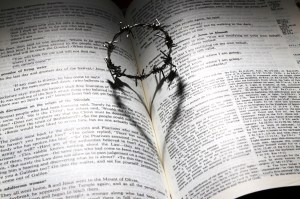
bible+heart-shadow-1_reduced-35-of-original

The problems we have with relationships in our communities are all consequences of our rejection of God.  We cannot truly love anyone without God: because God is love.  And if we cannot love our neighbors, how can we have healthy relationships with them?

As Jesus pointed out, the first great commandment is to “Love God”, the second great commandment is to “Love your neighbor”.  And the second great commandment cannot be fulfilled without the first great commandment (Matthew 22:35-40).

Furthermore, if the rebellious Believer is not “quarantined” from the rest of the brethren, i.e., if his/her rebellion is not confronted and condemned, his/her rebellious attitude towards God can spread to others and infect entire communities (1 Corinthians 5:1-6:11).  Indeed, this latent rebelliousness against God’s authority hinders genuine fellowship among church members and prevents us from fully shouldering the mantle of ministry God reserves for each Believer.

God’s authority over our lives is not burdensome, God’s authority is a blessing.

“For this is the love of God, that we keep His commandments: and His commandments are not grievous.” ~ 1 John 5:3

God’s judgments, God’s corrective disciplinary actions, are not a terror to His children. Miriam became leprous, but she never stopped being a Hebrew. When Believers are disciplined, we don’t lose our salvation: we don’t stop being children in the family of God, joint heirs with Jesus.

bible+notepad

“I remembered thy judgments of old, O Lord; and have comforted myself.” ~ Psalm 119:52

Like any child should, we remember God’s judgments because we do not want to dishonor our Father: He is holy, He is to be respected and reverenced.

We remember God’s judgments so that we don’t have to repeat our mistakes or repeat the mistakes of others.

We remember God’s judgments so that they will motivate us to do what we know is right.

We remember God’s judgments because they are demonstrations of His love for us: God cares, He is not indifferent toward us.

5 …despise not thou the chastening of the Lord, nor faint when thou art rebuked of Him: 6For whom the Lord loveth He chasteneth, and scourgeth every son whom He receiveth.
11Now no chastening for the present seemeth to be joyous, but grievous: nevertheless afterward it yieldeth the peaceable fruit of righteousness unto them which are exercised thereby.” ~ Hebrews 12:5b-6, 11

We are encouraged to remember God’s judgments so that we stay in glorious fellowship with Him.   So that we can fully enjoy the blessings, the ministry, He has in store for us, as members of the Body of Christ.  And so that we can enjoy the beauty of brotherly love with other Believers, i.e., other members of the Body of Christ.


This is the fourth of a nine-part series on Principles for the Promised Land summarized from the book of Deuteronomy.

God’s No

“If ye then, being evil, know how to give good gifts unto your children, how much more shall your Father which is in heaven give good things to them that ask Him?” ~ Matthew 7:11


God’s “no” means “Something better”
I can trust Him with my all.
The God who formed the universe
Attendeth when I call;
And when in love and wisdom
He withholds my heart’s request
His “no” means “something better”.
He will give me what is best.

God’s “wait-a-while’s” bring blessings
That His “right-away’s” withhold.
When He’s tried me in the fire
I shall [then] come forth as gold.
Oh what peace it brings in sorrow,
And what comfort fills my breast
Just to know, whate’er His answer
He will give me what is best.

– by Barbara C. Ryberg

“How do you know if what you are praying for is in God’s will?”

Knowing whether or not what we are praying for is part of God’s will for us, can be challenging for Believers.  We can sometimes be beset by doubt:

“Am I praying/asking for the right outcome?” “Should I stop praying?” “Should I keep praying?”

The Bible gives us some useful examples that might help us answer the questions.

First, let us look at Jesus.  When Jesus prayed in the Garden of Gethsemane, He asked for the “Cup” (his imminent death on the Cross) to pass if it was possible (Matthew 26:39). He repeated that prayer we are told, two more times (v. 42 and v.44). Eventually, it became clear to Him that it was not possible and He went ahead to die for our sins (it really was the ONLY way).

For a second example, consider David.  David prayed (and fasted) asking God to spare his gravely ill infant son. God declined.  David’s son died.  And David stopped fasting (2 Samuel 12:15-23).

In both examples, until God’s will became clear, both Jesus and David prayed. We should do the same. We should pray, study God’s Word, fast, repeatedly/continually until God’s will becomes clear to us.

biblelaughing-boy_cropped

Sadly, most of us (myself included) are too impatient: we want an answer now: right now. And we are unwilling to be patient until we “hear God’s voice”, i.e., until we perceive God’s will.

Consider this: God already knows the problem we are facing.  And He already knows the answer.   We don’t give God new information when we pray.  Therefore, prayer (and fasting and studying God’s Word) is really designed to help us to get in tune with Him.

It is not that God has difficulty hearing us, it’s that we have difficulty hearing Him.  Prayer is really a means by which God prepares our hearts and minds to “hear” Him, i.e., to perceive His will. If we allow Him to help us, if we give ourselves the time to learn, God will teach us what His perfect will is for us.

“Call unto me, and I will answer thee, and show thee great and mighty things, which thou knowest not.” ~ Jeremiah 33:3

Keep praying until God’s answer becomes clear.

Sometimes, like David, we will need to keep praying until the issue we are praying about is conclusively resolved.  David prayed for his sick baby until the child died: only then did he know God’s answer was “no”.

Finally, notice that once God’s will was clear, Jesus obeyed.  While God’s will is genuinely unclear, we should keep praying.  But, once God reveals to us what we should do, we should get off our knees and obey.  The sincere prayer of the Believer always results in the obedience of the Believer.


This article was written as a response to a question asked by a visitor who commented on “Perspective on Prayer“.

REMEMBER God is our Provider

“But thou shalt remember the Lord thy God: for it is He that giveth thee power to get wealth, that He may establish His covenant which He sware unto thy fathers, as it is this day.” ~ Deuteronomy 8:18


The Promised Land that God was leading the Hebrews into was fertile and super-productive (Numbers 14:7-8). Once they settled down to work the land they would thrive. However, while thriving, it is often easy to forget the One who made us succeed and forget the purpose of our success.

It is God that provides everything we need to do well. He gives us strength, health, intelligence, and opportunity.  Moreover, He protects us and guides us in ways we often don’t understand or even perceive. For example, Job prospered greatly until God allowed satan to attack him (Job 1).  And, once God restrained satan again, Job prospered again.  Without God’s protection, Job could not have prospered.

“Bless the Lord , O my soul, and forget not all His benefits:” ~ Psalm 103:2

If we fail to recognize that God is the one who supplies all our needs, instead of being thankful to Him, we will attribute our blessings to ourselves (or to a god/source we invent). Sadly, Israel would make this mistake and it would lead to their downfall.

“For [Israel] did not know that I gave her corn, and wine, and oil, and multiplied her silver and gold, which they prepared for Baal.” ~ Hosea 2:8

sunrisewheatfield

Nevertheless, success is not an end in itself. God would allow the Hebrews to prosper so that He could “establish His covenant” with them. In the covenant God made with them, He promised to bless them if they were faithful (Deuteronomy 7:8-16).

The intended result of this arrangement was that Israel would become an example to all nations: the world would recognize the everlasting benefits of faithful obedience to God (Deuteronomy 4:5-7). In other words, God would make Israel succeed so that other nations would seek to have a relationship with Him. The ultimate purpose of Israel’s blessings was the salvation of the world.

Similarly, in the covenant of The Cross, Christians are promised the indwelling of The Holy Spirit if we put our trust for salvation in Christ Jesus.

“If ye then, being evil, know how to give good gifts unto your children: how much more shall your heavenly Father give the Holy Spirit to them that ask Him?” ~ Luke 11:13

God gives His children many different gifts to meet their various needs.  However, the Holy Spirit is the gift that every Believer is guaranteed to receive.  The Holy Spirit applies God’s Word to our lives, thereby enabling us to thrive: to become mature Christians growing to “the measure of the stature of the fullness of Christ” (Ephesians 4:13-15, 2 Peter 1:3).

However, the indwelling of the Holy Spirit, in the life of a Believer, is not an end in itself. Rather, we are to become witnesses: testifying of the mercies of God to the world around us (Matthew 28:18-20, 1 John 4:13-15).

“Hereby know we that we dwell in Him, and He in us, because He hath given us of His Spirit. And we have seen and do testify that the Father sent the Son to be the Saviour of the world.” ~ 1 John 4:13-14

barley-field-1684052_1920

The ultimate purpose of the blessings of God, the indwelling of the Holy Spirit, in the life of a Believer is the salvation of the world.

But there is a problem.

Our definition of success/prosperity often differs from God’s definition. God’s gift to us is the Holy Spirit, through Jesus’ redemptive death and empowering resurrection. But that’s usually not what we desire when we think of success/prosperity. Usually, our focus is on material wealth and/or physical health.  Material wealth and physical health are gifts from God, but they are not always beneficial.  Therefore, God does not always provide them to us.

If we are primarily concerned with material wealth and/or physical health, it is easy for us to become insensitive, even blind, to God’s desired work in us (to conform us to the image of Christ, Romans 8:29, Ephesians 4:13) and through us (to reconcile the world to Himself, 2 Corinthians 5:19).

Remembering that God is our provider also means that we trust in His provision. Whether He gives us material wealth, physical health or the forgotten gift of suffering (Philippians 1:29), we trust that God provides us with everything necessary for us to thrive BECAUSE He is The Good Father.

“According as His divine power hath given unto us all things that pertain unto life and godliness, through the knowledge of Him that hath called us to glory and virtue:” ~ 2 Peter 1:3


This is the third of a nine-part series on Principles for the Promised Land summarized from the book of Deuteronomy