Latest Posts

Redemption (Part 3): Disobedience Disables

Bookmark and Share

Genesis 3:9-11
9 And the LORD God called unto Adam, and said unto him, Where art thou? 10 And he said, I heard thy voice in the garden, and I was afraid, because I was naked; and I hid myself.  11 And he said, Who told thee that thou wast naked? Hast thou eaten of the tree, whereof I commanded thee that thou shouldest not eat?

HAVE YOU EATEN THE FRUIT THAT I TOLD YOU NOT TO EAT? God addresses the crux of Adam’s (and our) problem: Sin.

But God commendeth his love toward us, in that, while we were yet sinners, Christ died for us. (Romans 5:8)

First, God had made Adam aware of the broken fellowship between them (vs. 9).

Second, God had challenged Adam’s new-found way of thinking to show him that he was no longer in the light, he was now in the dark (vs. 11a). Adam had argued that nakedness was his problem, rather than his sin instead of walking in the truth Adam was living a lie.

Now (vs. 11b) God effectively asks Adam: “Did you sin?”; “Did you do what I told you not to do?”

The first two questions God had asked were designed to get Adam to the see the problems caused by his sin. Adam’s sin is what destroyed fellowship with God, and sin was why Adam could no longer think straight.

Just like Adam, sin prevents us from fellowshipping with the Holy God AND blinds our eyes to God’s truth. For fellowship with God to be restored and for us to be able to walk in the light of God’s Truth, we must first deal with our sin problem. And the ONLY way to do that is to accept, in faith, the way God has made possible: the sacrifice of Jesus Christ on the Cross of Calvary.

“Jesus saith unto him, I am the way [back to fellowship with God], the truth [of what living is really about], and the life [given to replace the death sentence of sin!]: no man cometh unto the Father, but by me.” ~John 14:6

We cannot hide from the problem of sin in our lives. It cannot be escaped or circumvented. BUT faith Jesus can break sin’s power over us and an bring us into a transformative relationship with Him.

And ye shall seek me, and find me, when ye shall search for me with all your heart. (Jeremiah 29:13)

Finally, in the question He asked Adam (vs. 11b), God defines sin as disobedience. Disobedience is doing what we know is against God’s will. In other words, disobedience is rebellion to God’s authority. This is the message God wanted Adam to understand. Rebellion cuts off access to both God’s love (fellowship) and God’s guidance/instruction (true knowledge/understanding). This was true for Adam and is true for us. To enjoy a genuinely close and personal relationship with God we MUST walk in obedience to His Word. To have true wisdom, knowledge and understanding we MUST walk in obedience to His Word.

The distance Believers too often experience in our relationship with God is a direct result of our failure to obey him. We can’t expect to ignore God’s instructions and then feel His presence. Likewise, the uncertainty and confusion many Christians have about their lives, and life in general, is also a result of disobedience. In no less than four places (Psalm 110:10, Proverbs 1:7, Proverbs 9:10, Proverbs 15:33) God’s word tells us that, “The fear of the Lord is the beginning of wisdom/knowledge…” Clearly, walking in disobedience is EXACTLY the opposite of walking in “The fear of the Lord”. In other words, wisdom/knowledge are NOT available to the disobedient!

As Adam was about to discover, sin/disobedience makes life very, very difficult. The challenge for us is to learn from Adam’s mistake. If we are ever to live victorious Christian lives, we must first seriously seek to live obedient sacrificial lives. It’s not more ‘churching’, it’s not louder singing, it’s not even better preaching that’s going to transform us. We will be transformed when we “offer ourselves as living sacrifices” to God (Romans 12:1-2). When we sacrifice our will to live in obedience to His will.

Bookmark and Share

——————————————————————————————————————-
**This is the third installment in a series on the Origins of Redemption as given in Genesis 3**

Redemption (Part 2): Garbage in, Garbage Out (Wrong Knowledge = Wrong Action)

Bookmark and Share

Genesis 3:7, 9-11
7 And the eyes of them both were opened, and they knew that they were naked; and they sewed fig leaves together, and made themselves aprons.  9 And the LORD God called unto Adam, and said unto him, Where art thou?  10 And he said, I heard thy voice in the garden, and I was afraid, because I was naked; and I hid myself.  11 And he said, Who told thee that thou wast naked?

WHO TOLD YOU THAT YOU WERE NAKED? Since God is omniscient, He clearly wasn’t trying to find out who told Adam and Eve they were naked. Rather, in asking them the question, His objective was to get them to see that this new knowledge regarding their nakedness was not from Him. If their nakedness was a problem, then He would have taken care of it from the beginning.

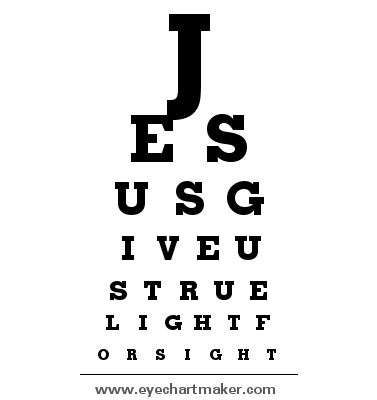
The just shall live by faith. For we walk by faith, not by sight (Romans 1:17b, 2 Corinthians 5:7)

So where did Adam and Eve get this new knowledge? The answer lies in verse 7: after eating the fruit their eyes “were opened”. In other words, they were able to see things they had never seen before.

Before eating the fruit (i.e., before sin) Adam and Eve were limited to God’s worldview: they saw life as God revealed it, they saw life from God’s perspective. Therefore, they appropriated God’s value-system: what God deemed important was important what God deemed trivial was trivial.

After eating the fruit (i.e., after sin), however, this changed and they now saw life through their own eyes, from their own perspectives.

To experience God’s Redemption we must relinquish our worldview/value-system and accept God’s instead. From their new perspective, the first thing Adam and Eve saw was the external. They had immediately forgotten their sin-stained internal/spiritual state. Instead of making preparations to address their fallen spiritual condition, they set about covering their external features, which previously had not been a problem! How absurd to fix what was not broken (i.e., their nakedness) and ignore what was broken (i.e., their relationship with God)!

“The light of the body is the eye: if therefore thine eye be single, thy whole body shall be full of light.  But if thine eye be evil, thy whole body shall be full of darkness. If therefore the light that is in thee be darkness, how great is that darkness!” Matthew 6:22-23

But as He did with Adam and Eve, God asks us the same question: “Where do you get the information/perspective which you use to make decisions, to run your life?”

In an unredeemed state we have no choice but to use our own knowledge/perspective to guide our lives. Without salvation we make decisions based on how we see things. Therefore, like Adam and Eve, we approach life in the wrong way because we focus on the external and ephemeral, rather than the spiritual and eternal.

…For the LORD seeth not as man seeth; for man looketh on the outward appearance, but the LORD looketh on the heart. 1 Samuel 16:7b

ALL scripture is given by inspiration of God, and is profitable for doctrine, for reproof, for correction, for instruction in righteousness: That the man of God may be perfect… (2 Timothy 3:16-17)

Therefore, a truly redeemed life is one in which the innate sin-spawned worldview/value-system is being replaced daily with God’s redemption-enabled worldview/value-system.

And be not conformed to this world: but be ye transformed by the renewing of your mind, that ye may prove what is that good, and acceptable, and perfect, will of God. Romans 12:2

God has placed His worldview/value-system in His Word, the Bible. Therefore, the redeemed ingest Scripture eagerly and conform to Biblical instruction. The redeemed neither change nor ignore (any part of) the Bible because it does not fit into their worldview/value-system. Instead, the redeemed relinquish their value-system for God’s, never daring to trust their sight, never relying on eyes opened by sin: the Redeemed keep their focus on the spiritual and eternal by trusting God’s sight.

For we [the Redeemed] walk by faith, not by sight 2 Corinthians 5:7

Bookmark and Share

——————————————————————————————————————-
**This is the second installment in a series on the Origins of Redemption as given in Genesis 3**

Redemption (Part 1): LOCATION, LOCATION, LOCATION

Genesis 3:7-9 7And the eyes of them both were opened, and they knew that they were naked; and they sewed fig leaves together, and made themselves aprons.  8And they heard the voice of the LORD God walking in the garden in the cool of the day: and Adam and his wife hid themselves from the presence of the LORD God amongst the trees of the garden.  9And the LORD God called unto Adam, and said unto him, Where art thou?

WHERE ARE YOU? Obviously, God knew where Adam and Eve were, geographically and otherwise. The Omniscient God did not ask them the question to gain information. Rather, He asked them the question to make them think. And by their answers to help them and us understand the effects of sin.

He shall cry unto me, Thou art my father, my God, and the rock of my salvation. (Psalm 89:26)

When God confronts us in our sinful state, He first wants us to know our spiritual location. God is unchanging and unmoving, God is our Rock.

…Ascribe ye greatness unto our God. He is the Rock, his work is perfect: for all his ways are judgment: a God of truth and without iniquity, just and right is he. (Deuteronomy 32:3b-4)

Every good gift and every perfect gift is from above, and cometh down from the Father of lights, with whom is no variableness, neither shadow of turning. (James 1:17)

Righteousness bound Adam and Eve to that Rock, but sin severed the bond.   The first step in rescuing them (and us) was to make them aware of their position relative to God. To come to God we must first realize that we are not where we should be: that we are not in a relationship with Him: that the bond between God and us is severed and we are adrift on the seas of life.

No one comes to God before first recognizing that he/she is separated from God. This was the problem with the Pharisees of Jesus’ day. They never realized that there was a Gulf between themselves and God. And so they never accepted Jesus’ offer to Bridge the gap: to make a way between them and God.

No one can be found who doesn’t know they are lost…

…Where are you?

Bookmark and Share

——————————————————————————————————————- This is the first installment in a series on the Origins of Redemption as given in Genesis 3

The First Sin — “Know God’s Word to know sin. Choose God’s Word to defeat sin”


Bookmark and Share


Genesis 3:1-6
1 Now the serpent was more subtil than any beast of the field which the LORD God had made. And he said unto the woman, Yea, hath God said, Ye shall not eat of every tree of the garden?  2 And the woman said unto the serpent, We may eat of the fruit of the trees of the garden:  3 But of the fruit of the tree which is in the midst of the garden, God hath said, Ye shall not eat of it, neither shall ye touch it, lest ye die.  4 And the serpent said unto the woman, Ye shall not surely die:  5 For God doth know that in the day ye eat thereof, then your eyes shall be opened, and ye shall be as gods, knowing good and evil. 6 And when the woman saw that the tree was good for food, and that it was pleasant to the eyes, and a tree to be desired to make one wise, she took of the fruit thereof, and did eat, and gave also unto her husband with her; and he did eat.

Thy word have I hid in mine heart, that I might not sin against thee. (Psalm 119:11)

NOTES

  1. What will you do with what you know about God’s Will/Word
  2. Know God’s Word to know sin
  3. Choose God’s Word to defeat sin

CHORDS

This passage of Scripture not only tells us the root cause of sin, but also how to triumph over it. (NOTE: The fact that the woman sinned before the man sinned is inconsequential in so far as understanding the origin of sin.) It begins with the woman being confronted by the serpent while she is alone in the garden. The serpent first challenged the woman’s knowledge of God’s Word. And she resisted that initial maneuver by correctly recounting God’s instruction. The serpent then asserts (without evidence!) that God lied and that there was benefit to eating the fruit (i.e., disobeying God). Then, despite her knowledge of God’s instruction, the woman considers the appeal of the fruit and decides to eat it, because the fruit was “good for food”, “pleasant to the eyes”, and “desired to make one wise”.

In this record of the first sin, God wants us to understand the root cause of sin and how to defeat it. And so He gives us the two factors that, together, can be used to overcome sin and without which sin overcomes us: (1) Knowledge and (2) Supremacy of God’s Word.

Knowledge of God’s Word. In his effort to ensnare the woman, the serpent’s first line of attack was on her knowledge of God’s Word regarding eating the fruit of the tree of knowledge of good and evil. If she didn’t know what God had said, then she would have little reason to resist the serpent’s suggestion. The woman passed this test because she knew what God had said about eating the fruit.

Thy word have I hid in mine heart, that I might not sin against thee. ~Psalm 119:11

Thy word is a lamp unto my feet, and a light unto my path. ~Psalm 119:105

If ye love me, keep my commandments. ~John 14:15

The law of the LORD is perfect, converting the soul: the testimony of the LORD is sure, making wise the simple. (Psalm 19:7)

Her knowledge of God’s Word enabled her to recognize sin and (initially) avoid it. Far too frequently, however, Believers slip-up because they are unable to recognize sin/error due to unfamiliarity with God’s Word. Knowledge of God’s Word opens the eyes of Believers so that they can see where to go and not stumble.

Jesus amplifies this point even further by establishing a link between keeping (i.e., knowing and holding on to) His commandments (God’s Word) and fellowship between God and man. That is, we cannot enjoy fellowship (a love relationship) with God without knowing what He says! If we intend to walk in righteousness and NOT to walk in sin, then we must know how to walk and where to walk: we MUST know God’s Word.

All scripture is given by inspiration of God, and is profitable for doctrine, for reproof, for correction, for instruction in righteousness: ~2 Timothy 3:16

Supremacy of God’s Word. Having failed in his initial attack, the serpent tries a second, more insidious tactic: he attacks God’s credibility. The serpent, in essence, challenges the notion that God cared about the woman’s interests/concerns as much as she did. The serpent asserts that the woman had more to gain by charting her own course than accepting God’s prescription. It is at this point that the woman makes the pivotal error: She decides to examine the authenticity of the serpent’s claim from her human perspective.

For all that is in the world, the lust of the flesh, and the lust of the eyes, and the pride of life, is not of the Father, but is of the world. ~1 John 2:16

The statutes of the LORD are right, rejoicing the heart: the commandment of the LORD is pure, enlightening the eyes. (Psalm 19:8)

The woman considered the fruit’s appeal to

  • Her physical need (it was good for food)
  • Her need for pleasure (it was pleasant to the eyes)
  • Her need for validation/self-pride ([it was] desired to make one wise).

Though none of these human desires are intrinsically evil, they have no place in the determination of right from wrong. No decision on any matter should be made because of how well they please human desires. Instead God’ Word should be held as supreme. Rather than making God’s Word subject to our desires, we should subject our desires to God’s Word. Only God’s Word differentiates sin from righteousness.

…for thou hast magnified thy word above all thy name. ~Psalm 138:2b

For as the heavens are higher than the earth, so are my ways higher than your ways, and my thoughts than your thoughts. ~Isaiah 55:9

However, we will only hold God’s Word as supreme when we trust that He knows what is best for us, infinitely better than we do. The serpent was successful because the woman, after reflecting on how appealing the fruit was, doubted the integrity of God and the supremacy of His Word.  This is the constant struggle for every Believer: our human nature tells us that we need several things: houses, cars, husbands, wives, children, money.   But, when those perceived needs are not met, can we trust God to sustain us? Or should we take matters into our own hands?   Can a just and loving God withhold the things we feel we so desperately need to make our lives complete?

The fear of the LORD is clean, enduring for ever: the judgments of the LORD are true and righteous altogether. (Psalm 19:9)

When Jesus was tempted, He resolutely resisted ALL the devil’s deceptive propositions. Instead, Jesus relied on God’s Word to overcome temptation. Unlike the woman, Jesus not only knew God’s Word, but also demonstrated that God’s Word was supreme: more important than food (physical need), more important than worldly gain (need for pleasure) and more important than world acclaim (need for validation).

A Closing Word on the Serpent. Contrary to popular belief, the serpent did not trick the woman into anything. The serpent falsely accused God of lying, but that does not constitute a trick; it is just a false accusation. Notably, Scripture, does not involve the devil in its description of the sin process that takes place within a person:

But every man is tempted, when he is drawn away of his own lust, and enticed.  Then when lust hath conceived, it bringeth forth sin: and sin, when it is finished, bringeth forth death. ~James 1:14-15

Instead, Scripture places the responsibility squarely on the individual. The devil will try to make us fall, but we can choose to trust God’s Word (if we know it) and TRIUMPH!

CODA

  • Do you know God’s Word enough?
  • Is God’s Word more important than your feelings or your comfort?
  • When God’s Word in in conflict with your dreams, plans and hopes, which one wins?


Bookmark and Share


Miracles of Jesus: The Blind Man from Bethsaida… “We need more than just Light, We also need Sight”

Bookmark and Share

Mark 8:22-25
22 And he cometh to Bethsaida; and they bring a blind man unto him, and besought him to touch him.  23 And he took the blind man by the hand, and led him out of the town; and when he had spit on his eyes, and put his hands upon him, he asked him if he saw ought.  24 And he looked up, and said, I see men as trees, walking.  25 After that he put his hands again upon his eyes, and made him look up: and he was restored, and saw every man clearly.

NOTES

  1. Salvation: from Darkness to Light
  2. Salvation+Sanctification: from Light to Sight
  3. We Need Light to Live and Sight to Succeed

CHORDS

And Jesus said… I am come into this world, that they which see not might see… (John 9:39a)

Jesus does a curious thing in this miracle: He restores the blind man’s sight in two stages. Clearly, as seen in His other miracles, Jesus could have healed the man at once, in an instant. So, why did Jesus choose to heal the man in two steps? In the Scripture, Jesus frequently uses miracles as object lessons and here He teaches us that Salvation gives birth, and Sanctification gives growth to a Christian.

The Bible tells us that life before Salvation is like living in total darkness, which makes it impossible to see:

Then spake Jesus again unto them, saying, I am the light of the world: he that followeth me shall not walk in darkness, but shall have the light of life. ~John 8:12

To open their eyes, and to turn them from darkness to light, and from the power of Satan unto God, that they may receive forgiveness of sins, and inheritance among them which are sanctified by faith… ~Acts 26:18a

So in the miracle Jesus shows us that when Salvation comes to a person’s life, it opens their eyes, removing darkness and enabling them to see for the first time. However, while the ability to detect/receive light is a clear and definite improvement over blindness, it is imperfect. Light is coming into the eyes, but the images that come with it are unintelligible: Light without Sight. Indeed, doctors report that when physically blind people are cured (through medical rather than supernatural means) a period of adjustment of up to several weeks is needed before images become intelligible. Ostensibly, some of the components of the visual system (especially the brain!) require both practice and conditioning before they can function properly. The scripture shows us that this is also true spiritually.

In the miracle, the blind man does not go away from Jesus after the first stage (Salvation) of the miracle. While in an absolute sense he could now see, there wasn’t much he could do with unclear images. If he went away after the first stage he would stumble around, experiencing very limited improvement in the quality of his life. Instead, he continued with Jesus until his sight was fully restored, after the second stage (Sanctification) of the miracle.

Then Jesus said unto them, Yet a little while is the light with you. Walk while ye have the light, lest darkness come upon you: for he that walketh in darkness knoweth not whither he goeth. While ye have light, believe in the light, that ye may be the children of light… (John 12:35-36a)

Likewise, if we fail to walk with Jesus after we experience salvation, we become like persons who stumble around because they can’t see clearly. We might know right from wrong, darkness from light, but we are unable to use that knowledge to navigate the often treacherous world around us. If our Christian walk (begins and) ends with salvation we remain vulnerable and easily led/misdirected down the wrong paths. We know light from darkness, good from evil, but men look like walking trees: we are confused.

Like the blind man, we need Jesus to give us more than just Light, we also need Sight: the ability to make sense of what the light shows us, the ability to use the light to good effect. So, we too should continue walking with Jesus as he guides us into that second stage after Salvation (Light), namely Sanctification (Sight).

Jesus further demonstrates the importance of Sanctification in the passage below:

I [Jesus] have manifested thy name unto the men which thou gavest me out of the world: thine they were, and thou gavest them me; and they have kept thy word.  Now they have known that all things whatsoever thou hast given me are of thee.  For I have given unto them the words which thou gavest me; and they have received them, and have known surely that I came out from thee, and they have believed that thou didst send me.

Sanctify them through thy truth: thy word is truth.  As thou hast sent me into the world, even so have I also sent them into the world.  And for their sakes I sanctify myself, that they also might be sanctified through the truth.  Neither pray I for these alone, but for them also which shall believe on me through their word; ~John 17: 6-8, 17-20

Jesus starts out by confirming that the disciples (the 11 present) were saved (John 17: 6-8): they had The Light. But then He prays that they (John 17: 17, 19) and we (John 17: 20) might be Sanctified: that they might have Sight. Salvation was not enough for them to thrive, to succeed in the tasks God had prepared for them. The same is true for every Christian: to be successful, to overcome the devil, to complete the work God prepared for us to do, we MUST be in the place for the work of Sanctification to be completed. As Paul puts it:

I beseech you therefore, brethren, by the mercies of God, that ye present your bodies a living sacrifice, holy, acceptable unto God, which is your reasonable service.  And be not conformed to this world: but be ye transformed by the renewing of your mind, that ye may prove what is that good, and acceptable, and perfect, will of God. ~Romans 12:1-2

Only as the Transformation/Sanctification takes place can we start to prove (know with certainty) the will of God. Without Transformation/Sanctification we cannot know God’s will. And so we stumble, taking uncertain steps in life: never quite sure what we are about, or what to do or where to go and how to get there. We have the Light but not the Sight.

But ye are a chosen generation, a royal priesthood, an holy nation, a peculiar people; that ye should shew forth the praises of him who hath called you out of darkness into his marvellous light; (1 Peter 2:9)

In closing, Scripture leaves us (at least) two keys to securing (being in the place to receive) Sanctification:

STUDY

Study to shew thyself approved unto God, a workman that needeth not to be ashamed, rightly dividing the word of truth. ~2 Timothy 2:15

Of whom we have many things to say, and hard to be uttered, seeing ye are dull of hearing.  For when for the time ye ought to be teachers, ye have need that one teach you again which be the first principles of the oracles of God; and are become such as have need of milk, and not of strong meat.  For every one that useth milk is unskilful in the word of righteousness: for he is a babe.  But strong meat belongeth to them that are of full age, even those who by reason of use have their senses exercised to discern both good and evil. ~Hebrews 5:11-14

WORK

…He [Jesus]… gave gifts unto men… For the perfecting of the saints, for the work of the ministry, for the edifying of the body of Christ: Till we all come in the unity of the faith, and of the knowledge of the Son of God, unto a perfect man, unto the measure of the stature of the fulness of Christ:  That we henceforth be no more children, tossed to and fro, and carried about with every wind of doctrine, by the sleight of men, and cunning craftiness, whereby they lie in wait to deceive;  But speaking the truth in love, may grow up into him in all things, which is the head, even Christ: ~Ephesians 4:8, 12-15

Bookmark and Share

The Parable of the Sheep and the Goats… “Do I value others enough to put their needs above mine?”

Bookmark and Share

Three Characteristics of Salvation, Part 3: Love

Matthew 25:31-46
31 When the Son of man shall come in his glory, and all the holy angels with him, then shall he sit upon the throne of his glory:  32 And before him shall be gathered all nations: and he shall separate them one from another, as a shepherd divideth his sheep from the goats:  33 And he shall set the sheep on his right hand, but the goats on the left.  34 Then shall the King say unto them on his right hand, Come, ye blessed of my Father, inherit the kingdom prepared for you from the foundation of the world:  35 For I was an hungred, and ye gave me meat: I was thirsty, and ye gave me drink: I was a stranger, and ye took me in:  36 Naked, and ye clothed me: I was sick, and ye visited me: I was in prison, and ye came unto me.  37 Then shall the righteous answer him, saying, Lord, when saw we thee an hungred, and fed thee? or thirsty, and gave thee drink?  38 When saw we thee a stranger, and took thee in? or naked, and clothed thee?   39 Or when saw we thee sick, or in prison, and came unto thee?  40 And the King shall answer and say unto them, Verily I say unto you, Inasmuch as ye have done it unto one of the least of these my brethren, ye have done it unto me.  41 Then shall he say also unto them on the left hand, Depart from me, ye cursed, into everlasting fire, prepared for the devil and his angels:  42 For I was an hungred, and ye gave me no meat: I was thirsty, and ye gave me no drink:  43 I was a stranger, and ye took me not in: naked, and ye clothed me not: sick, and in prison, and ye visited me not.

“Before him shall be gathered all nations: and He shall separate them one from another, as a shepherd divideth his sheep from the goats” ~Matt. 25:32

44 Then shall they also answer him, saying, Lord, when saw we thee an hungred, or athirst, or a stranger, or naked, or sick, or in prison, and did not minister unto thee?  45 Then shall he answer them, saying, Verily I say unto you, Inasmuch as ye did it not to one of the least of these, ye did it not to me.  46 And these shall go away into everlasting punishment: but the righteous into life eternal.

NOTES

  1. Actualization = Authenticity
  2. We don’t serve those we don’t see;
  3. We won’t serve those we won’t value
  4. When looking for God, don’t look past your brother/sister
  5. The Saved love others and Those who love others are Saved

CHORDS

This parable concludes our study on the three characteristics of Salvation as outlined by Jesus in three parables in Matthew 25. In this parable Jesus previews mankind’s appearance before God at The Judgment; at the end of the world. In this glimpse into the future, Jesus makes clear that the sole issue that will separate the saved from the unsaved is love of the brethren. Although they are all of irrefutable importance in the church, knowledge, fervor, piety, doctrinal rectitude, etc. would not be the defining characteristic; the defining characteristic will be love. Moreover, love in action would be the key: God’s love is channeled through and revealed by the saved to (even the least of) mankind in tangible ways.

I was a stranger, and ye took me in…

In the parable the Son of man, Jesus, returns to Judge mankind as rightful King of the universe. Figuratively, mankind is separated into two groups: Sheep and Goats. The Sheep, we are told, are the ones who did the work of love in ministering to Jesus’ brethren and their reward is to join Him in heaven. In contrast, the Goats failed to do the work of love in ministering to Jesus’ brethren and are, consequently, banished to everlasting fire with the devil.

The first point we will examine is that Jesus makes it clear that a believer’s authenticity is determined by the actualization of his/her faith. In other words, it was not enough to merely acknowledge Jesus as God; rather, that belief must be evident in the believer’s conduct, specifically in how people in need are treated. In James it is explained as follows,

Pure religion and undefiled before God and the Father is this, To visit the fatherless and widows in their affliction, and to keep himself unspotted from the world. ~James 1:27

What doth it profit, my brethren, though a man say he hath faith, and have not works? can faith save him? If a brother or sister be naked, and destitute of daily food,  And one of you say unto them, Depart in peace, be ye warmed and filled; notwithstanding ye give them not those things which are needful to the body; what doth it profit?  Even so faith, if it hath not works, is dead, being alone. ~James 2:14-17

I was… Naked, and ye clothed me…

In other words, un-actualized, theoretical faith, faith that does not produce action is not faith at all. That kind of faith is not authentic. Genuine faith produces actions of love. This notion is further clarified by considering how much God loves all of mankind (John 3:16-17) and how much He is concerned with the well being of the weak, the underprivileged and the oppressed:

The LORD preserveth the strangers; he relieveth the fatherless and widow. ~Psalm 146:9

Is not this the fast that I have chosen? to loose the bands of wickedness, to undo the heavy burdens, and to let the oppressed go free, and that ye break every yoke?  Is it not to deal thy bread to the hungry, and that thou bring the poor that are cast out to thy house? when thou seest the naked, that thou cover him; and that thou hide not thyself from thine own flesh?… Then shalt thou call, and the LORD shall answer… ~Isaiah 58:6-7, 9a

For I was an hungred, and ye gave me meat…

When this special concern that God has for the disadvantaged is combined with the fact that Jesus Christ lives in the believer…

I am crucified with Christ: nevertheless I live; yet not I, but Christ liveth in me: and the life which I now live in the flesh I live by the faith of the Son of God, who loved me, and gave himself for me. ~Galatians 2:20

…it becomes clear that if Jesus lives in us then we MUST love our brother and share God’s special concern for the weak, the underprivileged and the oppressed. John makes the point even more succinctly:

Beloved, let us love one another: for love is of God; and every one that loveth is born of God, and knoweth God.  He that loveth not knoweth not God; for God is love.  Beloved, if God so loved us, we ought also to love one another. ~1 John 4:7-8, 11

Therefore, if our faith isn’t actualized in the work of love, then it is not authentic.

Nevertheless, it is important to distinguish doing the work of love, versus just doing a job. Simply being in a profession whose job it is to help people in need—e.g., nursing—does not automatically authenticate anyone as a Sheep. Instead Jesus was referring to acts of love motivated by the presence of God in a believer’s life.

I was thirsty, and ye gave me drink…

The next two points arising from the parable are that we don’t serve those we don’t see and we don’t serve those we don’t value. Curiously, neither the Sheep nor the Goats saw Jesus in the people they loved/served or didn’t love/serve. But the Sheep did see the weak, the underprivileged and the oppressed; and they helped them. On the other hand, the Goats apparently never saw the disadvantaged; or worse they never cared enough to help those in need that they did see. We must therefore ask ourselves two questions:

  1. “Do I see those in need around me?”
  2. “Do I care enough to help the helpless that I do see?”.

The first question is one of worldview: when one looks out on the world what he/she see? Attending to the problems and distractions of daily life often consumes us. So we are unable to see the needs of others because we are so preoccupied with our own—we say, “I’m in too much pain to even think about anyone else’s troubles”; “I just lost my job and the mortgage is due, I’ve got my own problems”, “Can’t stop now, I’m late for Pilates”. However, Scripture encourages us to follow Jesus’ example (Philippians 2:5-11) instead. Jesus wasn’t too distracted to see our need for salvation; He wasn’t too busy to leave His throne and rescue us in our desolation.

I was sick, and ye visited me…

The second question is about value and preference: Do I value my brethren enough to put their needs above mine? In this case the weak, the underprivileged and the oppressed are not hidden, but their worth is in question. The Goats’ answer to The LORD (vs. 44) suggests that if they had seen Him they certainly would have ministered to Him. In other words, the LORD was valuable enough for them to put their own needs and comforts aside. But their brethren were NOT valuable enough to put their own needs and comforts aside. Conversely, the Sheep—who had the same answer as the Goats—found enough value in their brethren to help them in their time of need. The Sheep were willing to help, to serve and to give to the disadvantaged, whether it was The LORD or not. When we fail to give the help we can to those we know are in need, it’s because they are not important enough to us: we don’t really love them.

Be kindly affectioned one to another with brotherly love; in honour preferring one another ~Romans 12:10

Jesus really wants us to understand that as we search for God, we should not look past (or over the heads of) our fellow man. Instead, our search for God, our relationship with God, if it is real, must lead us to loving our brethren. The evidence of true faith is service to others, especially the weakest among us.

A new commandment I give unto you, That ye love one another; as I have loved you, that ye also love one another.  By this shall all men know that ye are my disciples, if ye have love one to another. ~John 13:34-35

I was in prison, and ye came unto me.

Finally, Jesus reveals the third defining characteristic of salvation: The Saved love others and Those who love others are The Saved. Only those who actually, tangibly loved their brethren were saved. Love is neither theoretical nor abstract. The lover pays a price to love the loved. Jesus gave His life and thereby proved His love for us. He didn’t, and indeed couldn’t, just stay in Heaven and wish us into salvation; a price had to be paid. We too must be willing to pay any price to love our brethren; because each person has value and that value is the Blood of Christ, for that is the price He paid for each man, each woman.

CODA

  • Can you forget yourself long enough to find someone in need and offer help?
  • Is anyone you know not important enough for you to put aside some of your valuable time to help them?
  • Do you see Jesus in the people around you?
Bookmark and Share

The Parable of the Talents… “We are NOT saved by works, BUT we are saved to do works”


Bookmark and Share


Three Characteristics of Salvation, Part 2: Good Works

Matthew 25:14-30
14 For the kingdom of heaven is as a man travelling into a far country, who called his own servants, and delivered unto them his goods.  15 And unto one he gave five talents, to another two, and to another one; to every man according to his several ability; and straightway took his journey.  16 Then he that had received the five talents went and traded with the same, and made them other five talents.  17 And likewise he that had received two, he also gained other two.  18 But he that had received one went and digged in the earth, and hid his lord’s money.  19 After a long time the lord of those servants cometh, and reckoneth with them.  20 And so he that had received five talents came and brought other five talents, saying, Lord, thou deliveredst unto me five talents: behold, I have gained beside them five talents more.  21 His lord said unto him, Well done, thou good and faithful servant: thou hast been faithful over a few things, I will make thee ruler over many things: enter thou into the joy of thy lord.  22 He also that had received two talents came and said, Lord, thou deliveredst unto me two talents: behold, I have gained two other talents beside them.  23 His lord said unto him, Well done, good and faithful servant; thou hast been faithful over a few things, I will make thee ruler over many things: enter thou into the joy of thy lord.  24 Then he which had received the one talent came and said, Lord, I knew thee that thou art an hard man, reaping where thou hast not sown, and gathering where thou hast not strawed:  25 And I was afraid, and went and hid thy talent in the earth: lo, there thou hast that is thine.  26 His lord answered and said unto him, Thou wicked and slothful servant, thou knewest that I reap where I sowed not, and gather where I have not strawed:  27 Thou oughtest therefore to have put my money to the exchangers, and then at my coming I should have received mine own with usury.  28 Take therefore the talent from him, and give it unto him which hath ten talents.  29 For unto every one that hath shall be given, and he shall have abundance: but from him that hath not shall be taken away even that which he hath.  30 And cast ye the unprofitable servant into outer darkness: there shall be weeping and gnashing of teeth.

Be not deceived; God is not mocked: for whatsoever a man soweth, that shall he also reap. For he that soweth to his flesh shall of the flesh reap corruption; but he that soweth to the Spirit shall of the Spirit reap life everlasting. (Galatians 6:7-8)

NOTES

  1. God Gives Gifts According to Ability
  2. Work With What-Is NOT With Wish-es
  3. Work is the product of Faith enlivened by Righteousness
  4. The Saved are the Workers & the Workers are the Saved

CHORDS

This is the second of three parables on various aspects of salvation that Jesus gives in Matthew 25. In this famous Parable, a king leaves money with three servants while he goes on a trip. When he returns, two of his servants have increased the money they were responsible for. The third gave the king no increase because he had simply hid the money. Jesus uses this parable to show that work is the tangible evidence of salvation and that righteousness empowers faith to produce work.
As the king leaves to go on his trip, Jesus notes, vs. 15, that the servants were given responsibility according to their ability. This point is key because it shows that: (1) The Christian life is not a “free lunch” and (2) God has a job for everyone perfectly tailored to each person’s ability. This is a clear principle in Scripture:

For by grace are ye saved through faith; and that not of yourselves: it is the gift of God: Not of works, lest any man should boast. For we are his workmanship, created in Christ Jesus unto good works, which God hath before ordained that we should walk in them. Ephesians 2:8-10

And he gave some, apostles; and some, prophets; and some, evangelists; and some, pastors and teachers; For the perfecting of the saints, for the work of the ministry, for the edifying of the body of Christ: ~Ephesians 4:11-12

We are NOT saved by works, BUT we are saved (by grace through faith) to do WORK.

Furthermore, since each servant was given responsibility according to his/her ability, Jesus also removes the doubt as to whether they could manage their tasks or not. So, the only issue remaining is willingness. Since their ability to do the job was no longer in doubt, the rest of the parable focuses on their willingness to do the job. The application to our lives is straightforward: Jesus has a job for each of us to do; a job that perfectly matches our abilities. So the question is never, “CAN I do the work?”, instead it is “WILL I do the work?”.

For we are his workmanship, created in Christ Jesus unto good works, which God hath before ordained that we should walk in them. ~Eph. 2:10

Two of the three servants went to work, increasing the value of resources their master left with them, v. 16, 17. They worked with what they had available. There is no mention of whether the resources in their control were suitable or sufficient; no quarrelling that one had more or that one had less. No complaints are noted as to whether the circumstances for work were ideal or not. They simply went to work. Likewise, God has invested talents, skills, gifts in each Christian and He expects us to get to work, WITHOUT COMPLAINT; maximizing His investment (in us) for His glory.

For other foundation can no man lay than that is laid, which is Jesus Christ.  Now if any man build upon this foundation gold, silver, precious stones, wood, hay, stubble; Every man’s work shall be made manifest: for the day shall declare it, because it shall be revealed by fire; and the fire shall try every man’s work of what sort it is. If any man’s work abide which he hath built thereupon, he shall receive a reward. ~1 Corinthians 3:11-14

In contrast, the 3rd servant did not go to work. Instead, he hid the resources till his master returned. He reasoned that his actions were justifiable because his master was “hard man, reaping where thou hast not sown, and gathering where thou hast not strawed”, v. 24. The king, however, exposed the error of the 3rd servant’s argument, by noting that it implied the servant should have increased the king’s wealth instead of maintaining the status quo, v. 27. This exchange is really the crux of the parable. It reveals that the 3rd servant failed to work for three reasons: (a) He saw the king as “hard”/mean; (b) He saw the king as unfair and (c) He saw himself as king.

First, the 3rd servant saw the king as “hard”, v. 24. In his view the king wouldn’t tolerate mistakes; any loss on the investment would be penalized. Many of us likewise see God as a harsh taskmaster who punishes every mistake. When we see God that way it makes us risk averse, like the 3rd servant, because we don’t want to “mess up” and “get in trouble” for a misstep. In so doing, however, our world narrows and opportunities to serve God pass us by. In that mindset, danger lies everywhere, waiting to jump out on us, so “don’t do this, don’t do that, don’t go there, don’t try that, JUST DON’T…! The hidden assumption is that somehow God isn’t available to protect His children (so they better protect themselves). Or, that everything that goes wrong in a Christian’s life is a punishment, so the only way to survive is to play it safe. But this is not true; God loves us and He is merciful:

The LORD is gracious, and full of compassion; slow to anger, and of great mercy~Psalm 145:8

Also, things sometimes happen (Job 1-2) that we might never understand in this life, but God is still on our side.

Fear not: for I have redeemed thee, I have called thee by thy name; thou art mine.  When thou passest through the waters, I will be with thee; and through the rivers, they shall not overflow thee: when thou walkest through the fire, thou shalt not be burned; neither shall the flame kindle upon thee. ~Isaiah 43:1b-2

I must work the works of him that sent me, while it is day: the night cometh, when no man can work... ~John 9:4

Second, the 3rd servant also saw the king as “reaping where thou hast not sown, and gathering where thou hast not strawed”, v. 24. In other words, he saw the king as unfair. The idea here is that the king did not give his servants what they deserved; they did not benefit from their labor. Many of us often see God the same way: “God does not give me what I deserve”, “God is not fair”. Often we view ourselves as “working hard” for God, but not being rewarded by Him. “I did everything right, so why don’t I have a husband?” “I played by the rules, so why am I still struggling financially?” “I worship faithfully, so why is my child sick?” In fact, Asaph, the psalmist, expressed similar feelings

But as for me, my feet were almost gone; my steps had well nigh slipped.
For I was envious at the foolish, when I saw the prosperity of the wicked.
They are not in trouble as other men; neither are they plagued like other men.
…they have more than heart could wish.
Behold, these are the ungodly, who prosper in the world; they increase in riches.
Verily I have cleansed my heart in vain
When I thought to know this, it was too painful for me…~Psalm 73:2-3, 5-7b, 12-13a, 16

But, through prayer, he eventually realized that God is to be trusted because He is LORD.

My flesh and my heart faileth: but God is the strength of my heart, and my portion for ever.
For, lo, they that are far from thee shall perish…
But it is good for me to draw near to God: I have put my trust in the Lord GOD, that I may declare all thy works. ~Psalm 73: 26-28

Also, Isaiah reminds us:

For as the heavens are higher than the earth, so are my ways higher than your ways, and my thoughts than your thoughts. ~Isaiah 55:9

There was still another problem for the 3rd servant. Servants in Jesus’ day did not own anything. Any increase that came as a result of their labor belonged to their master who would decide how to reward them, if they even rewarded them at all. It seems that framework was unbearable for the 3rd servant. What was in it for him? No matter how hard he worked or how successful he was, the rewards belonged to his master. He could only secure his “just” reward if he was king. The same is true for with God: it ALL belongs to Him:

The earth is the LORD’s, and the fulness thereof; the world, and they that dwell therein. ~Psalm 24:1

And He alone decides what to do with it. When we focus on ourselves, instead of God, life will always seem unfair. Freedom comes when we can accept that we are not kings; we are servants of a Master who truly loves us. Only then will we be able to freely…

…Present our bodies a living sacrifice, holy, acceptable unto God, which is our reasonable service. ~Romans 12:1

Freely ye have received...

The 3rd servant’s mindset was a result of him not having a right relationship with the king. And the absence of that right relationship prevented him from doing his job; from giving his all. In contrast, it is evident that the first two servants had a right relationship with the king. Though they might also have had reservations/doubts about the king, their relationship with him convinced them that service was more important than self-preservation: it was more important to risk it all trying to serve their master than to play it safe. Their relationship with the king convinced them that, ultimately, the king could be trusted: he would reward them. As Scripture tells us:

…Without faith it is impossible to please him: for he that cometh to God must believe that He is, and that He is a rewarder of them that diligently seek him. ~Heb. 11:6

...freely give. (Matthew 10:8)

Salvation, by definition, brings us into a right relationship with God (Ephesians 2:13-16). The evidence of Salvation lies in our response to God. If we are saved, then we are saved “unto good works” (Ephesians 2:10). And not just any works, but those “which God hath before ordained that we should walk in them”. This parable shows us that a right relationship with God (a.k.a., righteousness) allows our faith to be transformed into work. That relationship is possible when we believe God exists AND that He, justly, will reward us for serving Him, even if we make mistakes. A wrong relationship with God is defined by self-preservation rather than self-sacrifice; distrust rather than dependence; self-focus rather than God-focus, and so it produces no “good work”.

Finally, Jesus reveals an awesome truth in the parable: The Saved are the Workers & the Workers are the Saved. The 3rd servant is cast into “outer darkness”, which is a plain reference to Hell. He was not saved! The application is that the saved were those who worked (the first two servants in the parable), v. 21, 23; the servant who did no work was not saved. Clearly, Salvation is NOT by works (Ephesians 2:9). But equally true, “works” testify that salvation HAS taken place, or as James explains “Faith without works is dead” (James 2:26). The one who is truly Saved will WORK!

CODA

  • Will God really take care of you?
  • Are “good works” evident in your life?
  • Are you maximizing God’s investment in you?


Bookmark and Share


The Parable of the Wise and Foolish Virgins… “Salvation must be everything or it does nothing”


Bookmark and Share


Three Characteristics of Salvation, Part 1: Endurance

Matthew 25:1-13
1 Then shall the kingdom of heaven be likened unto ten virgins, which took their lamps, and went forth to meet the bridegroom. 2 And five of them were wise, and five were foolish. 3 They that were foolish took their lamps, and took no oil with them: 4 But the wise took oil in their vessels with their lamps. 5 While the bridegroom tarried, they all slumbered and slept. 6 And at midnight there was a cry made, Behold, the bridegroom cometh; go ye out to meet him. 7 Then all those virgins arose, and trimmed their lamps. 8 And the foolish said unto the wise, Give us of your oil; for our lamps are gone out. 9 But the wise answered, saying, Not so; lest there be not enough for us and you: but go ye rather to them that sell, and buy for yourselves. 10 And while they went to buy, the bridegroom came; and they that were ready went in with him to the marriage: and the door was shut. 11 Afterward came also the other virgins, saying, Lord, Lord, open to us. 12 But he answered and said, Verily I say unto you, I know you not. 13 Watch therefore, for ye know neither the day nor the hour wherein the Son of man cometh.

But of that day and hour knoweth no man, no, not the angels of heaven, but my Father only. (Matthew 24:36)

NOTES

  1. Prepare to go the Distance
  2. Salvation means Everything or it does Nothing
  3. Those who are Saved, Endure & those who Endure are Saved
  4. Fill your tanks while there is time

CHORDS

In this well-known Parable, Jesus relates the story of two groups of young ladies on their way to participate in a wedding procession. One group (the foolish virgins) was unprepared for the bridegroom’s late arrival and ran out of oil for their lamps. They were unable to get more oil for their lamps before the final ceremony begun and were shut out of the wedding party.

To fully grasp this story, it is useful to note a few background details about wedding ceremonies in Jesus’ day. In that period in Middle-Eastern culture, wedding ceremonies lasted seven days; on the seventh day, the bridegroom would take the bride from her father’s house. He would arrive with a wedding party of mostly men and his bride would join him with her own wedding party. Typically, the bridegroom’s arrival took place late at night and no one quite knew when he would come. But as soon as people saw him arriving with his entourage, some type of alert was made. Those listening to Jesus relate this parable fully understood that any sensible member of the bridal party would certainly make provision for the bridegroom’s (possible) late arrival. What elevated this story from the mundane was that Jesus’ applied it to Salvation.
In the story Jesus exhorts His audience to prepare for a long wait; He asserts that Salvation must be all consuming; and He establishes endurance as a unique characteristic of Christians/Believers.

Very early in the parable Jesus reveals the single quality that distinguished the wise virgins from the foolish virgins: preparedness. Both groups were aware of the uncertainty of the bridegroom’s arrival because, in that culture, that was to be expected. However, only the wise virgins prepared themselves. Similarly, it is fairly common knowledge today that death is uncertain; no one knows exactly when he/she will die (not even those who attempt suicide). Moreover, Jesus also makes it plain that no one knows when He will return for His bride, the church. Therefore, with such great uncertainty preparedness is the only way to guarantee survival.

Let your light so shine before men, that they may see your good works, and glorify your Father which is in heaven. (Matthew 5:16)

So the vital question is, ‘How does a believer prepare?’ In the parable, the wise virgins prepared themselves for the uncertainty by carrying extra oil. In Scripture, when oil is associated with lamp light it usually signifies the Word of God. Just as lamps need oil to give physical light, likewise Christians need The Word of God to give spiritual light:

Matthew 4:4–But he answered and said, It is written, Man shall not live by bread alone, but by every word that proceedeth out of the mouth of God.

Psalm 119:105, 130–Thy word is a lamp unto my feet, and a light unto my path; The entrance of thy words giveth light; it giveth understanding unto the simple.

In other words, to prepare for an unsure survival to the end, whether by death or Jesus’ arrival Christians MUST maintain a reservoir full of God’s Word!!! It is Gods Plan to prepare (sanctify) Christians for the great Wedding Feast in Heaven through His Word. Without God’s Word working in our lives we will not be prepared.

John 17:17Sanctify them through thy truth: thy word is truth.

Ephesians 5:25b-27–…Christ also loved the church, and gave himself for it; That he might sanctify and cleanse it with the washing of water by the word, That he might present it to himself a glorious church, not having spot, or wrinkle, or any such thing; but that it should be holy and without blemish.

The lack of preparation seen in the foolish virgins further suggests that being a part of the wedding ceremony was not as important to them as it was to the wise virgins. It did not captivate the attention of the foolish virgins. The same is clearly true of many Christians today. Careers/career-building, family, security and lifestyle, to name a few, often distract us. To be clear, the merit of each of these items is not necessarily the issue, rather it is that they distract Christians from our main purpose and goal: Salvation. If we are going to be in the bridal party, then we must not be distracted from properly preparing ourselves for it. We know Jesus is coming back, we know we may die before He does, but, in both cases, we do not know WHEN. If we are not COMPLETELY focused on His return, if we are distracted (by anything), then we WILL NOT be able to prepare properly and we WILL NOT be ready. If Salvation is to achieve its work in us, then it must be everything to us.

Matthew 13:44-46- Again, the kingdom of heaven is like unto treasure hid in a field; the which when a man hath found, he hideth, and for joy thereof goeth and selleth all that he hath, and buyeth that field. Again, the kingdom of heaven is like unto a merchant man, seeking goodly pearls: Who, when he had found one pearl of great price, went and sold all that he had, and bought it.

...Take no thought for your life, what ye shall eat, or what ye shall drink; nor yet for your body, what ye shall put on. Is not the life more than meat, and the body than raiment? Behold the fowls of the air: for they sow not, neither do they reap, nor gather into barns; yet your heavenly Father feedeth them. Are ye not much better than they? (Matthew 6:25-26)

Thirdly, in applying the parable to Salvation, Jesus reveals an amazing truth: The saved are those who are there at the end! The foolish virgins had left to get their oil replenished and when they came back the door had already been closed. As was their custom, when the bridegroom retired to the bride-chamber with his bride the doors to the house were shut and no one, not already inside the house, was allowed to enter. The foolish virgins were not there at the end and so were not saved!!! Jesus was not suggesting that their Salvation was forfeit, but rather that they were never really saved at all. This is shown clearly in vs. 12, where the bridegroom (Jesus) declares they are unknown to Him. In other words, no relationship had ever existed between the bridegroom and the foolish virgins!

The absence of a relationship is explained in vs. 8 and 9, where the foolish virgins ask the wise for some of their oil. The wise (rightfully) refuse because they wanted to make sure that they had enough for the wedding procession. However, the application to us is that God’s Word (which never changes) does a unique Work in each individual’s life and so cannot be “transferred” to another person. My reservoir of the Word is uniquely suited to me. On The Day of Judgment, it will be impossible to confer the transformation wrought in my life by God’s Word onto someone else:

Philippians 2:12b-13–work out your own salvation with fear and trembling. For it is God which worketh in you both to will and to do of his good pleasure.

In some ways this is like the Parable of the Sower. The foolish virgins did receive some oil (the word) at the beginning, BUT their lamps did not hold enough oil for the work of salvation to be complete. Likewise, the “bad” soils in the Parable of the Sower all were unsuitable for the seed (the word) that they received. Though the seed did grow in some of the “bad” soils, that growth was not sustainable because the soils were unprepared to receive it; so salvation never came, the seed/word was never established in them. Indeed, one chapter earlier (and again in 10:22), Jesus said:

Matthew 24:12-13–And because iniquity shall abound, the love of many shall wax cold. But he that shall endure unto the end, the same shall be saved.

...He that shall endure unto the end, the same shall be saved (Matt.24:13)

Endurance, the ability to stick it out, to persevere is a defining characteristic of true Salvation. Those who endure are those who are saved; those who are saved endure.

Finally, time was a deciding factor in the fate of the foolish virgins. Presumably, they had time to get it right (i.e., to get the extra oil they needed) before the trumpet announcing the bridegroom’s arrival sounded. However, for whatever reason, they didn’t. When they finally faced the consequence of their misjudgment, it was too late. Some, though not all of us (for many people are dying unexpectedly as this is being read), still have time to get the extra oil needed: we still have time to fill up on the Word of God and allow it to do its inimitable work in our lives. The question is, “Will we do what we KNOW is right?”, or “Will we find ourselves on the outside of the wedding feast?”

CODA

  • How full is your vessel?
  • Are you completely focused on Salvation?
  • If you know what you need, will you do what you must?


Bookmark and Share


Miracles of Jesus: The Ten Lepers… “It takes more faith to give our lives to Jesus than to receive healing.”

Bookmark and Share

Luke 17:11-19
11And it came to pass, as he went to Jerusalem, that he passed through the midst of Samaria and Galilee. 12And as he entered into a certain village, there met him ten men that were lepers, which stood afar off: 13And they lifted up their voices, and said, Jesus, Master, have mercy on us. 14And when he saw them, he said unto them, Go shew yourselves unto the priests. And it came to pass, that, as they went, they were cleansed. 15And one of them, when he saw that he was healed, turned back, and with a loud voice glorified God, 16And fell down on his face at his feet, giving him thanks: and he was a Samaritan. 17And Jesus answering said, Were there not ten cleansed? but where are the nine? 18There are not found that returned to give glory to God, save this stranger. 19And he said unto him, Arise, go thy way: thy faith hath made thee whole.

NOTES

  1. Focus on The Healer, not the healing
  2. Faith when sick is good, Faith when well is better
  3. Don’t just be healed, be Whole, be Healthy

CHORDS

In Scripture, Jesus frequently uses miracles as object lessons and here, in the Healing of the Ten Lepers, He teaches us the sometimes subtle differences between: submission and exploitation; faith and opportunism; wholeness and superficiality.

Bless the LORD, O my soul, and forget not all his benefits: Who forgiveth all thine iniquities; who healeth all thy diseases; (Psalm 103:2-3)

Ten lepers see Jesus passing by and plead to be healed. Jesus agrees and sends them (in accordance with Mosaic Law) to be examined by the priests. While on the way to the priests, they are healed. This is the crucial point in the story. Their responses to being healed reveal their attitudes and (spiritual) outcomes. Nine of them moved on with their lives; one returned to glorify and thank Jesus.

Jesus explained the importance of this point in verse 18, when He said: “There are not found… to give glory to God…”. The point Jesus was making is that the nine who kept going did not have the right attitude toward the miracle or towards God. When God works a miracle in our lives, the point of the miracle is to bring Glory to God: to reveal to the miracle receiver and those around him/her that God is in control of everything. And, therefore, He is to be worshipped; we must submit ourselves to Him.

…Call upon me in the day of trouble: I will deliver thee, and thou shalt glorify me. ~Psalm 50:15

He sent his word, and healed them, and delivered them from their destructions.
Oh that men would praise the LORD for his goodness, and for his wonderful works to the children of men!
And let them sacrifice the sacrifices of thanksgiving, and declare his works with rejoicing. ~ Psalm 107:20-22

On the contrary, nine of the ten lepers focused on themselves rather than on God. Hence, once they received their healing, Jesus was no longer needed; no longer relevant. For them Jesus was essentially a means to an end: Jesus was exploited to accomplish a goal.

By application, we must ask ourselves:

  • “Is Jesus our Master or just a means to an end?”
  • “Am I serving God for my gain or to glorify Him?”
  • “Is my focus on my healing or The Healer”

This beginning of miracles did Jesus in Cana of Galilee, and manifested forth his glory; and his disciples believed on him. (John 2:11)

When Jesus is for us a tool/appliance then BOTH the rewarding and the withholding of desired gifts/miracles/blessings will drive us away from Him. In John 6, Jesus feeds five thousand men, yet it is clear (John 6:15, 26-27) that that great miracle didn’t help them to understand Jesus’ ministry (Matthew 16:21-23). They wanted him to become their earthly King, they failed to understand the redemptive work of Jesus and that He was already King. The miracle did not draw them any closer to God.

Later in the chapter (John 6:28, 30-31), the people ask Jesus to prove himself to them again. This time Jesus refused to perform a miracle (John 6:29) and instead challenged their theology. And many deserted Him. The people were not drawn closer to God whether Jesus performed a miracle or not!   To those who abandoned Him, Jesus was a means to an end. When He failed to deliver what they wanted, He became redundant, unnecessary.

On the other hand, as His disciples showed (John 6:66-69), we can only truly come to Jesus when we accept Him as Master. They didn’t understand Jesus’ theology any better than the people (John 14:1-11) and were often surprised by the miracles (John 6), but they remained because He was their Master, not a means to an end. They focused on who Jesus was not what He should do for them:

Then said Jesus unto the twelve, Will ye also go away?
Then Simon Peter answered him, Lord, to whom shall we go? thou hast the words of eternal life.
And we believe and are sure that thou art that Christ, the Son of the living God. ~ John 6:67-69

When Jesus is our Master, we focus on how we can glorify Him, not on how He can satisfy us. This does not mean we don’t have legitimate needs, but it does mean that our relationship with Him does not depend on those needs being met. Neither does His importance/relevance begin or end when those needs are met (or not). Instead of celebrating the healing we celebrate the Healer (like the tenth leper did; verses 15-16). Instead of celebrating the blessing, we must celebrate the Blesser.

In His response to the tenth leper, vs. 19, Jesus next teaches us about faith: “…thy faith hath made thee whole.”

Therefore if any man be in Christ, he is a new creature: old things are passed away; behold, all things are become new. (2 Corinth. 5:17)

In other words, ONLY, the tenth leper had enough faith to be made whole; he was not just disease-free, but sin-free! Salvation had come to his life. He now had a new heart to go along with the new skin. Clearly, the other nine lepers also had a measure of faith; they had enough faith to be cured from their leprosy. As opportunists, they, like many of us, cried out eagerly to Jesus when they were in trouble. When the trouble passed, however, Jesus was quickly forgotten as they moved on to fresh opportunities.

But Jesus shows us that that kind of opportunistic faith was not enough for their salvation. Christians tend to believe that they need more faith in order to see/experience God’s miraculous power. However, Jesus turns that notion on its head. More faith is needed for salvation, than sanitation; and only the tenth leper had enough. It takes more faith to come to Jesus when there is nothing (earthly) at stake, than to go to the priests when everything is at stake. It takes more faith to submit to Jesus when all is well, than when our very lives are in danger. It takes more faith to give our lives to Jesus than to receive healing.

And, behold, they brought to him a man sick of the palsy, lying on a bed: and Jesus seeing their faith said unto the sick of the palsy; Son, be of good cheer; thy sins be forgiven thee. And, behold, certain of the scribes said within themselves, This man blasphemeth. And Jesus knowing their thoughts said, Wherefore think ye evil in your hearts? For whether is easier, to say, Thy sins be forgiven thee; or to say, Arise, and walk? But that ye may know that the Son of man hath power on earth to forgive sins, (then saith he to the sick of the palsy,) Arise, take up thy bed, and go unto thine house. ~Matthew 9:2-6

But we have this treasure in earthen vessels, that the excellency of the power may be of God, and not of us. (2 Corinthians 4:7)

Finally, Jesus makes a clear distinction between being healed and being whole/healthy. The tenth leper was the only one with enough faith for salvation and so he was not just healed, he was whole: he was healthy in body, soul and spirit. Nine of the lepers settled for being healthy in body only. Likewise, we frequently seek only material/physical miracles from God, often forgetting to seek out spiritual miracles. But His word frequently reminds us that the inner man is more important than the outer man:

But the LORD said… Look not on his countenance, or on the height of his stature… for the LORD seeth not as man seeth; for man looketh on the outward appearance, but the LORD looketh on the heart. ~ 1 Samuel 16:7

For which cause we faint not; but though our outward man perish, yet the inward man is renewed day by day. For our light affliction, which is but for a moment, worketh for us a far more exceeding and eternal weight of glory; While we look not at the things which are seen, but at the things which are not seen: for the things which are seen are temporal; but the things which are not seen are eternal. ~ 2 Corinthians 4:16-18

To accomplish the will of our Master, Jesus, we must be transformed inwardly. Being healed of leprosy in our flesh is of little consequence if we still have leprosy in our spirit. Will we cry out to Jesus for the healing of our spirit/mind as much as we cry out for the healing of our bodies and the healing of our finances? Ten went for sanitation. One returned with salvation. Ten lepers in a pew, which one are you?

CODA

  1. Is it more important for God to meet my need than for me to serve Him?

  2. When do I call out to God most? What kind of faith might I have?
  3. Is it good enough to be whole in God’s sight?
Bookmark and Share

Miracles of Jesus: The Nobleman’s Son… Faith produces Miracles, but Miracles don’t produce Faith!

Bookmark and Share

John 4:46-53
…There was a certain nobleman, whose son was sick at Capernaum. When he heard that Jesus had come out of Judea into Galilee, he went unto Him and besought Him that He would come down and heal his son, for he was at the point of death. Then Jesus said unto him, “Unless ye see signs and wonders, ye will not believe.” The nobleman said unto Him, “Sir, come down ere my child die!” Jesus said unto him, “Go thy way; thy son liveth.” And the man believed the word that Jesus had spoken unto him, and he went his way. And as he was going down, his servants met him and told him, saying, “Thy son liveth!” Then he inquired of them the hour when he began to be healed. And they said unto him, “Yesterday at the seventh hour the fever left him.” So the father knew that it was at the same hour in which Jesus had said unto him, “Thy son liveth.”
And he himself believed, and his whole house.

NOTES

  • Signs can be obstacles
  • Signs can be wonderful
  • Faith is the best “sign”
  • zero faith x signs = zero faith
  • faith x signs = more faith

CHORDS

A desperate father begs Jesus to heal his son and Jesus points out that “Unless ye see signs and wonders, ye will not believe“. Many refuse to believe unless God “proves” Himself to them, by passing arbitrary tests. Alternatively, God cannot be believed since there is no supernatural “evidence”. Moreover, the plights suffered by many surely shows that God is either not real or (at least) can’t be trusted. In short, a lack of signal evidence blocks the path to belief.

This is also true for many believers who wonder why God seems absent from their day-to-day lives. Believers who wish God would show them what to do, “If He just gave me a sign I would…”
The content of the father’s plea reveals that he does have faith. Indeed, he sees no other solution but Jesus. Jesus doesn’t go with the father as he requested, but states that his son was healed. In a great show of faith, the father heads back home and the miracle (the sign) is confirmed before he arrives. This sign bolsters his faith.

O taste and see that the LORD is good: blessed is the man that trusteth in him. (Psalm 34:8)

It is clear that the father’s faith secured the miracle; not the other way around. In the Kingdom of God, believing is seeing!!! To find God, to prove Him, we must first step out in faith. Miracles grow the faith of the faithful. As the father walked (home) in faith the miracle (sign) was reported and his faith grew. “Sign and Wonders”, in the context of faith, spurs growth.

Repeatedly, the Bible tells the believer: “Don’t be afraid”, “God will help you”, “God will supply ALL your needs”, etc. Yet, far too frequently, believers sit on the sidelines too afraid to test the waters. And so we rarely ever see God wondrously in action in our lives (except when he miraculously provides parking spaces and 1/2-price sales). So our growth stagnates as we settle for the practical over the promised, the safe over the spectacular and conformity over transformation.

CODA

  • What would you do if God gave you a sign?
  • Would it be worth doing without a sign?
  • Are lives (maybe even yours) at stake if you don’t step out in faith?

Bookmark and Share