Latest Posts

REMEMBER God is our Lord

“Beware that thou forget not the Lord thy God, in not keeping His commandments, and His judgments, and His statutes, which I command thee this day:” ~ Deuteronomy 8:11


As the Hebrews entered into the Promised Land, they would be confronted by new cultures, new philosophies, and new religions.

Would they still honor Jehovah as their Lord?  Or would they abandon their covenant with Him to serve new gods?

Would they keep His commands, His judgments, and His statutes?  Or would they exchange them for worldly commands, worldly judgments, and worldly statutes?

The Scripture teaches us that

8 The statutes of the Lord are right, rejoicing the heart: the commandment of the Lord is pure, enlightening the eyes.
9 The fear of the Lord is clean, enduring for ever: the judgments of the Lord are true and righteous altogether.
10 More to be desired are they than gold, yea, than much fine gold: sweeter also than honey and the honeycomb.” ~ Psalm 19:8-10

bible-treasure

Therefore, the key factor in remaining faithful to God is our esteem, our valuation, of His Word. If God’s Word is precious to us, we will obey it. And, if we obey God’s Word, we will remain faithful to Him.

Conversely, if God’s Word is not precious to us, we will ignore it and very quickly be lured away by the world’s philosophies, cultures, and religions.

“Order my steps in Thy word: and let not any iniquity have dominion over me.” ~ Psalm 119:133

If our steps (our decisions about life and how to live it) are ordered in God’s Word, we will live by God’s rules. And if we live by God’s rules, then God is our King, our Lord.

Conversely, if our steps are ordered in the world’s value-system, we will live the world’s rules. And, if we live by the world’s rules, then the world is our king, our lord.

In a world that bombards us with its own “truths” and its own values, the only way to stay faithful to God is to uphold and infuse His word in every facet of our lives.

“Thy word have I hid in mine heart, that I might not sin against thee.” ~ Psalm 119:11

“I will delight myself in Thy statutes: I will not forget Thy word.” ~ Psalm 119:16


This is the second of a nine-part series on Principles for the Promised Land summarized from the book of Deuteronomy.

REMEMBER God is our Protector

“Thou shalt not be afraid of them: but shalt well remember what the Lord thy God did unto Pharaoh, and unto all Egypt;” ~ Deuteronomy 7:18


As the Hebrew people were about to enter the Promised Land, security was at the forefront of their concerns. Would they be able to defeat the Canaanites? Would they be safe? The battles ahead meant their lives were at risk.

Moses instructed them to gain the courage they need by remembering that God had protected them from Pharaoh and the Egyptians. The Hebrews had been enslaved and oppressed them greatly. But, as a people, they had thrived: They had continued to grow in number despite the persecution they suffered BECAUSE God had a plan for them (Exodus 1:10-12).

If God could protect them in Egypt, surely He could and would protect them in Canaan. If God protected them at the start of their mission, surely God would protect them all the way to the completion of that mission.

Like the Hebrew nation, Believers also must remember that God has a plan for each of us (Ephesians 2:10). And, therefore, while we are walking in His will there is nothing that can prevent that mission from being accomplished. God protects us so that we can accomplish His purpose for us.

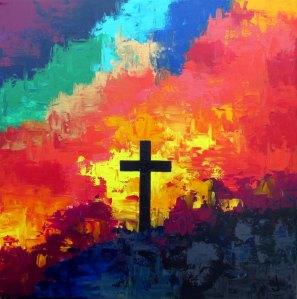
cross_artistic-1

We can see this principle at work in Jesus’ life.  Jesus was protected by God so that He could complete His mission by dying on the cross, crucified for our redemption.  Despite efforts to kill Him (e.g., John 7:30, 45-46, Luke 4:28-30), no one was successful until the time was right.

The key then to God’s protection is to be about His business.  As long as we are in His will, we can be sure of His protection.

“Some trust in chariots, and some in horses: but we will remember the name of the Lord our God.” ~ Psalm 20:7

But, wrapped in the remembrance of God’s protection is also God’s priority of protection. When we think of protection, safety from all types of physical harm is usually at the forefront of our thoughts.

Conversely, as Scripture shows, God prioritizes the spiritual man over the physical man (e.g., consider Job). Indeed, God will often allow the body to suffer so that the spirit can thrive.

“For which cause we faint not; but though our outward man perish, yet the inward man is renewed day by day.” ~ 2 Corinthians 4:16

For most of us, the real challenge of relying on God’s protection is accepting His prioritization. Our struggle then is more about whether God will protect us the way we want Him to, rather than whether or not God will protect us.

But there is no other way: God is our ONLY protector. The devil seeks to destroy us and we can’t protect ourselves. We must, therefore, look to God and trust Him.  We must learn to value the spiritual man over the physical man.

“I will say of the Lord, He is my refuge and my fortress: my God; in Him will I trust.” ~ Psalm 91:2


This is the first of a nine-part series on Principles for the Promised Land summarized from the book of Deuteronomy


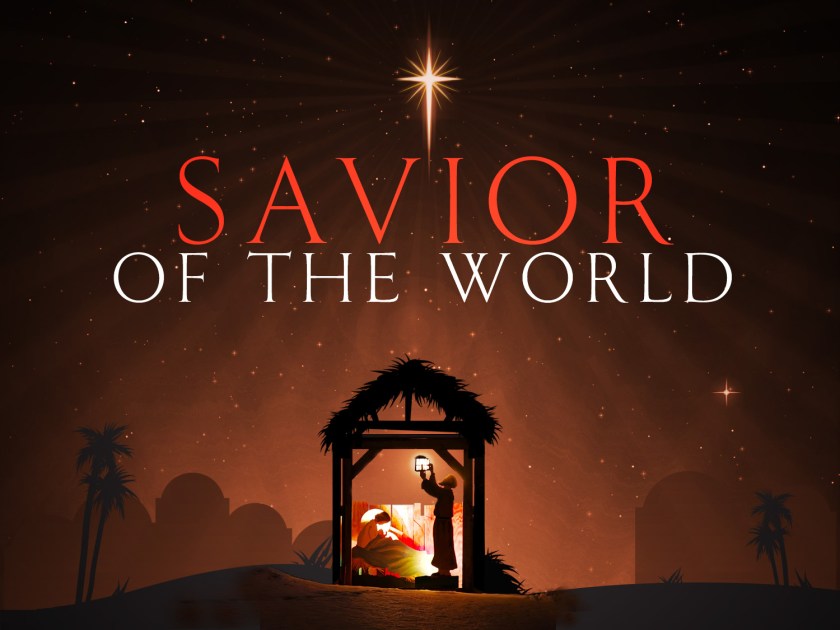
Unto Us A Son is Given

Unto us a son is given
Unto us a child is born
Unto us a gift from heaven
Unto us this gracious morn

Sing to Him your songs of praises
Bring to Him your gifts of love
Exalt His holy name to heaven
Let your joy ascend above

He shall be called Wonderful
He shall be called Counselor
He shall be called Mighty God
Everlasting Father

Sing to Him your songs of praises
Bring to Him your gifts of love
Give to Him your very finest
All the King is worthy of

by Vicki Baird

Annunciation Appreciation | The Fundamentals of Faith

Then said Mary unto the angel, “How shall this be, seeing I know not a man?” (Luke 1:34)

Mary’s question articulates the fundamental challenge of faith. Her question can be restated as “Will God intervene to accomplish what is humanly impossible?”

Faith is invoked when we look to God to accomplish what seems undoable. And that was precisely what Mary did when she asked, “How shall this be…?”.

Mary wasn’t disputing Gabriel’s message, she was simply acknowledging that there was no independently human way by which the prophecy could be fulfilled. She wasn’t voicing unwillingness, she was expressing her own incapacity. She wasn’t declaring doubt, she was declaring the need for divine intervention.

The challenge of faith is waiting on God to do the incomprehensible. Faith demands that we dispense with human logic and trust God to do what cannot humanly be accomplished.

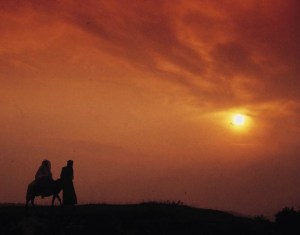
journey-to-bethlehem_cropped

“Now faith is the substance of things hoped for, the evidence of things not seen.” (Hebrews 11:1)

Faith transitions us from the physical world to the spiritual world. Physically, a virgin birth was impossible, but spiritually it was possible: God isn’t limited by the laws of the physical universe. God is bigger than that. Mary, however, was limited by the physical world and she needed God’s intervention to live out God’s will for her life.

Like Mary, God calls on His children to do things that are beyond their abilities: things that are unattainable without His intervention. Faith happens when we call on Him and wait on Him to intervene: when we depend on Him to lift us beyond our limitations: when we confess that we can’t get there without Him.

“I can do all things through Christ which strengtheneth me.” (Philippians 4:13)

And God sent Jesus, born in a manger to die on a cross, to do what we could not do for ourselves.  God sent Jesus to do the most impossible thing of all: to redeem us from the curse of sin.

God intervened to do what was humanly impossible.  Will we put our faith in Him?  Mary did.

Annunciation Appreciation | Glorifying Jesus

“He shall be great, and shall be called the Son of the Highest: and the Lord God shall give unto Him the throne of His father David: And He shall reign over the house of Jacob for ever; and of His kingdom there shall be no end.” ~ Luke 1:32-33

In our text, the angel, Gabriel announces/prophecies FIVE (5) ways in which Jesus would be glorified because He came to save mankind:

  1. Greatness: “He shall be great”
  2. Recognition as Deity: “He shall be called the Son of The Highest”
  3. Sovereignty: “the Lord God shall give unto Him the throne of His father David”
  4. Eternal Rule: “He shall reign over the house of Jacob for ever”
  5. Eternal Kingdom: “of His kingdom there shall be no end”

All five prophecies have already begun to come true and will be fully realized after the final judgment (Revelation 21:1-22:5).

Crucially, however, these glorifications of Jesus also point to the place Jesus should have in each of our lives. And reveal a progression of honor by which Jesus becomes both Saviour and Lord for us.

“He shall be great…”

First, Jesus is to be great, uniquely special to us. There are many for whom Jesus is just a historical character, no greater, no more special, than any of a pantheon of prominent personalities. However, the first step towards redemption is recognizing that Jesus stands out from all men, that He is like no other, and thereby the focal point of human history.

Jesus must be unignorable to us, looming large in every facet of life. In short, to come to Jesus we must acknowledge that life is all about Jesus.

“And He is the head of the body, the church: Who is the beginning, the firstborn from the dead; that in all things He might have the preeminence.” (Colossians 1:18)

“…He shall be called the Son of The Highest…”

Second, we are to confess that Jesus is God. Many acknowledge Jesus as great, but not as God. Jesus’ greatness is accepted in many world religions (e.g., Islam, Judaism) and cults (e.g., Mormons, Jehovah’s Witnesses), but they deny His deity: they reject Him as God.

The same is true for many individuals, for whom Jesus is a great man but only a great man. However, to deny the deity of Jesus is to deny the truth of Scripture and to deny the very character of God.

worship pray kneel

1In the beginning was the Word, and the Word was with God, and the Word was God.
14And the Word was made flesh, and dwelt among us, (and we beheld his glory, the glory as of the only begotten of the Father,) full of grace and truth.” (John 1:1, 14)

“For in [Christ] dwelleth all the fulness of the Godhead bodily.” (Colossians 2:9)

If Jesus is not God, then there is no salvation. God must provide the ultimate sacrifice (Himself) to redeem man from the ultimate transgression: sin. If sin can be forgiven with less than the ultimate sacrifice, then sin is not the ultimate transgression. As Psalm 113 reveals,

“Who is like unto the Lord our God, who dwelleth on high,
Who humbleth Himself to behold the things that are in heaven, and in the earth!” (Psalm 113:5-6)

Even the things in heaven are beneath The Holy God! How then could anything beneath God be sufficient to atone for rebellion against God?

To accept Jesus, we must accept Him as He truly is; we cannot accept Jesus as less than Himself.

“Behold, a virgin shall be with child, and shall bring forth a son, and they shall call his name Emmanuel, which being interpreted is, God with us.”  (Matthew 1:23)

“…the Lord God shall give unto Him the throne of His father David…”

The third step, in the progression that leads to accepting Jesus as our Saviour and Lord, is to acknowledge Him as King. Many agree Jesus is great, many concede Jesus is God, but many have also not submitted to Jesus as their King: the one with supreme authority over our lives.

prayer-group-1

However, if we don’t accept Jesus as our King, we will not feel obliged to accept His authority over us or to obey His commands. For us to accept Jesus as Saviour we must first see Jesus as King, rightly having the authority to offer us salvation on His terms. Sin came about when man rejected God’s authority (Genesis 3). Salvation comes about when man accepts God’s authority: when we see Jesus as our King.

“These shall make war with the Lamb, and the Lamb shall overcome them: for He is Lord of lords, and King of kings: and they that are with Him are called, and chosen, and faithful.” (Revelation 17:14)

We should note here that the term “His father David” refers to the fact that Jesus was in the biological lineage of David through His mother, Mary (Luke 3:23-38) and in the legal (but non-biological) lineage of David through Joseph (Matthew 1:1-17) both of which qualified Jesus as an heir to David’s throne.

In perhaps the simplest sense, the term “throne of…David” reminds us that David was God’s choice to rule over God’s people by the old covenant, Israel, the sons of Abraham by blood. And, in like manner, Jesus is God’s appointed choice to rule over God’s people by the new covenant (Hebrews 8:13, 12:24), the church, the sons of Abraham by faith in Jesus Christ (Romans 4:1-5:2, Ephesians 2:1-22, 1 Peter 2:9-10).

“…He shall reign over the house of Jacob for ever…”

This fourth step is the point at which salvation takes place. To acknowledge the eternal reign of Jesus Christ is to acknowledge that there is no other Saviour: Jesus is the only Word, the only way, the only truth, the only life (John 14:6). There is no new Word, no new way, no new truth, no new life now, or coming in the future. And, therefore, there is no other choice but to turn to Jesus for our salvation.

small country church

The name “Jacob” means “supplanter”. And every act of sin is an attempt to supplant God as rightful ruler over our lives and replace Him with ourselves. The “house of Jacob” then refers to sinners. And Christ rule over “house of Jacob” is Christ’s rule over sinners saved by grace.

Christ Jesus came to redeem us from sin: to save the supplanters: to save those who wanted to take His place: the ultimate demonstration of love. Salvation comes when the “house of Jacob” accept Christ as the eternal King.

“O house of Jacob, come ye, and let us walk in the light of the Lord.” (Isaiah 2:5)

“…of His kingdom there shall be no end…”

Fifth, and last, accepting that Jesus’ kingdom is eternal means that life is all about serving Him: life is about glorifying God. If Jesus is our King we must serve Him. If Jesus is our eternal King, then we must serve Him eternally: from NOW to forever. This is the principle of sanctification. To sanctify means to set apart. The citizen’s of Jesus’ kingdom are set apart forever to serve Him forever.

“…Unto Him that loved us, and washed us from our sins in His own blood, and hath made us kings and priests unto God and His Father; to Him be glory and dominion for ever and ever. Amen.” (Revelation 1:5b-6)

Annunciation Appreciation | God’s Favour Frees From Fear

“And the angel said unto her, Fear not, Mary: for thou hast found favour with God.” ~ Luke 1:30

As we continue looking at The Annunciation, we see in our text that Mary’s status of having favour with God (first mentioned in Luke 1:28) is repeated by the angel, Gabriel.  However, this time he adds the command: “Fear not”.

The rationale of the statement is fairly straightforward yet profound: If we have found favour with God the creator and abiding ruler of the universe, then we have nothing to fear.

In other words, fear is IRRATIONAL for the saved, the children of God.  If we are in the care of God, The Almighty; who or what can harm us?

Moreover, as Romans 8:35-39 teaches us, nothing can separate us from God’s love: in each and every circumstance, God is working things out for our benefit and for His glory.

35Who shall separate us from the love of Christ? shall tribulation, or distress, or persecution, or famine, or nakedness, or peril, or sword?
38For I am persuaded, that neither death, nor life, nor angels, nor principalities, nor powers, nor things present, nor things to come, 39Nor height, nor depth, nor any other creature, shall be able to separate us from the love of God, which is in Christ Jesus our Lord.” (Romans 8:35, 38-39)

Then why are so many Believers still fearful?

Our problem is that we trust our senses more than we trust God. Our tendency is to walk by sight, i.e., to live by our senses and our own human logic. When our sensory experiences tell us that things are out of the norm, our minds conclude, based on that limited information, that we are in danger, that we should react in fear.

fear-cartoon-cropped-wide

However, there is often much more going on than our senses can detect. And, our limited human minds are unable to process all the variables that are in effect. Therefore, we have only two options, either we rely on our weak minds working with limited information, OR we trust in God’s omniscience.

“Behold, his soul which is lifted up is not upright in him: but the just shall live by his faith.” (Habakkuk 2:4)

The apostle, Peter, was able to walk on water as long as his trust was solely on Jesus. But when he looked around at the waves and started trusting in his senses instead of Jesus, he feared and started to sink. His ability to triumph over his circumstances depended on whether he trusted God or trusted his senses.

walking on water

And [Jesus] said, “Come.” And when Peter was come down out of the ship, he walked on the water, to go to Jesus.
But when he saw the wind boisterous, he was afraid; and beginning to sink, he cried, saying, “Lord, save me.”
And immediately Jesus stretched forth his hand, and caught him, and said unto him, “O thou of little faith, wherefore didst thou doubt?” (Matthew 14:29-31)

God the Father sent us Jesus so that through Him we can find favour with God. Jesus came to take away our fear.

In closing, it is also instructive to consider the contrapositive to Gabriel’s statement.

ORIGINAL:
“Fear not… for thou hast found favour with God.”

CONTRAPOSITIVE (paraphrased):
“You who have NOT found favour with God, FEAR.”

The unrepentant and unsaved, of their own choice, live in enmity with God and God’s children. It is not a small thing to openly rebel against The Creator of the universe. God is Holy and it is right for us to humble ourselves before Him so that we can find favour with Him.

And there is a price to pay if we reject His offer of salvation:

For we know him that hath said, “Vengeance belongeth unto me, I will recompense“… It is a fearful thing to fall into the hands of the living God. (Hebrews 10:30-31)

Because of Jesus, the saved, those who have found favour with God, have nothing to fear: they are on God’s team. Regardless of the circumstances, they know they can trust in God. God alone has everything worked out, He alone knows the real truth and He is in control of the storms.

But the unsaved, those who have rejected Jesus, should live in constant fear of God’s judgment.

Annunciation Appreciation | Highly Favoured: Lowly Humbled

“And the angel came in unto her, and said, “Hail, thou that art highly favoured, the Lord is with thee: blessed art thou among women.” ~ Luke 1:28

In the opening sentence of Gabriel’s greeting to Mary, he declares that she is “highly favoured”. This phrase is commonly used/misused today and it is worth examining what it means.

CONTEXT

Luke chapter 1 informs us that Mary was a poor young woman from Nazareth. In those times, that was a horrible resume: she had four strikes, four negatives, against her:

  • she was poor
  • she was a woman
  • she was young
  • she came from the wrong neighborhood

Then, as now, the poor were at the lowest rung of society. In those times, women were second class citizens with very little rights. Likewise, the young generally had much less power and influence in their society compared with their elders. And finally, Nazareth was not a well-regarded town to live in. Effectively, Mary was at the bottom rung of Jewish society in almost every way. To go any lower, she would have had to be a leper.

painting-of-servant-girl

Therefore, the first things we can learn about being “highly favoured” with God is that

  • It has nothing to do with social standing: we can’t ascend to it.
  • It has nothing to do with material wealth: we can’t buy it.
  • It has nothing to do with age: we can’t age into it, we can’t age out of it.
  • It has nothing to do with gender, family history, culture, or ethnicity: we can’t be born into it.

CONSTRUCT

Since we can’t acquire favour by the usual human means, the question is, How does one become “highly favoured”?

Thankfully, the Bible makes the answer quite clear. As examples, consider the following three passages:

6 But He giveth more grace. Wherefore he saith, God resisteth the proud, but giveth grace unto the humble.
10 Humble yourselves in the sight of the Lord, and He shall lift you up.” ~ James 4:6, 10

“For whosoever exalteth himself shall be abased; and he that humbleth himself shall be exalted.” ~ Luke 14:11

Humble yourselves therefore under the mighty hand of God, that He may exalt you in due time” ~ 1 Peter 5:6

prayer-on-my-knees4

Clearly, the one that humbles himself/herself is the one that God exalts, the one that is “highly favoured”: humility brings God’s favour.

Sadly, in many Christian circles today, humility seems to be in short supply. And, accordingly, God’s favour is in short supply too. Many churches seem to exalt those who are the loudest and proudest. Many leaders annoint and appoint themselves as “bishops”, “elders”, “apostles”, etc. It is rare to see a leader accept the role of most menial servant. But God favours the humble, and so should we.

COMMUNION

What is the result of being “highly favoured”?

We have already seen that despite her low standing in human society, Mary was “highly favoured” by God because of her genuine humility.  However, examining Mary’s life from Gabriel’s announcement going forward shows us a few things that God’s favour does not guarantee:

God’s favour did not make Mary rich, the biblical record suggests she was poor for her entire life.

God’s favour did not put Mary into a nicer neighborhood, she lived in Nazareth at least up to the time Jesus instructed His disciple, John, to take care of her.

God’s favour did not even make Mary’s life “easier”, her life became more challenging than ever:

  • she nearly lost her fiancé, due to her pregnancy;
  • she would live the rest of her life with the suspicion of her neighbors (“Was Mary an adulteress?”);
  • she would be widowed fairly early in life.
  • she would see her child die a horrible death.

So, what is the benefit of being “highly favoured”?

Our text gives us the answer: “…the Lord is with thee…”.  The benefit of being “highly favoured” by God is His abiding presence with us.

“Thou wilt shew me the path of life: in Thy presence is fullness of joy; at Thy right hand there are pleasures for evermore.” ~ Psalm 16:11

Complete, supernatural, extraordinary joy in available in the presence of God. When God is with us we can have the true joy of life. Without God’s presence, when the Lord is NOT with us, we have no joy and no access to joy.

“…Fear not:
for I have redeemed thee,
I have called thee by thy name;
thou art Mine.
When thou passest through the waters,
I will be with thee;
and through the rivers,
they shall not overflow thee:
when thou walkest through the fire,
thou shalt not be burned;
neither shall the flame kindle upon thee.
For I am the Lord thy God, the Holy One of Israel, thy Saviour…”
~ Isaiah 43:1b-3a

woman-591576_1920

When we are “highly favored”, we have The Lord with us: we have God on our side: we live in God’s presence and, by grace, we walk in His will.

Indeed, God’s presence is His greatest and essential gift to His (saved) children:

“And I will pray the Father, and He shall give you another Comforter, that He may abide with you for ever; Even the Spirit of truth; Whom the world cannot receive, because it seeth Him not, neither knoweth Him: but ye know Him; for He dwelleth with you, and shall be in you.” ~ John 14:16-17

“If ye then, being evil, know how to give good gifts unto your children: how much more shall your heavenly Father give the Holy Spirit to them that ask Him?” ~ Luke 11:13

“Hereby know we that we dwell in Him, and He in us, because He hath given us of His Spirit.” ~ 1 John 4:13

“Know ye not that ye are the temple of God, and that the Spirit of God dwelleth in you?” ~ 1 Corinthians 3:16

The priceless benefit of being “highly favored” by God is being able to have fellowship with Him, being blessed to live in His presence where there is fullness of joy.

CONSECRATION

water_basin

But there is a second benefit of being “highly favoured” by God, namely, we are blessed to serve. Gabriel hailed Mary as “blessed art thou among women”. However, this blessedness was not for Mary to become self-serving, it was a blessedness that allowed her to become more God-serving. She was elevated to serve more and at even greater personal cost. Often we perceive God’s blessing as a call to suffer less, to have more for ourselves. However, God’s blessing often calls us into deeper service, where we have less for ourselves and suffer more for Him.

“For unto you it is given in the behalf of Christ, not only to believe on Him, but also to suffer for His sake” ~ Philippians 1:29

Being blessed meant Mary was challenged to risk everything to serve God even more.

Annunciation Appreciation: Jesus is The Only Answer

26And in the sixth month the angel Gabriel was sent from God unto a city of Galilee, named Nazareth, 27To a virgin espoused to a man whose name was Joseph, of the house of David; and the virgin’s name was Mary.” ~ Luke 1:26-27

This passage is the opening line of that section of Scripture often referred to as “the Annunciation” where the angel, Gabriel, announces to Mary that she would be the one to give birth to Christ Jesus, the Messiah. Accordingly, our text sets the stage not only for the message to be delivered to Mary. But, perhaps even more profoundly, it sets the stage for the message Jesus, and His followers would deliver to the world. Let us explore some of the points embedded in this rich passage by looking at the names used therein.

Gabriel: Man of God

God sending the angel Gabriel with the announcement to Mary is revealing. First, consider that the meaning of the name “Gabriel” is “man of God”.  Second, Gabriel was sent to Daniel twice to explain visions Daniel had received from God, and (earlier, in Luke 1:5-20) to Zacharias to announce the upcoming birth of his son, John.

attribution: photo from etsy.com

photo from etsy.com

Putting these two points together, we see that “The man of God” is sent by God to deliver His message to whoever needs to hear it.

“And Jesus came and spake unto them, saying, All power is given unto me in heaven and in earth. Go ye therefore, and teach all nations, baptizing them in the name of the Father, and of the Son, and of the Holy Ghost: Teaching them to observe all things whatsoever I have commanded you” ~ Matt. 28:18-19

At Christmas time, and all the time, Believers (“men and women of God”) are appointed to deliver God’s message, to announce God’s truth, to those whom we are sent; just like Gabriel did.

Nazareth of Galilee: Vantage View

Nazareth was a small town in the multicultural/multiethnic region called Galilee, which was geographically part of the former kingdom of Israel. What makes Nazareth interesting and instructive is its location, which was on one of the hills overlooking the plain of Esdraelon. The plain of Esdraelon, also known as Jezreel, was famously the location of several significant battles in the history of the Hebrew nation, e.g.:

annunciation-1

Each battle was a showdown between the forces of good and evil. Each battle represented a crisis of faith: who do you believe in? Which side are you on? Which way is right? Whenever the children of Israel called on Him, God won every battle for them. But, without fail, they would turn away from God and back into idolatry.

The plain of Esdraelon eventually also became known as the valley of Megiddo or Har Megiddo from which we get the name Armageddon (Revelation 16:14-16): The place where the final battle against evil will be fought.

The annunciation of Jesus’ birth and that He would grow up in Nazareth overlooking the plain of Esdraelon, the valley of Armageddon, emphasizes that Jesus came as Saviour, Saviour from God’s impending judgment. God, looking down on Esdraelon on the battles between good and evil, sent His ultimate solution and our ultimate opportunity to choose whose side we are on. Jesus is God’s final answer to the fundamental question of faith: “Whose side are you on?”

“God, who at sundry times and in divers manners spake in time past unto the fathers by the prophets, Hath in these last days spoken unto us by his Son…” ~ Hebrews 1:1-2a

Jesus’ birth heralded the beginning of the end.

Joseph, David and Mary: The salvation harmony

john-3-16_1

Hebrew lexicons tell us that the name Joseph” means “Jehovah has added”. “David” means “well-beloved”. And “Mary” (in Hebrew) means “their rebellion”. Altogether, these three names convey the beautiful message of salvation, which Jesus’ death made possible.

In announcing Jesus’ birth, God was sending the message that in Jesus He had added a way to salvation that was not available before. That way to salvation was made available to mankind because of their (our) rebellion (sin) which had broken the fellowship between man and God. And the reason God was adding a way of salvation to the life experience of man was because they were well-beloved.

The famous passage in John 3:16 puts it this way:

“For God so loved the world [“well-beloved”], that He gave His only begotten Son [“Jehovah has added”], that whosoever believeth in Him should not perish [for “their rebellion”], but have everlasting life.” ~ John 3:16

Jesus birth was an act of love from God our Father, who was making a way where there had been no way a way. A way to return to Him, a way to be saved from the penalty and power of sin in our lives.

Take Up Thy Cross

Take up thy cross, the Saviour said,
If thou wouldst My disciple be;
Deny thyself, the world forsake,
And humbly follow after Me.

Take up thy cross; let not its weight
Fill thy weak soul with vain alarm;
His strength shall bear thy spirit up,
And brace thy heart, and nerve thine arm.

Take up thy cross, nor heed the shame,
Nor let thy foolish pride rebel;
The Lord for thee the cross endured
To save thy soul from death and hell.

carry cross-1

Take up thy cross, then, in His strength,
And calmly every danger brave;
‘Twill guide thee to a better home,
And lead to victory o’er the grave.

Take up thy cross, and follow Christ,
Nor think till death to lay it down;
For only he who bears the cross
May hope to wear the glorious crown.

Charles William Everest

In His Hands

‘Twixt gleams of joy and clouds of doubt
Our feelings come and go;
Our best estate is tossed about
In ceaseless ebb and flow.
No mood of feeling, form of thought
Is constant for a day;
But Thou, 0 Lord, Thou changest not:
The same Thou art alway.

I grasp Thy strength, make it mine own,
My heart with peace is blest;
I lose my hold, and then comes down
Darkness, and cold unrest.
Let me no more my comfort draw
From my frail hold of Thee,
In this alone rejoice with awe—-
Thy mighty grasp of me.

Out of that weak, unquiet drift
That comes but to depart,
To that pure heaven my spirit lift
Where Thou unchanging art.
Lay hold of me with Thy strong grasp,
Let Thy almighty arm
In its embrace my weakness clasp,
And I shall fear no harm.

Thy purpose of eternal good
Let me but surely know;
On this I’ll lean—let changing mood
And feeling come or go—
Glad when Thy sunshine fills my soul,
Not lorn when clouds o’ercast,
Since Thou within thy sure control
Of love dost hold me fast .

John Campbell Shairp